0x9dcba70b…8b8asent to0x8d59e106…2902·#24,201,965·view on Etherscan
# Lil Noun <> B<>rder/ess Builders' OP
## Objectives
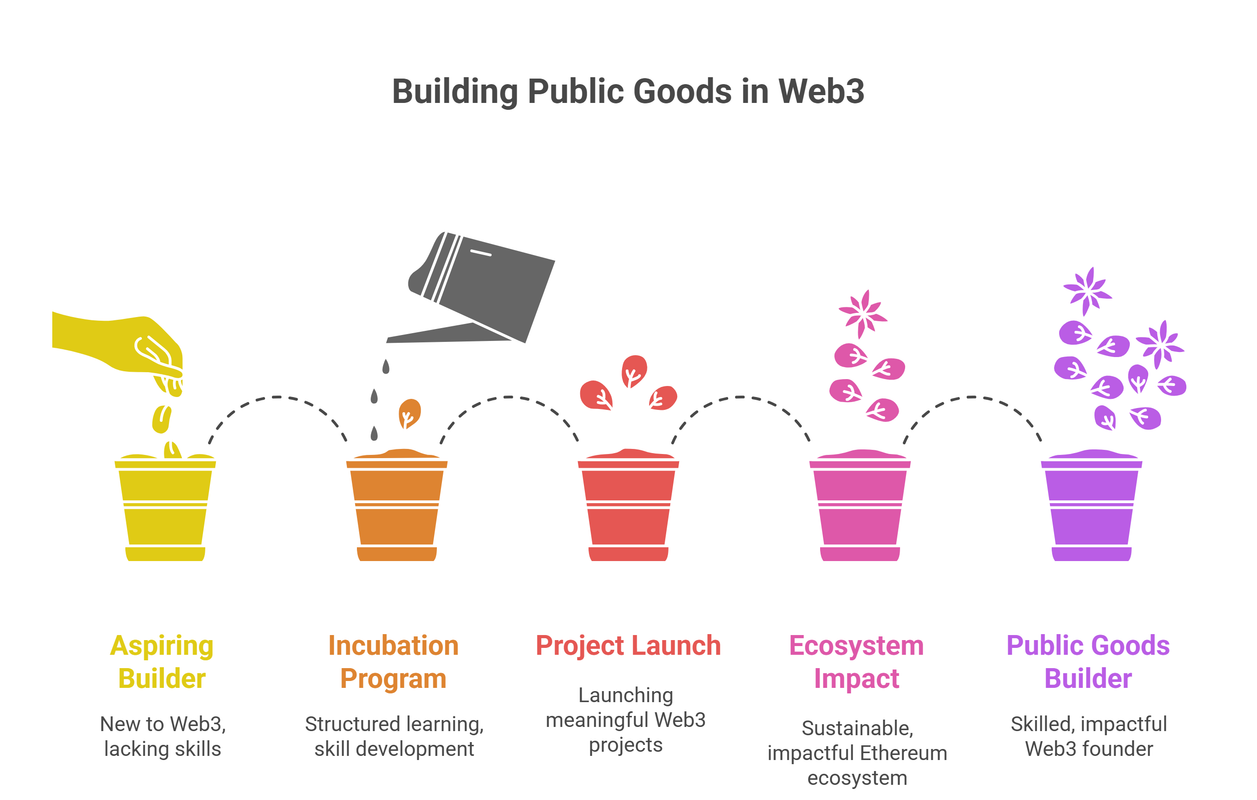
The objective of the B<>rder/ess Builders OP is to convert early-stage experimentation into long-term, compounding public goods value for the Lil Nouns ecosystem.
Specifically, the program aims to:
[](https://postimg.cc/4YLMJWBz)
1. Grow a pipeline of first-time builders and student founders producing open, usable public goods.
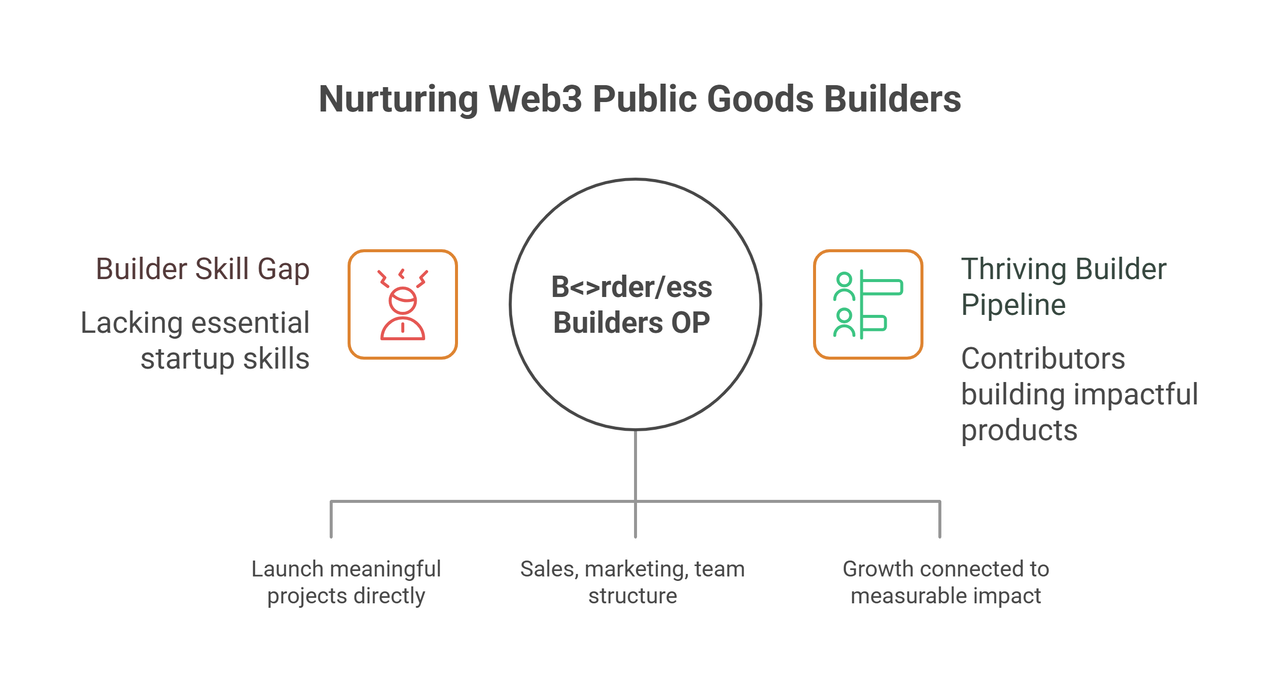
2. Reduce early-stage failure caused by a lack of product, business, and coordination skills.
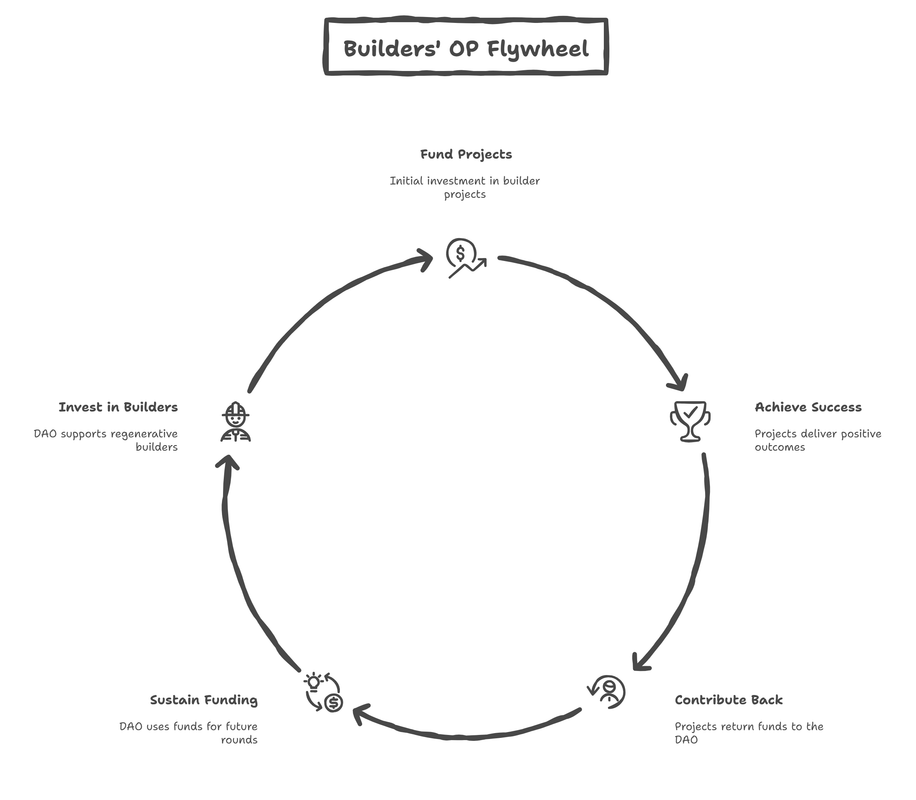
3. Create a feedback loop where successful projects replenish the Lil Nouns treasury through;
4. Revenue-sharing agreements.
5. Buybacks or deposits to the Lil Nouns treasury
6. Contributions following large grants, investments, or protocol partnerships.
**How This Serves Lil Nouns**
[](https://postimg.cc/R64NLjqv)
1. Extends Lil Nouns’ mission beyond grants into productive capital formation.
2. Converts funded experimentation into durable ecosystem assets.
3. Positions Lil Nouns as an early supporter of builders who later succeed, creating alignment and loyalty.
4. Diversifies treasury growth toward builder-generated value.
[](https://postimg.cc/Z0vJXdYs)
## Platforms & Rationale
**Primary Platforms**
1. Ethereum & Ethereum-aligned L2s (e.g. Base, Scroll, Celo)
2. Selected for Ethereum equivalence, low-cost experimentation, and strong developer tooling.
**Supporting Tooling**
1. Karma GAP — for milestone tracking, impact reporting, and grant accountability
2. Scaffold-ETH / Foundry / Remix — proven onboarding tools for early builders
3. AI-assisted dev platforms (v0, Bolt, etc.) — reduce build time and lower skill barriers
**Rationale** These platforms:
- Lower technical friction for first-time builders
- Are composable with the existing Ethereum public goods infrastructure
- Allow Lil Nouns-funded outputs (code, playbooks, reports) to remain non-rivalrous and reusable
**Diligence**
-- Prior hands-on deployments through Vibecoding Sprint
-- Multiple cohorts run across Ethereum-aligned ecosystems since 2022
-- Demonstrated builder retention, project completion, and user onboarding
**Example Scenario**
[](https://postimg.cc/VS6YsmSg)
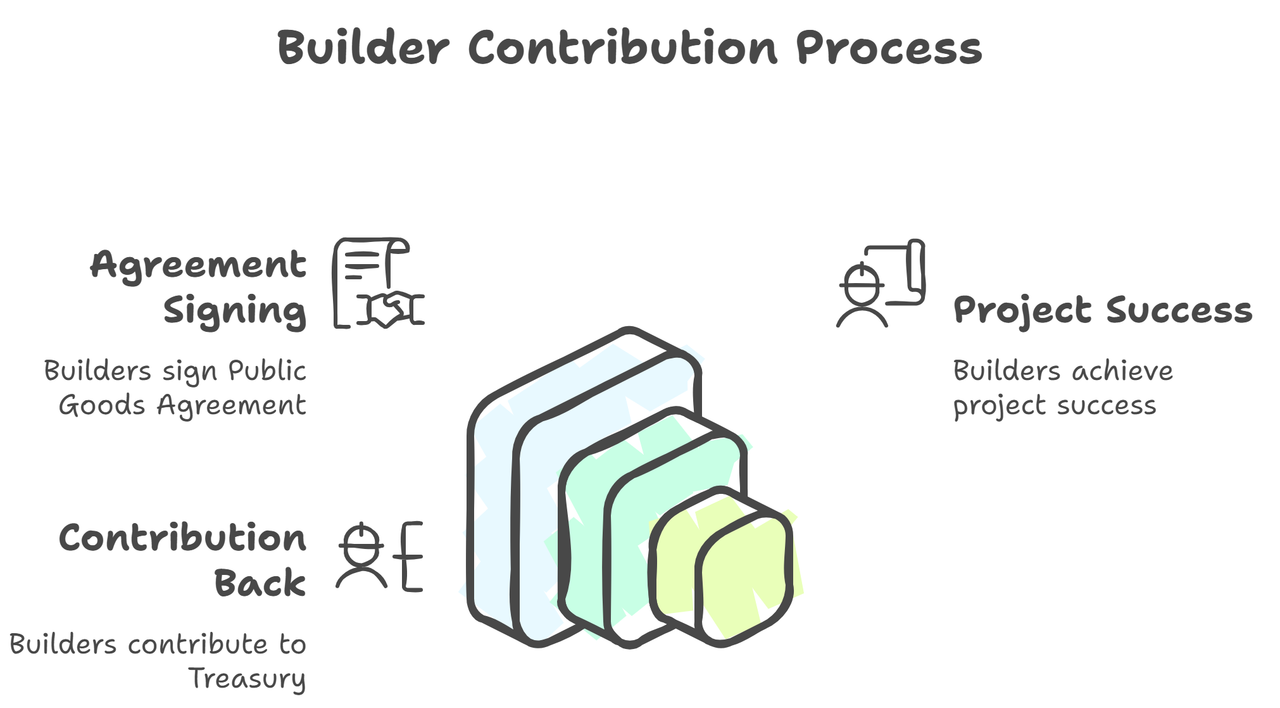
If 10 early builders graduate from the Builders’ OP and just 3–4 of them turn into revenue-generating products or receive large ecosystem grants:
- And *hypothetically,* each contributes a small 2–5% return from revenues, raises, or grants.
- Collectively, this could generate recurring inflows to the DAO treasury, a model of Revenue-Generating Projects funding public goods.
## Risks
1. **Technical Risks**
Smart contract bugs or incomplete MVPs
**Mitigation:**
- Use of testnets, audited templates, and Scaffold-ETH
- Emphasis on MVPs and user testing rather than production-scale DeFi
**2. Market / Adoption Risks**
Projects may fail to reach users or sustain traction
**Mitigation:**
- Adoption targets (100–1,000 users) baked into the program
- Marketing sprints and user onboarding moments
- Early kill-or-pivot decisions via lean experimentation
**3. Execution Risks**
First-time builders lack experience
**Mitigation:**
- Structured support teams (technical, marketing, business)
- Reduced cohort size per cycle
- Proven delivery track record across multiple programs
**4. Treasury Risk**
Not all projects will succeed
**Mitigation:**
- Portfolio approach: many small experiments
- Returns expected from a minority of high-performing projects, not all
## Returns
Returns are asymmetric and long-term, driven by builder success.
**Expected Outcomes**
- Majority of projects: learning, open-source outputs, ecosystem value
- Minority of projects (10–30%): revenue-generating or grant-winning
**Return Mechanisms**
- Percentage of revenue from successful projects
- Percentage of large grants or investments received
- Buybacks or treasury deposits agreed upfront
**Assumptions**
Based on prior cohorts:
- 11 projects shipped in one sprint
- Multiple teams continue building post-program
- Even 1–2 successful projects per year can justify the program cost and create compounding upside.
## Monitoring & Access
**Operations**
- Program operated by the B<>rder/ess core team
- Support teams embedded per cohort
**Tracking & Reporting**
- Builder milestones tracked via Karma GAP
- Metrics include:
---- Projects shipped
---- Users onboarded
---- Retention after 6 months
---- Revenue or grant outcomes
---- Public reports published after each cohort
**Controls**
- Milestone-based disbursement of prizes
- Adoption-linked rewards
- Transparency via open reports and on-chain metrics where possible
- Lil Nouns retains visibility into:
---- Outputs
---- Outcomes
---- Treasury contributions tied to funded builders
## Exit Criteria
**For Individual Projects**
- Projects exit the program when they:
- Reach adoption targets
- Secure external funding or grants
- Transition into independent operations
**For Lil Nouns Capital**
- Positions are adjusted or concluded when:
---- A project fails to achieve traction after defined iterations
---- A project becomes self-sustaining and begins contributing back
---- Agreements are fulfilled (revenue share, buyback, treasury deposit)
**Reporting**
- Exit outcomes documented in cohort reports
- Successes and failures shared transparently to inform future DAO decisions
**FEEDBACK LOOP**
[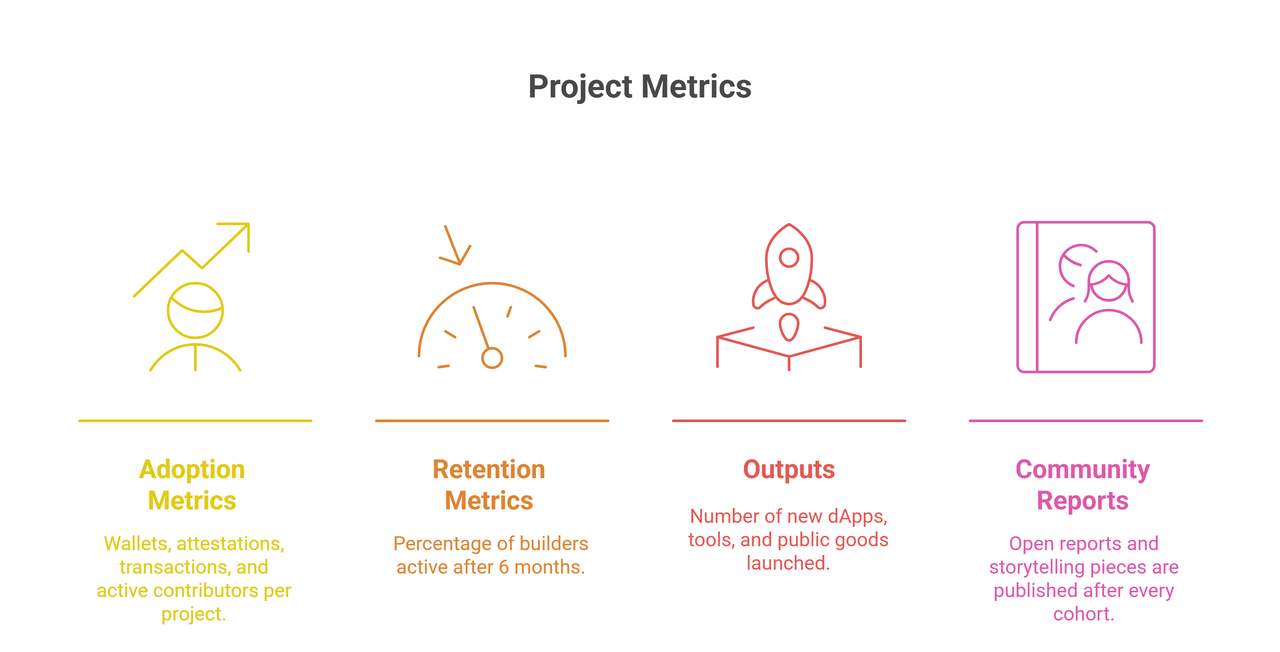](https://postimg.cc/jnsqVsxS)
*Adoption Metrics:* Wallets, attestations, transactions, and active contributors per project. *Retention Metrics:* % of builders active after 6 months. *Outputs:* Number of new dApps, tools, and public goods launched. *Community Reports:* Open reports and storytelling pieces are published after every cohort for transparency and replication.
**BUDGET AND ALLOCATION STRUCTURE**
[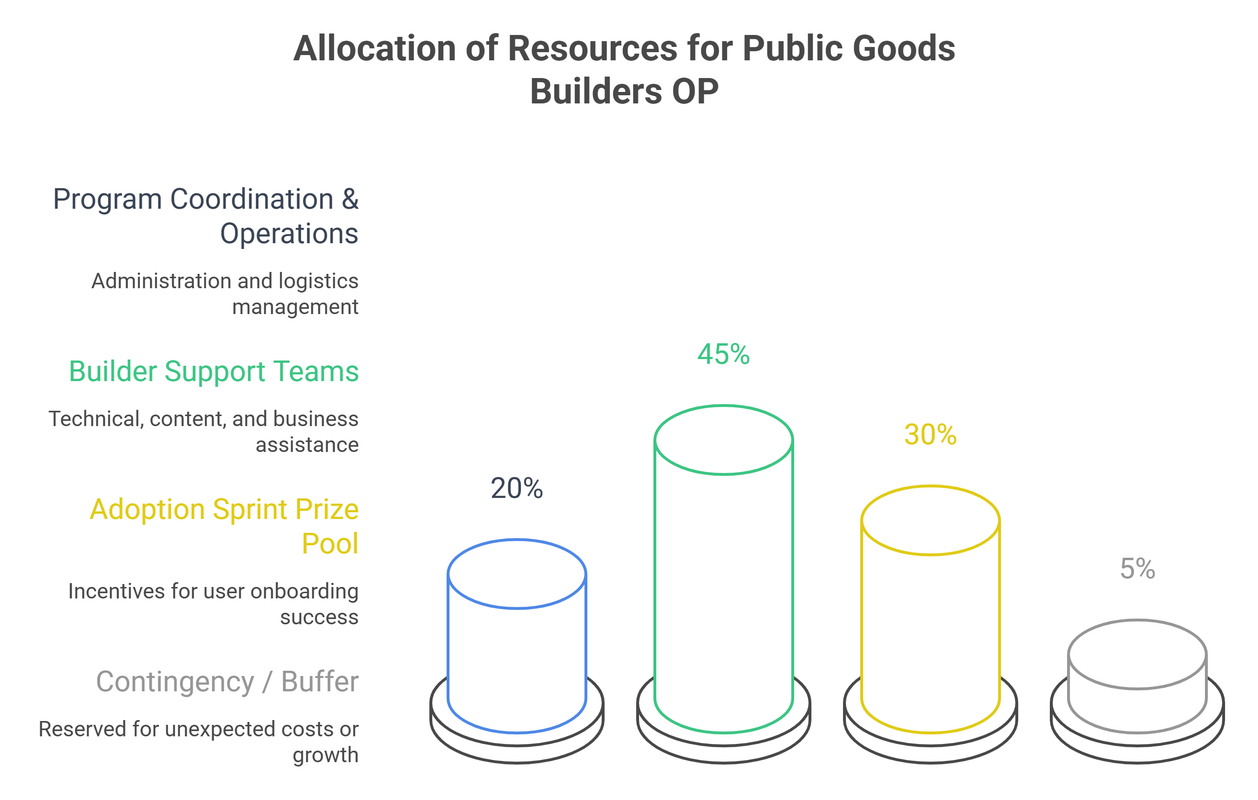](https://postimg.cc/14FrXv5G)
**Program Coordination & Operations – 20%** This encompasses administration, program management, mentor coordination, and logistics for bimonthly cohorts, ensuring the smooth operation of the program and maintaining reporting accountability.
**Builder Support Teams – 45%** *Technical Support (15%):* Product design, smart contracts, front-end dev, and data analytics. *Content & Marketing (15%):* Branding, storytelling, community building, and growth campaigns. *Business Development (15%):* Product-market fit guidance, partnerships, fundraising strategies, community nd team building, monitoring and evaluation.
**Adoption Sprint Prize Pool – 30%**
- Incentives for builders who successfully onboard 100–1,000 users.
- Structured as milestone-based disbursements tied to verifiable adoption metrics.
**Contingency / Buffer – 5%** Reserved for unexpected costs or scaling opportunities during the OP.
*Budget Summary:*
- Coordination & Ops – 20%
- Builder Support Teams – 45%
- Prize Pool – 30%
- Contingency – 5%
**EXTRA DETAILS - FULL PROPOSAL AND EXECUTION STRATEGY HERE**
[https://docs.google.com/document/d/1wzJeDws_fuuBzmfEY3gNqgsaB7KGBNRITcrQALwAvvk/edit?usp=sharing](https://docs.google.com/document/d/1wzJeDws_fuuBzmfEY3gNqgsaB7KGBNRITcrQALwAvvk/edit?usp=sharing)
Hello everyone, I'm KarlaGod ([https://x.com/_karlagod)](https://x.com/_karlagod), Lead Partner at B<>rder/ess ([https://x.com/borderlessdev)](https://x.com/borderlessdev), and we’re excited to share the Public Goods Builders OP, a structured incubation program designed to turn first-time builders into successful founders while creating sustainable value for public goods ecosystems like Lil Nouns and Public Nouns.
**Our core thesis is simple:** If we help early builders launch real products, the projects that succeed can contribute revenue back to the DAOs that funded their early development.
This creates a regenerative loop where DAOs aren’t only spending on experiments, but helping launch products that can replenish the treasury over time.
We recently had this program supported by Public Nouns with 3ETH, and we start our Pilot this January. We’re now exploring additional funding from Lil Nouns so the impact canscale, and we can continue in Q1 2026 with more founders, more public goods projects, more on-chain adoption, and a clear pathway for successful teams to return value back to public goods DAOs.
I’ve attached a link to our doc in the "Proposal Idea Notion" and also the doc itself, which goes into full detail on the program structure, expected impact, KPIs, and reporting flow, the sustainability model and overall impact and growth.
Would love for you to read through it and share feedback or questions. Your input will help us shape this into something that truly strengthens the Lil Nouns ecosystem and the wider public goods landscape.
Thanks for taking a look, excited to build this with LilNouns' support 😊
*Please feel free to comment on the doc, it's public for all, and all comments are welcome.*\*
Proposal Idea Notion: [https://al409.notion.site/B-RDER-ESS-LIL-NOUNS-A-PUBLIC-GOODS-BUILDERS-OP-69475e35a4b440b0924f2b19de1f5e18?source=copy_link](https://al409.notion.site/B-RDER-ESS-LIL-NOUNS-A-PUBLIC-GOODS-BUILDERS-OP-69475e35a4b440b0924f2b19de1f5e18?source=copy_link)lil-noun-<>-b<>rder/ess-builders'-op