# Franchiser Operational Upgrade and Rebalance
## Summary
This proposal upgrades Compound's treasury-delegation (Franchiser) system to a new pool-based architecture and, in the same step, carries out the first scheduled biannual delegate rebalancing under **Proposal 504 — [Compound Delegate Race (Cycle 2)](https://www.comp.xyz/t/compound-delegate-race-cycle-2/7302)**.
The total COMP delegated through the program does not change. Existing delegations migrate to the new pool with no interruption to voting power, and the pool reclaimed from under-participating delegates is redistributed to qualified active delegates. COMP remains in Governance-owned contracts throughout.
## Background
Proposal 504 established a standing six-monthly review of treasury-delegated voting power, with a uniform on-chain participation standard and a defined reallocation procedure. The first review window (Proposals 505–586) has closed and participation has been verified on-chain. The full review, application window, and waterfall are documented on the forum: [comp.xyz/t/7862](https://www.comp.xyz/t/7862).
## What this proposal does
1. **Upgrade.** Migrate the treasury-delegation program to the upgraded Franchiser pool: existing delegations move into a new Governance-funded pool, with the CGWG multisig set as Coordinator and a Guardian set for emergency oversight. Governance retains sole authority to fund, halt, or reclaim the pool in full.
2. **Rebalance.** As part of the migration, three delegations that fell below the participation standard are not renewed — releasing **81,178.58 COMP** — which is redistributed to the qualified applicants per the waterfall.
**Not renewed — 81,178.58 COMP reclaimed:**
| Delegatee | Address | COMP |
|---|---|---:|
| Michigan Blockchain | `0x13BD…8548` | 29,999.88 |
| Reservoir / AlphaGrowth | `0x4f89…fd3c` | 50,000.00 |
| Sharp | `0x72C5…7708` | 1,178.70 |
**Reallocated — 81,178.58 COMP:**
| Delegate | Address | COMP |
|---|---|---:|
| FranklinDAO | `0x0703…961b` | 8,262.46 |
| DAOplomats | `0xc554…7759` | 40,000.00 |
| blockful | `0x1F3D…0591` | 32,916.12 |
## The upgraded architecture
The upgrade replaces per-delegation Franchiser deployments with a single pool, split across three role-gated contracts:
- **FranchiserPoolFactory** — the Governance-only entry point. Governance creates, funds, and can halt a pool; halting recalls all delegates and returns the full COMP balance to the Timelock (the only path for COMP to leave the program).
- **FranchiserPool** — holds the program's idle COMP. A **Coordinator** (the CGWG multisig) can `delegate`, `recall`, and `reassign` voting power among delegates within Governance-set limits. A separate **Guardian** can emergency-`recall` a delegate or `freeze` the pool (10-day minimum), but can never move or delegate COMP.
- **Franchiser** — unchanged from V1: holds delegated COMP and grants voting power to a delegatee (who may name up to one sub-delegate).
Governance (the Timelock) sets each pool's parameters — delegate cap, Coordinator, Guardian, freeze period — and can change them or halt the program at any time by on-chain vote.
## Guarantees
- **Delegation only, never custody.** COMP stays in Governance-owned contracts at every step (Timelock → pool → Franchiser); no working group, Coordinator, or Guardian ever takes custody of the tokens.
- **Total set by governance.** This proposal does not change the program's total delegated COMP — it migrates and reallocates the existing pool. Any change to the total returns to an on-chain vote, and Governance can recall or reassign any delegation at any time.
# Delegate Compensation Program (Initial 6-Month Term)
Authors: CGWG ([@AranaDigital](https://www.comp.xyz/u/aranadigital) [@PGov](https://www.comp.xyz/u/pgov)) in collaboration with [@Compound\_Foundation](https://www.comp.xyz/u/compound_foundation)
## Summary
This proposal introduces a Delegate Compensation Program to strengthen Compound governance by tying delegate remuneration to objective, measurable criteria. Delegates are essential to Compound’s governance, but the lack of structured compensation has contributed to declining participation and engagement over time. This is especially important since Compound governance has one of the most active DAOs by number of proposals, requiring material and consistent participation from voters.
We propose a framework that applies consistently across all eligible delegates, rewarding both voting participation and substantive public forum communications, and includes clear oversight mechanisms to maintain accountability. The program would run for an initial six-month pilot period, renewable by subsequent governance action.
This proposal does not modify governance power, voting weight, or delegation mechanics. It solely introduces a structured compensation mechanism to incentivize and reward consistent, high-quality participation.
## Objectives
* Retain and increase voting participation rates
* Improve responsiveness and feedback pertaining to important proposals
* Encourage substantive engagement on the forums
* Align delegate incentives with protocol resilience and long-term health
* Introduce predictable, transparent compensation standards
## Baseline Eligibility
To be eligible for remuneration under this framework, a delegate must:
* Maintain a minimum delegated voting power of 25,000 COMP, equivalent to the effective proposal threshold
* Manage a public delegate statement on the forum and adhere to the [Governance Code of Conduct](https://www.comp.xyz/t/compound-governance-code-of-conduct/7251)
* Provide a publicly accessible communication channel for submitting voting rationales
* Not be under suspension (see Oversight section below)
Eligibility assessments shall be conducted at fixed three-month intervals from the program start date, with updated eligibility taking effect at the beginning of the following calendar month.
## Qualification for Remuneration
### Delegate Selection
At the start of the program, the top 8 eligible delegates, selected based on objective voting participation data, will qualify for remuneration. Every 3 months, these 8 spots will be re-evaluated and members reshuffled based on the metrics below.
Each eligible delegate’s previous 6 months of voting history will be analyzed, with the top 8 qualifying for remuneration. After the first 3 months, the previous 6-month voting history determines updated rankings, allowing for candidates to compensate for missed votes and potentially qualify for future rounds of remuneration.
In the case of a tie between 2 or more candidates, the previous 12-month voting history will be analyzed, then 18 months, then 24 months, and so on.
### Components of Remuneration
Remuneration is split into two components: vote participation and public communication. These criteria pertain to the 8 delegates that pass the delegate selection process.
#### Vote Participation
Delegates that qualify for remuneration must:
* Maintain a minimum 95% participation rate across all onchain governance proposals that reach the voting stage during the month
* “Participation” means casting a vote (For / Against / Abstain) prior to a vote closing
* Failure to meet 95% participation in a given month results in zero vote participation remuneration for that month
* In cases where a delegate is unable to participate in a vote due to verifiable, widespread technical issues (including but not limited to network outages, RPC failures, or wallet malfunctions), the oversight group may, acting reasonably and based on objective evidence, exclude such vote from the participation calculation for that month
#### Public Communication
To qualify for the communication portion of the remuneration, delegates must:
* Publish a written public rationale for 100% of their votes within 3 days of the vote ending.
* A rationale must be substantive and reference proposal content (not boilerplate or generic text). More leniency will be applied for routine market parameter updates and adjustments.
* Rationales are to be posted on a delegate’s “Delegate Platform.” This is intended to create a communication thread that the public can reference to easily access a voter’s collective perspectives.
* Post at least 2 substantive forum contributions relating to governance proposals, risk, treasury, or protocol development. “Substantive” excludes one-line comments, acknowledgments, or purely procedural remarks.
* Attend at least one community call in a given month. These are hosted biweekly and are managed according to [this thread](https://www.comp.xyz/t/compound-community-calls-thread/7272).
Failure to meet any of these requirements results in a proportional reduction of that month’s communication component.
Example: A qualified delegate is expected to give rationales for 6 votes, 2 substantive forum comments, and attend 1 call in a given month. If they provide rationale on 4 votes, 1 comment, and a call, they receive (4 + 1 + 1) / (6 + 2 + 1) = 2/3 of the communication portion.
If a vote crosses over between two months—for instance, a voting period takes place between April and May—then the relevant voting participation rate and associated rationale will count under the May remuneration. Votes are divided based on when a particular voting period concludes. Note that vote “end” refers to the conclusion of the voting period, not upon proposal execution.
## Remuneration Amount
Qualified delegates are eligible to receive up to $4,000 per month, split as follows:
ComponentAmountPayout BasisVote Participation$2,000/monthAll-or-nothing (must meet 95% threshold)Public Communication$2,000/monthProrated based on rationale, forum comments, and call attendance
The vote participation remuneration is all-or-nothing. In other words, delegates must maintain over 95% voting participation in a given month to receive this portion. The public communication remuneration is prorated based on the percentage of voting rationale, substantive forum comments, and call attendance provided. If a delegate does not meet the 95% voting participation rate, they are automatically disqualified from the communication remuneration for that month as well.
Example: A qualified delegate is expected to give rationales for 6 votes, 2 substantive forum comments, and attend 1 call in a given month.
* If they vote on everything, provide rationale on 4 votes, 1 comment, and a call, they receive $2,000 for voting and ~$1333 (⅔\*$2000) for communication of the communication portion. Total = $3,133.
* If they vote on everything and don’t partake in communication, they only receive $2,000.
* If they vote on ⅚ proposals, or 83% of all votes, then Total = $0 since the threshold is 95%.
## Forum Contributions
Delegate Platform and Communication Thread
Each month, qualified delegates are expected to update their Delegate Platform thread with each vote decision and respective rationales. We ask that delegates maintain one forum post that is edited as it is updated.
These communications should be established as a running thread under the initial delegate statement. For formatting, you may reference the outline at the bottom of the [Code of Conduct](https://www.comp.xyz/t/compound-governance-code-of-conduct/7251).
Substantive Comments
As stated in the above section, a delegate must also make 2 substantive forum comments. These comments are not intended to be posted under a delegate’s communication thread. They’re meant to be commented directly under a forum topic. For example, if there’s an RFC related to treasury management, a delegate should comment their substantive contribution as a reply to that forum post. We also encourage delegates to start fresh discussions in the event there aren’t enough active forum posts. A new forum post that initiates discussion will also be acknowledged as a substantive contribution.
## Payment Administration
Payments will be made monthly in USDC, and each delegate’s contribution results will be transparently reported to the forums. Payments shall be calculated and disbursed within a reasonable period following the end of each calendar month, based on the finalised participation and engagement metrics for that month.
Approved funds shall be transferred to a newly created multisig established solely for the administration of delegate remuneration under this framework. The multisig will operate under a 3-of-4 signing threshold, with 2 representatives each from the CGWG and the Compound Foundation.
The multisig shall:
* Hold only the funds allocated for this program
* Disburse monthly payments strictly in accordance with publicly verifiable data
* Publish transaction records and monthly payout summaries in a forum thread
## Transparency, Reporting, and Oversight
### Reporting
A public spreadsheet will be maintained, tracking vote participation percentage and engagement count (rationale posts, forum comments, call attendance) for each delegate. A continuous forum thread will update the community each month.
All voting participation data shall be derived from publicly verifiable onchain governance records (including recognised governance interfaces such as Tally or equivalent), and engagement metrics shall be sourced from the Compound governance forum and officially recognised communication channels.
### Suspension for Suspected Malicious Conduct
Remuneration may be suspended where there is reasonable suspicion that a delegate:
* Is coordinating with known malicious actors
* Is participating in governance manipulation or vote-buying schemes
* Is acting in bad faith to undermine protocol security or integrity
* Is engaged in undisclosed conflicts of interest materially affecting governance behavior
* Or is in violation of any of the other Code of Conduct criteria
### Oversight Group
Suspension determinations shall be made by a 2-party oversight group comprising the Compound Foundation and the CGWG. A unanimous decision of the group is required to impose suspension. The standard is “reasonable suspicion based on objective evidence.”
All suspensions are immediate, and public disclosure will be made. This mechanism applies solely to delegate qualification for remuneration. It does not affect governance power or delegation. Treasury delegation matters, for example, are handled under a different program managed by the CGWG.
The oversight group is also responsible for making final decisions around tracking delegate scores pertaining to voting participation and forum comments.
## Term and Budget
DetailValueInitial Duration6 months from activation—if this proposal passes in the middle of a given month, remuneration tracking will commence on the 1st of the following monthRenewalRequires subsequent governance proposal and approvalReviewA performance and impact review shall be published before renewal
Total Budget: $4,000/delegate × 8 delegates × 6 months = $192,000 USDC (maximum)
If not renewed, this program automatically expires, and any unused USDC will be returned to the treasury. A follow-up will be posted prior to the onchain vote to confirm exactly where assets for funding this proposal will be sourced from.
## Proposal Actions
1. Decrease cUSDCv3 reserves for 192,000 USDC. The reserves are transferred to 0x42a7716cf1f55Fe3F4f6585Aa37349bcbE69D621
# Authorization of Treasury Management Use of Compound v2 Reserves
**Summary**
This proposal seeks governance approval to establish a limited framework for stewarding a defined portion of protocol reserves associated with Compound v2 following its deprecation and wind-down. With v2 markets now inactive, these reserves are no longer required for liquidation backstopping or other v2 risk management purposes and are currently sitting idle. This proposal authorizes the Compound Foundation, acting via qualified service providers and subject to existing governance oversight, to manage a designated allocation of these v2 reserves in support of the Compound protocol and DAO.
Specifically, this authorization enables the Compound Foundation to:
* Establish and operate a treasury management framework for specific assets accessible due to the Compound v2 deprecation.
* Utilize the assigned v2-related reserves in a controlled and accountable manner to support ongoing protocol operations and make the assigned capital productive.
* Implement these activities in a manner consistent with prudent stewardship, market sensitivity, and the intent of prior governance decisions.
Importantly:
* No specific transactions, execution strategies, or market actions are prescribed by this proposal but will be included in future reporting.
* This proposal’s authorization is narrowly scoped to DAI from v2-related reserves.
* The DAO’s existing treasury strategies remain unchanged.
* These funds are entirely DAO-owned and will not be used to fund Foundation-specific operations.
**Background and Governance Context**
Compound governance previously approved the deprecation of Compound v2 markets pursuant to the [Compound v2 Deprecation Proposal](https://www.comp.xyz/t/gauntlet-compound-v2-deprecation-proposal/7237), which was passed by an [on-chain vote](https://www.tally.xyz/gov/compound/proposal/512?govId=eip155:1:0x309a862bbC1A00e45506cB8A802D1ff10004c8C0).
That proposal included, among other measures:
* Pausing new borrows and mints across v2 markets while allowing withdrawals, repayments, and liquidations to continue.
* Increasing reserve factors across v2 markets to 100%.
As a consequence of this deprecation, v2 markets no longer require reserves to perform their original risk-management function. While residual user positions continue to close over time, the associated protocol reserves are no longer actively deployed for market operations and instead remain latent. These balances persist as a byproduct of the deprecation process rather than as part of an ongoing market or treasury strategy.
To date, governance has not established a specific framework for how these v2-related reserves should be stewarded once their original purpose ceased. This proposal provides the necessary governance context and authorization to responsibly manage a defined portion of those reserves, without altering the DAO’s broader treasury mandate or existing strategies.
**Purpose of This Proposal**
The goal of this proposal is to enable the Foundation to establish a treasury management framework for the responsible stewardship of assets that have become available as a result of the Compound v2 deprecation and wind-down, and to ensure these assets are put to efficient and deliberate use in support of specific protocol operations rather than remaining idle.
For instance, COMP held by the Comptroller continues to be distributed through reward claims and is also required for certain governance actions. Taken together, these dynamics have resulted in a mismatch between available COMP balances in the Comptroller and the operational requirements of the protocol. This represents a potential challenge that the Foundation may address by way of the new treasury management framework.
This proposal, however, does not establish an explicit treasury management program from the outset, nor does it alter existing treasury strategies like Avantgarde-managed covered calls. Instead, it enables the Foundation, via appropriate service providers, to steward latent reserves in a manner prudent for addressing important protocol needs.
**Treasury Management Facilitation and Implementation**
If approved, the Foundation will be:
* Authorised to facilitate treasury management activities, via qualified service providers, using only the Compound v2 DAI reserves, which currently total approximately 8.42 million DAI.
* Allowed to maintain sufficient COMP availability for protocol components that depend on it, such as reward distribution and other forms of governance execution.
Any such facilitation or implementation will be conducted in accordance with existing governance controls, reporting expectations, and fiduciary standards. The Foundation may engage Gauntlet or other third parties as an implementation partner to support analysis, execution, and operational decision-making related to such treasury management activities.
**Scope of Authorisation**
* Eligible Assets: This authorization applies solely to the DAI reserves associated with deprecated Compound v2 markets, which currently total approximately 8.42 million DAI. No other DAO treasury assets, reserve balances, or protocol revenues are included within the scope of this authorization.
* Permitted Objectives: assets within scope may be managed or deployed exclusively to support protocol operations and governance continuity, including maintaining sufficient COMP availability for components that rely on it, such as reward distribution and governance execution. The authorization does not extend to discretionary trading/speculative activity or deployment of funds to non-essential operations.
* Facilitation and Oversight: The Foundation may engage Gauntlet or other qualified third parties for analysis or implementation support where appropriate. Reporting will be conducted retrospectively on a quarterly basis.
* Isolated Mandate: This authorization does not modify existing treasury strategies. This authorization does not permit the use of v2 deprecation reserves to fund Foundation overhead, personnel costs, or expenses related to any existing vendor or service-provider relationships. Such obligations remain governed by separate, explicitly approved arrangements.
**Proposed Action**
Upon approval, all 8.42 million DAI from v2 reserves will be transferred to a newly designated, Foundation-administered multisig wallet established solely for the purposes of this authorization. The multisig will be configured with an elevated security threshold (4-of-6) to ensure appropriate checks and balances while preserving operational flexibility. Signers will be drawn from the Compound Foundation, the Governance Working Group (CGWG) and the Security Service Provider (SSP) team, with two representatives from each group.
# Renewing the Community Multisig
### Authors
@cylon, @PGov (CGWG)
#### Summary
This proposal extends the initial [Formalizing the Community Multisig](https://www.comp.xyz/t/rfc-formalizing-the-community-multisig/6395) proposal that was approved for 6 months earlier in April 2025, until the end of 2026 (15 months between October 2025 to December 2026).
The initial proposed [vote](https://www.tally.xyz/gov/compound/proposal/425?govId=eip155:1:0x309a862bbC1A00e45506cB8A802D1ff10004c8C0) detailed an improved community multisig process and documentation. A robust and detailed process was created to professionalise the community multisig to meet industry level security and opsec standards. This process improves transparency and clarity for the Multisig and ensures all signers are active.
### Background
At Compound, the community multisig was initially created to:
* Pause the Compound protocol in case of emergency
* Whitelist accounts for submitting governance proposals that did not require a COMP threshold to be met
* Set borrow caps (Compound V2 only)
The power of the community multisig was recently modified to also include cancelling malicious proposals as well following the passage of[ Proposal 303](https://www.tally.xyz/gov/compound/proposal/304?govId=eip155:1:0xc0Da02939E1441F497fd74F78cE7Decb17B66529) to add a Proposal Guardian. This power must be periodically renewed by governance. We propose proactively extending the proposal guardian for 1 additional year.
Over the years, the process for onboarding and operational procedures for this very important multisig have been undefined. In the first trial period, the multisig signers have internally doxxed themselves and worked together to set some ground rules for the responsibility.
The current multisig signers and members can be found here:[ Forums](https://www.comp.xyz/t/community-multisig-4-of-6-deployment/134)
### Improvements
With the passing and onboarding of the recent security provider for the DAO, ChainSecurity & Certora’s approved [mandate](https://www.comp.xyz/t/request-for-proposal-rfp-compound-dao-security-service-provider-ssp/6955/4) now cover the scope of the quality engineer role, previously held by the DefiSafety team.
The DefiSafety team was incredibly helpful in first formalizing the multisig and has maintained these documents for the DAO to keep track of:
* [History Document](https://docs.google.com/document/d/1U9mn79a4tpiJdTAFpfPXUVHgPuCQanCk/edit?usp=sharing\&ouid=116885299862333606958\&rtpof=true\&sd=true) for the multisig
* [Detailed Activities Document](https://docs.google.com/document/d/1MhCn6oPYWH3wg6TD3zrntz7NbPvC_uIE/edit?usp=sharing\&ouid=116885299862333606958\&rtpof=true\&sd=true) showing all transactions and signers, documenting its management process. This includes what the Multisig is capable of, who the signers are, what their responsibilities are, and their proof of humanity. It includes how the signers will communicate when an issue has been raised. It describes the regular testing and how the resulting executed transactions are documented. This includes periodic test “fire drills” each quarter.
* [Shorter summary document](https://docs.google.com/document/d/19-GFwd34UlPHIx-AjlGlI3BQcWq71UKe/edit?usp=sharing\&ouid=116885299862333606958\&rtpof=true\&sd=true) highlighting main points
With DefiSafety’s role as the quality engineer now under ChainSecurity & Certora’s mandate, the CGWG will work with the team to transition any documents over and maintain continued updates and support. Further, the DefiSafety is encouraged and expected to apply for a grant from the Compound Grants Program to facilitate help as needed.
Additionally, the Proposal Guardian has recently been extended for 1 year in a [prior governance vote](https://www.tally.xyz/gov/compound/proposal/478?govId=eip155:1:0x309a862bbC1A00e45506cB8A802D1ff10004c8C0).
### Proposal
As part of the transition in Security Service Provider, we have added signers ChainSecurity & Certora onto the multsig. These new signers have elected to forfeit their stipends as part of their [Security Service Partnership](https://www.tally.xyz/gov/compound/proposal/466?govId=eip155:1:0x309a862bbC1A00e45506cB8A802D1ff10004c8C0) with Compound.
After consultation with the Foundation and discussion with current multisig members, signer membership was recently reevaluated to keep the current signer set composed of active community members. This includes removing TennisBowling and BLCK, and adding Michael as an additional independent signer.
Additionally, as mentioned above, with the transition of the quality engineer role to ChainSecurity and Certora, the original funding here will no longer be needed. The CGWG will oversee transitioning documents, and will coordinate with respective teams as needed.
### Budget
This budget will account for 15 months, from October 2025 until the end of 2026. We propose:
* [Multisig Signers](https://www.comp.xyz/t/community-multisig-deployment/134/19) (7): $1.5k/month/signer => $157.5k (ChainSecurity & Certora have forfeited their stipends)
* Quality Engineer: $0 (included in recent SSP RFP Mandate for ChainSecurity & Certora; CGWG will facilitate document updates)
Total: $157.5k
Similar to the prior vote, the funds will be sent to the CGWG who will be tasked with paying the multisig signers, including setting up streams and maintaining documentation and updates with DefiSafety. We have used a price of $29.75/Comp, resulting in $157,500/$29.75 = 5294 COMP. Given the extended duration of the program, we are requesting a 10% buffer in COMP, bringing the request to **5823 COMP.**
# Compound Delegate Race (Cycle 2)
**Authors:** Compound Governance Working Group (CGWG)
The first delegate race successfully delegated 300,000 COMP from the treasury to nine active participants, resulting in a significant increase in governance engagement and voting turnout across Compound DAO. Over 85% of delegated tokens were consistently used in votes, and proposal quorum rates improved dramatically, with 97% of 145 proposals meeting quorum. However, participation, indicated by quorum margin, began to decline in mid-2025 following the revocation of a major COMP holder’s delegations, revealing the need for an additional delegate race to maintain secure governance operations. Cycle 2 of the delegate race seeks to renew and expand delegations under stricter participation and transparency standards, allocating 310,000 COMP to eligible, active delegates. Through this next phase, Compound aims to reinforce delegate reliability, maintain quorum stability, and sustain an active, resilient governance ecosystem.
## Delegate Race Cycle 1: Recap & Impact
The first delegate race was run in August 2024 as an open application process coordinated by the CGWG. Delegates who applied were scored on criteria like onchain voting activity, proposal contributions, and community involvement. From 18 applicants, 9 delegates were selected to receive a share of COMP voting power. In total, 300,000 COMP was delegated from the community treasury in that round, with a maximum of 50,000 COMP per delegate, capped such that no delegate would exceed 80,000 COMP in total voting power. The selected delegates ranged from independent community members to organizations, all of whom had demonstrated commitment to Compound governance.
The results of Cycle 1 were for the most part encouraging. By delegating dormant COMP from the treasury to these active participants, Compound immediately saw a notable uptick in governance engagement. 6 out of 8 chosen delegates maintained an onchain voting participation above ~80% over 13 months, from September 2024 - October 2025.
A couple of delegates did see their participation dip around or below the 80% mark after extended months, underscoring the need for ongoing accountability as the program continues. Given these insights, the community is now poised to launch Cycle 2 of the delegate race.
The weighted average participation rate among the first cycle’s participants was 256,945.47 COMP (Total = Σ \[Participation Rate × COMP Allocation]). This implies that roughly 85.6% (256,945 / 300,000) of all delegated tokens were consistently used in votes over the 13-month period. This is overall a strong outcome indicating that most delegates reliably participated in governance rather than leaving their delegated COMP idle.
Since the first treasury delegations went live in September 2024, less than 3% of Compound proposals have failed to reach quorum, whereas about 8% of proposals in the prior year had failed due to lack of quorum.
This is a strong indicator that boosting reliable delegates’ voting power had the intended effect of meeting quorum consistently and preventing malicious governance proposals. The average voting turnout on proposals also increased, rising by 32% from 508k COMP to 668k COMP compared to the first half of 2024, prior to the delegate race.
Additionally, the community has been considering and voting on more proposals per month than previous years, at an average of 10 per month, up from an average of 5 per month in prior years. This gradual increase in proposals suggests a reinvigorated DAO where improvements and changes are being actively pursued and passed.
Over the past year, Compound DAO’s quorum margin, defined as the percentage of votes cast above or below the 400,000 COMP threshold, has shown a steady state of around 70%, outside of decreases due to seasonality. However, median quorum margin declined significantly in July and August of this year, bottoming out at 22%. This erosion was primarily driven by the revocation of voting power from a major COMP holder, which reduced the volume of consistent large-scale votes that had historically buoyed quorum levels. While September 2025 appears to show a rebound at 52%, this is an outlier and should not be interpreted as a reversal of the trend. The temporary boost in voting came from a short-term influx of support from atypical voters, including the Compound Foundation and other passive wallets that do not regularly participate. Excluding this anomaly, governance has become more vulnerable to falling short of quorum, emphasizing the urgency of reinforcing reliable delegate participation.
## Looking Ahead: Delegate Race Cycle 2
The CGWG is proposing a second round of treasury delegations to further boost governance activity, refine the delegate program, and incorporate lessons learned from Cycle 1. This second iteration will expand the delegate slate with new, active members under updated terms to ensure accountability. The ultimate goal is to increase the active voting power in the DAO, encourage even greater participation, and ensure Compound’s governance remains robust and resilient.
Original forum post for Cycle 2 can be seen [here](https://www.comp.xyz/t/compound-delegate-race-cycle-2/7302).
Applications for Cycle 2 can be seen [here](https://www.comp.xyz/t/compound-delegate-race-cycle-2-application/7311).
**Total Delegation Pool:** Allocate 310,000 COMP from the comptroller for delegation in this cycle. This amount will be distributed across the selected delegates listed below. After a round of feedback, the total allocation has increased since the RFC phase, and the max allocation has been increased to 60k per selected entity.
The entities in the above list have been selected based on a review by the CGWG and Foundation. Primarily, the voting participation rate was the driving factor behind the selections as the goal of this proposal is to help meet quorum more effectively. WOOF! has also been selected due to their broad and high impact contributions to the protocol, along with an existing voting history.
**Accountability and Participation Requirements:** To maintain an active delegate base, Cycle 2 will enforce stricter ongoing participation criteria, applied to Cycle 1 delegates as well. Each delegate receiving a treasury delegation must maintain at least an 80% onchain vote participation rate on a biannually basis. This will be calculated by the CGWG. If a delegate’s participation falls below 80% in a 6-month period, their voting power will be subject to revocation via an onchain vote and switched over to another active delegate.
**Unified Terms for New and Existing Delegates:** The updated delegation terms will apply across the board. All delegates from Cycle 1 who continue in Cycle 2, as well as the new delegates onboarded, will be subject to the same participation requirement (80% biannually) and accountability mechanisms. By standardizing these expectations, we ensure fairness and reinforce a culture of active governance. If any current treasury-delegated delegates cannot meet the new standard, their prior delegation will be revoked and that COMP will return to the allocation pool for redistribution under this proposal’s framework.
**Revocation and Reallocation:** The CGWG will institute a biannual review process to ensure accountability and sustained participation among treasury delegates. Every six months, each delegate’s onchain voting participation rate will be reviewed to verify that they remain active and engaged in governance. If a delegate’s participation rate falls below 80% during a review period, their delegated voting power will be subject to revocation. In such cases, the CGWG will initiate a week-long application process, structured similarly to the current one, to identify a replacement delegate(s). This process will be limited to a preset list of eligible applicants who have maintained an average participation rate above 80% over the preceding six months. The delegates from this list with the highest voting participation rate will receive the reallocated COMP delegation, following the waterfall method used in this present proposal. By establishing a recurring cycle of review and renewal, this system ensures that treasury delegations remain in the hands of the DAO’s most active and reliable contributors.
**Technical Implementation:** The mechanism for delegating tokens will remain the same as in Cycle 1. We will utilize the Franchiser contract system, which has been previously audited and used for the initial race, to assign voting power to each selected delegate. In Cycle 1, a Factory Factory contract was deployed and then individual Franchiser contracts were created for each delegate, each holding the delegated COMP voting rights on behalf of the DAO. We will follow the same approach for Cycle 2: an onchain governance proposal will deploy any new required contracts and delegate the specified COMP amounts to each delegate’s address. Importantly, the DAO retains ownership of these contracts and can revoke or reassign the delegation at any time via a governance vote. This means the treasury’s funds remain secure and recallable. If a delegate violates the Code of Conduct or fails the participation criterion, the community can seamlessly reclaim those votes. The delegated COMP is purely for onchain voting power and cannot be transferred or used by delegates for any other purpose.
# Compound Delegate Race (Cycle 2)
**Authors:** Compound Governance Working Group (CGWG)
The first delegate race successfully delegated 300,000 COMP from the treasury to nine active participants, resulting in a significant increase in governance engagement and voting turnout across Compound DAO. Over 85% of delegated tokens were consistently used in votes, and proposal quorum rates improved dramatically, with 97% of 145 proposals meeting quorum. However, participation, indicated by quorum margin, began to decline in mid-2025 following the revocation of a major COMP holder’s delegations, revealing the need for an additional delegate race to maintain secure governance operations. Cycle 2 of the delegate race seeks to renew and expand delegations under stricter participation and transparency standards, allocating 310,000 COMP to eligible, active delegates. Through this next phase, Compound aims to reinforce delegate reliability, maintain quorum stability, and sustain an active, resilient governance ecosystem.
## Delegate Race Cycle 1: Recap & Impact
The first delegate race was run in August 2024 as an open application process coordinated by the CGWG. Delegates who applied were scored on criteria like onchain voting activity, proposal contributions, and community involvement. From 18 applicants, 9 delegates were selected to receive a share of COMP voting power. In total, 300,000 COMP was delegated from the community treasury in that round, with a maximum of 50,000 COMP per delegate, capped such that no delegate would exceed 80,000 COMP in total voting power. The selected delegates ranged from independent community members to organizations, all of whom had demonstrated commitment to Compound governance.
The results of Cycle 1 were for the most part encouraging. By delegating dormant COMP from the treasury to these active participants, Compound immediately saw a notable uptick in governance engagement. 6 out of 8 chosen delegates maintained an onchain voting participation above ~80% over 13 months, from September 2024 - October 2025.
A couple of delegates did see their participation dip around or below the 80% mark after extended months, underscoring the need for ongoing accountability as the program continues. Given these insights, the community is now poised to launch Cycle 2 of the delegate race.
The weighted average participation rate among the first cycle’s participants was 256,945.47 COMP (Total = Σ \[Participation Rate × COMP Allocation]). This implies that roughly 85.6% (256,945 / 300,000) of all delegated tokens were consistently used in votes over the 13-month period. This is overall a strong outcome indicating that most delegates reliably participated in governance rather than leaving their delegated COMP idle.
Since the first treasury delegations went live in September 2024, less than 3% of Compound proposals have failed to reach quorum, whereas about 8% of proposals in the prior year had failed due to lack of quorum.
This is a strong indicator that boosting reliable delegates’ voting power had the intended effect of meeting quorum consistently and preventing malicious governance proposals. The average voting turnout on proposals also increased, rising by 32% from 508k COMP to 668k COMP compared to the first half of 2024, prior to the delegate race.
Additionally, the community has been considering and voting on more proposals per month than previous years, at an average of 10 per month, up from an average of 5 per month in prior years. This gradual increase in proposals suggests a reinvigorated DAO where improvements and changes are being actively pursued and passed.
Over the past year, Compound DAO’s quorum margin, defined as the percentage of votes cast above or below the 400,000 COMP threshold, has shown a steady state of around 70%, outside of decreases due to seasonality. However, median quorum margin declined significantly in July and August of this year, bottoming out at 22%. This erosion was primarily driven by the revocation of voting power from a major COMP holder, which reduced the volume of consistent large-scale votes that had historically buoyed quorum levels. While September 2025 appears to show a rebound at 52%, this is an outlier and should not be interpreted as a reversal of the trend. The temporary boost in voting came from a short-term influx of support from atypical voters, including the Compound Foundation and other passive wallets that do not regularly participate. Excluding this anomaly, governance has become more vulnerable to falling short of quorum, emphasizing the urgency of reinforcing reliable delegate participation.
## Looking Ahead: Delegate Race Cycle 2
The CGWG is proposing a second round of treasury delegations to further boost governance activity, refine the delegate program, and incorporate lessons learned from Cycle 1. This second iteration will expand the delegate slate with new, active members under updated terms to ensure accountability. The ultimate goal is to increase the active voting power in the DAO, encourage even greater participation, and ensure Compound’s governance remains robust and resilient.
Original forum post for Cycle 2 can be seen [here](https://www.comp.xyz/t/compound-delegate-race-cycle-2/7302).
Applications for Cycle 2 can be seen [here](https://www.comp.xyz/t/compound-delegate-race-cycle-2-application/7311). 
**Total Delegation Pool:** Allocate 310,000 COMP from the comptroller for delegation in this cycle. This amount will be distributed across the selected delegates listed below. After a round of feedback, the total allocation has increased since the RFC phase, and the max allocation has been increased to 60k per selected entity.
The entities in the above list have been selected based on a review by the CGWG and Foundation. Primarily, the voting participation rate was the driving factor behind the selections as the goal of this proposal is to help meet quorum more effectively. WOOF! has also been selected due to their broad and high impact contributions to the protocol, along with an existing voting history. 
**Accountability and Participation Requirements:** To maintain an active delegate base, Cycle 2 will enforce stricter ongoing participation criteria, applied to Cycle 1 delegates as well. Each delegate receiving a treasury delegation must maintain at least an 80% onchain vote participation rate on a biannually basis. This will be calculated by the CGWG. If a delegate’s participation falls below 80% in a 6-month period, their voting power will be subject to revocation via an onchain vote and switched over to another active delegate.
**Unified Terms for New and Existing Delegates:** The updated delegation terms will apply across the board. All delegates from Cycle 1 who continue in Cycle 2, as well as the new delegates onboarded, will be subject to the same participation requirement (80% biannually) and accountability mechanisms. By standardizing these expectations, we ensure fairness and reinforce a culture of active governance. If any current treasury-delegated delegates cannot meet the new standard, their prior delegation will be revoked and that COMP will return to the allocation pool for redistribution under this proposal’s framework.
**Revocation and Reallocation:** The CGWG will institute a biannual review process to ensure accountability and sustained participation among treasury delegates. Every six months, each delegate’s onchain voting participation rate will be reviewed to verify that they remain active and engaged in governance. If a delegate’s participation rate falls below 80% during a review period, their delegated voting power will be subject to revocation. In such cases, the CGWG will initiate a week-long application process, structured similarly to the current one, to identify a replacement delegate(s). This process will be limited to a preset list of eligible applicants who have maintained an average participation rate above 80% over the preceding six months. The delegates from this list with the highest voting participation rate will receive the reallocated COMP delegation, following the waterfall method used in this present proposal. By establishing a recurring cycle of review and renewal, this system ensures that treasury delegations remain in the hands of the DAO’s most active and reliable contributors.
**Technical Implementation:** The mechanism for delegating tokens will remain the same as in Cycle 1. We will utilize the Franchiser contract system, which has been previously audited and used for the initial race, to assign voting power to each selected delegate. In Cycle 1, a Factory Factory contract was deployed and then individual Franchiser contracts were created for each delegate, each holding the delegated COMP voting rights on behalf of the DAO. We will follow the same approach for Cycle 2: an onchain governance proposal will deploy any new required contracts and delegate the specified COMP amounts to each delegate’s address. Importantly, the DAO retains ownership of these contracts and can revoke or reassign the delegation at any time via a governance vote. This means the treasury’s funds remain secure and recallable. If a delegate violates the Code of Conduct or fails the participation criterion, the community can seamlessly reclaim those votes. The delegated COMP is purely for onchain voting power and cannot be transferred or used by delegates for any other purpose.
# Renewing the Community Multisig
### Authors
@cylon, @PGov (CGWG)
#### Summary
This proposal extends the initial [Formalizing the Community Multisig](https://www.comp.xyz/t/rfc-formalizing-the-community-multisig/6395) proposal that was approved earlier in April 2025, for a 1 year duration.
The initial proposed [vote](https://www.tally.xyz/gov/compound/proposal/425?govId=eip155:1:0x309a862bbC1A00e45506cB8A802D1ff10004c8C0) detailed an improved community multisig process and documentation. A robust and detailed process was created to professionalise the community multisig to meet industry level security and opsec standards. This process improves transparency and clarity for the Multisig and ensures all signers are active.
#### Background
At Compound, the community multisig was initially created to:
* Pause the Compound protocol in case of emergency
* Whitelist accounts for submitting governance proposals that did not require a COMP threshold to be met
* Set borrow caps (Compound V2 only)
The power of the community multisig was recently modified to also include cancelling malicious proposals as well following the passage of[ Proposal 303](https://www.tally.xyz/gov/compound/proposal/304?govId=eip155:1:0xc0Da02939E1441F497fd74F78cE7Decb17B66529) to add a Proposal Guardian. This power must be periodically renewed by governance. We propose proactively extending the proposal guardian for 1 additional year.
Over the years, the process for onboarding and operational procedures for this very important multisig have been undefined. In the first trial period, the multisig signers have internally doxxed themselves and worked together to set some ground rules for the responsibility.
The current multisig signers and members can be found here:[ Forums](https://www.comp.xyz/t/community-multisig-4-of-6-deployment/134)
#### Improvements
With the passing and onboarding of the recent security provider for the DAO, ChainSecurity & Certora’s approved [mandate](https://www.comp.xyz/t/request-for-proposal-rfp-compound-dao-security-service-provider-ssp/6955/4) now cover the scope of the quality engineer role, previously held by the DefiSafety team.
The DefiSafety team was incredibly helpful in first formalizing the multisig and has maintained these documents for the DAO to keep track of:
* [History Document](https://docs.google.com/document/d/1U9mn79a4tpiJdTAFpfPXUVHgPuCQanCk/edit?usp=sharing\&ouid=116885299862333606958\&rtpof=true\&sd=true) for the multisig
* [Detailed Activities Document](https://docs.google.com/document/d/1MhCn6oPYWH3wg6TD3zrntz7NbPvC_uIE/edit?usp=sharing\&ouid=116885299862333606958\&rtpof=true\&sd=true) showing all transactions and signers, documenting its management process. This includes what the Multisig is capable of, who the signers are, what their responsibilities are, and their proof of humanity. It includes how the signers will communicate when an issue has been raised. It describes the regular testing and how the resulting executed transactions are documented. This includes periodic test “fire drills” each quarter.
* [Shorter summary document](https://docs.google.com/document/d/19-GFwd34UlPHIx-AjlGlI3BQcWq71UKe/edit?usp=sharing\&ouid=116885299862333606958\&rtpof=true\&sd=true) highlighting main points
With DefiSafety’s role as the quality engineer now under ChainSecurity & Certora’s mandate, the CGWG will work with the team to transition any documents over and maintain continued updates and support. Further, the DefiSafety is encouraged and expected to apply for a grant from the Compound Grants Program to facilitate help as needed.
Additionally, the Proposal Guardian has recently been extended for 1 year in a [prior governance vote](https://www.tally.xyz/gov/compound/proposal/478?govId=eip155:1:0x309a862bbC1A00e45506cB8A802D1ff10004c8C0).
#### Proposal
As part of the transition in Security Service Provider, we have added signers ChainSecurity & Certora onto the multsig. These new signers have elected to forfeit their stipends as part of their [Security Service Partnership](https://www.tally.xyz/gov/compound/proposal/466?govId=eip155:1:0x309a862bbC1A00e45506cB8A802D1ff10004c8C0) with Compound.
After consultation with the Foundation and discussion with current multisig members, signer membership was recently reevaluated to keep the current signer set composed of active community members. This includes removing TennisBowling and BLCK, and adding Michael as an additional independent signer.
Additionally, as mentioned above, with the transition of the quality engineer role to ChainSecurity and Certora, the original funding here will no longer be needed. The CGWG will oversee transitioning documents, and will coordinate with respective teams as needed.
#### Budget
For a 1 year renewal, we propose:
* [Multisig Signers](https://www.comp.xyz/t/community-multisig-deployment/134/19) (7): $1.5k/month/signer => $126k (ChainSecurity & Certora have forfeited their stipends)
* Quality Engineer: $0 (included in recent SSP RFP Mandate for ChainSecurity & Certora; CGWG will facilitate document updates)
**Total: $126k**
Similar to the prior vote, the funds will be sent to the CGWG who will be tasked with paying the multisig signers, including setting up streams and maintaining documentation and updates with DefiSafety. We have used a price of $41.25/Comp, resulting in $126,000/$30.75 = 4097.5 COMP. Given the extended duration of the program, we are requesting a 10% buffer in COMP, bringing the request to **4507 COMP.**
Edit: This proposal has been resubmitted to reprice for substantial price movements, as well as align the voting period with weekdays.
# Renewing the Community Multisig
### Authors
@cylon, @PGov (CGWG)
#### Summary
This proposal extends the initial [Formalizing the Community Multisig](https://www.comp.xyz/t/rfc-formalizing-the-community-multisig/6395) proposal that was approved earlier in April 2025, for a 1 year duration.
The initial proposed [vote](https://www.tally.xyz/gov/compound/proposal/425?govId=eip155:1:0x309a862bbC1A00e45506cB8A802D1ff10004c8C0) detailed an improved community multisig process and documentation. A robust and detailed process was created to professionalise the community multisig to meet industry level security and opsec standards. This process improves transparency and clarity for the Multisig and ensures all signers are active.
#### Background
At Compound, the community multisig was initially created to:
* Pause the Compound protocol in case of emergency
* Whitelist accounts for submitting governance proposals that did not require a COMP threshold to be met
* Set borrow caps (Compound V2 only)
The power of the community multisig was recently modified to also include cancelling malicious proposals as well following the passage of[ Proposal 303](https://www.tally.xyz/gov/compound/proposal/304?govId=eip155:1:0xc0Da02939E1441F497fd74F78cE7Decb17B66529) to add a Proposal Guardian. This power must be periodically renewed by governance. We propose proactively extending the proposal guardian for 1 additional year.
Over the years, the process for onboarding and operational procedures for this very important multisig have been undefined. In the first trial period, the multisig signers have internally doxxed themselves and worked together to set some ground rules for the responsibility.
The current multisig signers and members can be found here:[ Forums](https://www.comp.xyz/t/community-multisig-4-of-6-deployment/134)
#### Improvements
With the passing and onboarding of the recent security provider for the DAO, ChainSecurity & Certora’s approved [mandate](https://www.comp.xyz/t/request-for-proposal-rfp-compound-dao-security-service-provider-ssp/6955/4) now cover the scope of the quality engineer role, previously held by the DefiSafety team.
The DefiSafety team was incredibly helpful in first formalizing the multisig and has maintained these documents for the DAO to keep track of:
* [History Document](https://docs.google.com/document/d/1U9mn79a4tpiJdTAFpfPXUVHgPuCQanCk/edit?usp=sharing\&ouid=116885299862333606958\&rtpof=true\&sd=true) for the multisig
* [Detailed Activities Document](https://docs.google.com/document/d/1MhCn6oPYWH3wg6TD3zrntz7NbPvC_uIE/edit?usp=sharing\&ouid=116885299862333606958\&rtpof=true\&sd=true) showing all transactions and signers, documenting its management process. This includes what the Multisig is capable of, who the signers are, what their responsibilities are, and their proof of humanity. It includes how the signers will communicate when an issue has been raised. It describes the regular testing and how the resulting executed transactions are documented. This includes periodic test “fire drills” each quarter.
* [Shorter summary document](https://docs.google.com/document/d/19-GFwd34UlPHIx-AjlGlI3BQcWq71UKe/edit?usp=sharing\&ouid=116885299862333606958\&rtpof=true\&sd=true) highlighting main points
With DefiSafety’s role as the quality engineer now under ChainSecurity & Certora’s mandate, the CGWG will work with the team to transition any documents over and maintain continued updates and support. Further, the DefiSafety is encouraged and expected to apply for a grant from the Compound Grants Program to facilitate help as needed.
Additionally, the Proposal Guardian has recently been extended for 1 year in a [prior governance vote](https://www.tally.xyz/gov/compound/proposal/478?govId=eip155:1:0x309a862bbC1A00e45506cB8A802D1ff10004c8C0).
#### Proposal
As part of the transition in Security Service Provider, we have added signers ChainSecurity & Certora onto the multsig. These new signers have elected to forfeit their stipends as part of their [Security Service Partnership](https://www.tally.xyz/gov/compound/proposal/466?govId=eip155:1:0x309a862bbC1A00e45506cB8A802D1ff10004c8C0) with Compound.
After consultation with the Foundation and discussion with current multisig members, signer membership was recently reevaluated to keep the current signer set composed of active community members. This includes removing TennisBowling and BLCK, and adding Michael as an additional independent signer.
Additionally, as mentioned above, with the transition of the quality engineer role to ChainSecurity and Certora, the original funding here will no longer be needed. The CGWG will oversee transitioning documents, and will coordinate with respective teams as needed.
#### Budget
For a 1 year renewal, we propose:
* [Multisig Signers](https://www.comp.xyz/t/community-multisig-deployment/134/19) (7): $1.5k/month/signer => $126k (ChainSecurity & Certora have forfeited their stipends)
* Quality Engineer: $0 (included in recent SSP RFP Mandate for ChainSecurity & Certora; CGWG will facilitate document updates)
**Total: $126k**
Similar to the prior vote, the funds will be sent to the CGWG who will be tasked with paying the multisig signers, including setting up streams and maintaining documentation and updates with DefiSafety. We have used a price of $41.25/Comp, resulting in $126,000/$41.25 = 3054.5 COMP. Given the extended duration of the program, we are requesting a 10% buffer in COMP, bringing the request to **3360 COMP.**
# Update price feeds in cUSDTv3 on Mainnet with CAPO and Chainlink SVR implementation.
## Proposal summary
This proposal updates existing price feeds for wstETH, sFRAX, weETH, WBTC, WETH, mETH, COMP, and LINK on the USDT market on Mainnet.
SVR summery
[RFP process](https://www.comp.xyz/t/oev-rfp-process-update-july-2025/6945) and community [vote](https://snapshot.box/#/s:comp-vote.eth/proposal/0x98a3873319cdb5a4c66b6f862752bdcfb40d443a5b9c2f9472188d7ed5f9f2e0) passed and decided to implement Chainlink's SVR solution for Mainnet markets, this proposal updates wstETH, WBTC, WETH, LINK, weETH, mETH, COMP price feeds to support SVR implementations.
CAPO summery
CAPO is a price oracle adapter designed to support assets that grow gradually relative to a base asset - such as liquid staking tokens that accumulate yield over time. It provides a mechanism to track this expected growth while protecting downstream protocol from sudden or manipulated price spikes. wstETH, sFRAX, weETH, mETH price feeds are updated to their CAPO implementations.
Further detailed information can be found on the corresponding [proposal pull request](https://github.com/compound-finance/comet/pull/1015), [forum discussion for CAPO](https://www.comp.xyz/t/woof-correlated-assets-price-oracle-capo/6245) and [forum discussion for SVR](https://www.comp.xyz/t/request-for-proposal-rfp-oracle-extractable-value-oev-solution-for-compound-protocol/6786).
## CAPO audit
CAPO has been audited by [OpenZeppelin](https://www.comp.xyz/t/capo-price-feed-audit/6631), as well as the LST / LRT implementation [here](https://www.comp.xyz/t/capo-lst-lrt-audit/7118).
## SVR fee recipient
SVR generates revenue from liquidators and Compound DAO will receive that revenue as part of the protocol fee. The fee recipient for SVR is set to Compound DAO multisig: 0xd9496F2A3fd2a97d8A4531D92742F3C8F53183cB.
## Proposal actions
The first action updates wstETH price feed.
The second action updates sFRAX price feed.
The third action updates WBTC price feed.
The fourth action updates WETH price feed.
The fifth action updates LINK price feed.
The sixth action updates weETH price feed.
The seventh action updates mETH price feed.
The eighth action updates COMP price feed.
The ninth action deploys and upgrades Comet to a new version.
# Add tBTC as collateral into cUSDCv3 on Base
## Proposal summary
WOOF! proposes to add tBTC into cUSDCv3 on Base network. This proposal takes the governance steps recommended and necessary to update a Compound III USDC market on Base. Simulations have confirmed the market’s readiness, as much as possible, using the [Comet scenario suite](https://github.com/compound-finance/comet/tree/main/scenario). The new parameters include setting the risk parameters based off of the [recommendations from Gauntlet](https://www.comp.xyz/t/add-collateral-tbtc-to-compound-base-market/6368/7).
Further detailed information can be found on the corresponding [proposal pull request](https://github.com/compound-finance/comet/pull/998) and [forum discussion](https://www.comp.xyz/t/add-collateral-tbtc-to-compound-base-market/6368).
## Proposal Actions
The first proposal action adds tBTC to the USDC Comet on Base. This sends the encoded `addAsset` and `deployAndUpgradeTo` calls across the bridge to the governance receiver on Base.
# Scaling V4 and Supporting Unichain
PGOV is submitting the proposal on GFX Labs' behalf because GFX no longer has sufficient voting power to submit.
GFX Labs proposes that the Uniswap DAO allocate funding to support the integration of Uniswap V4 on Ethereum in Oku, and to add support for Unichain on Oku. This initiative aims to enhance Uniswap's reach, encourage liquidity migration to V4, and solidify the protocol’s position as the leading decentralized exchange.
## Updates
* We have **removed** the Additional Use Grant language. The rest of the proposal remains the same.
### Background
In 2022, GFX Labs was granted $1.6M from the Uniswap DAO to scale the Uniswap ecosystem and expand the protocol's presence across EVM chains. Today, Oku is live across 30+ chains, and we have expanded our services to offer best-in-class bridge and trade aggregation. With a dedicated interface for V3 pool analytics and a simplified LP management interface, Oku has served as a consistent and scalable growth channel for the wider Uniswap ecosystem.
We’ve deployed to a wide range of chains at our own expense – far exceeding the original scope of the grant – and have generated a high ROI by accelerating Uniswap adoption across new environments. Now, with the advent of Uniswap V4, it’s time to build the next generation of tooling for the next wave of liquidity.
### Scale V4 and Add Unichain Support
Since the launch of Uniswap V4 in January 2025, we’ve seen a surge in interest from users, partners, and hook developers eager to experiment with the new protocol’s capabilities. As one of the most active contributors to the Uniswap ecosystem infrastructure, GFX Labs views this momentum as a timely opportunity to scale V4 usage, reduce friction for LP’ing, and host an environment for hook developers to showcase their innovative pool adaptations. As we have provided for V3, GFX Labs will develop a dedicated V4 analytics interface to support hooked pool discovery and performance tracking.
### Who benefits?
The Uniswap DAO’s ability to expand V4’s reach heavily depends on ecosystem builders and infrastructure. That is why supporting the flywheel between hook builders, liquidity migrators/providers, and traders is crucial. With V4’s flexibility also comes complexity. It is key that each stakeholder's user experience and needs are addressed and iterated upon so V4 can become the dominant DEX protocol. Oku will fill the gaps and support ecosystem players as a base layer user interface for developers, LPs, traders, and chains. EVM chains with V4 enabled will have separate interfaces to distinguish between hooked and vanilla pools.
**Hook Devs**: Hook developers thrive when LP’ing is made easy, unlocking exposure to their unique market architecture
**LPs**: Intuitive position management tools and highlighted yield farming opportunities for V4 pools
**Traders**: Option to include V4 “hooked” pools for unique trading strategies & best execution
**DAO**: Expand V4 footprint across all chains and highlight market opportunities for unique market structures
### Proposed Plan
V4 Development Scope
* V4 Liquidity management
* Pool analytics with historical performance data
* Oku V4 data API for anyone building in the Uniswap ecosystem
* Hook pool discovery via V4 analytics dashboard
* Routing support for V4 traders
For the one-time integration and build-out of V4 on Ethereum Mainnet into Oku, we are requesting a total of $250K. The Uniswap DAO could expect delivery within two months of the proposal passing. Post launch, Oku will continue to improve the V4 interface and iterate based on feedback.
* Backend infrastructure: $150,000. This would primarily focus on indexing the V4 protocol, adding a routing setup for V4 markets, and updating our peripheral systems to support V4.
* Frontend development: $100,000. There are two phases here. The first would be designing new UI elements for pool creation, V4 LPing, V4 analytics, V4 trading, and any other UI updates necessary to support V3 and V4 in the same interface. The second phase is implementing the design improvements.
### Unichain Deployment on Oku
* Within two weeks of this proposal passing, Unichain and the **V3 deployment** will be available in Oku. Unichain users will have access to a full suite of Oku features, including a smart routing system integrated into 10 trade routers and 11 bridges.
* As soon as we have the minimum viable backend and frontend support for V4, we will integrate the Unichain V4 deployment.
Given our long-standing relationship with the DAO and our concurrent request for the initial V4 integration, GFX Labs will waive the standard integration fee for integrating Unichain with Oku. Recognizing the benefit of a synergistic V3/V4 offering, instead we are requesting $90k - $7.5k per month - to cover operational and maintenance related costs. This cost structure is representative of preferential pricing for the Uniswap DAO.
With a new emphasis on V4 infrastructure, Oku further aligns itself as a standard bearer for the Uniswap ecosystem, with a focus on expanding utility and interoperability across EVM environments. By funding this proposal, the DAO positions itself to scale V4 usage, promote novel onchain markets, and support unique market innovation from the ground up.
# Scaling V4 and Supporting Unichain
# Scaling V4 and Supporting Unichain
PGOV is submitting the proposal on GFX Labs' behalf because GFX no longer has sufficient voting power to submit.
GFX Labs proposes that the Uniswap DAO allocate funding to support the integration of Uniswap V4 on Ethereum in Oku, grant GFX Labs a blanket license exemption for future V4 deployments, and to add support for Unichain on Oku. This initiative aims to enhance Uniswap's reach, encourage liquidity migration to V4, and solidify the protocol’s position as the leading decentralized exchange.
## EDITs/Updates
* We have **updated** the Additional Use Grant language. Scroll down to read more.
* We will be hosting office hours for delegates who would like to understand Oku's current swap volume, users, and other internal metrics on **Friday, the 9th, at 12:30 Central Time**. If you would like to attend, send Getty a DM on Telegram, and he will send you a meeting invite. Anyone unable to attend at that time, we are happy to schedule a 1:1. In the meantime, feel free to browse Oku's Uniswap V3 Analytics or to view the various Uniswap V3 deployments we have completed on DeFiLlama.
* The plan is to post the onchain proposal on Friday, so voting will begin on Monday.
* We will be on Tuesday's community call to discuss the proposal further.
### Background
In 2022, GFX Labs was granted $1.6M from the Uniswap DAO to scale the Uniswap ecosystem and expand the protocol's presence across EVM chains. Today, Oku is live across 30+ chains, and we have expanded our services to offer best-in-class bridge and trade aggregation. With a dedicated interface for V3 pool analytics and a simplified LP management interface, Oku has served as a consistent and scalable growth channel for the wider Uniswap ecosystem.
We’ve deployed to a wide range of chains at our own expense – far exceeding the original scope of the grant – and have generated a high ROI by accelerating Uniswap adoption across new environments. Now, with the advent of Uniswap V4, it’s time to build the next generation of tooling for the next wave of liquidity.
### Scale V4 and Add Unichain Support
Since the launch of Uniswap V4 in January 2025, we’ve seen a surge in interest from users, partners, and hook developers eager to experiment with the new protocol’s capabilities. As one of the most active contributors to the Uniswap ecosystem infrastructure, GFX Labs views this momentum as a timely opportunity to scale V4 usage, reduce friction for LP’ing, and host an environment for hook developers to showcase their innovative pool adaptations. As we have provided for V3, GFX Labs will develop a dedicated V4 analytics interface to support hooked pool discovery and performance tracking.
### Who benefits?
The Uniswap DAO’s ability to expand V4’s reach heavily depends on ecosystem builders and infrastructure. That is why supporting the flywheel between hook builders, liquidity migrators/providers, and traders is crucial. With V4’s flexibility also comes complexity. It is key that each stakeholder's user experience and needs are addressed and iterated upon so V4 can become the dominant DEX protocol. Oku will fill the gaps and support ecosystem players as a base layer user interface for developers, LPs, traders, and chains. EVM chains with V4 enabled will have separate interfaces to distinguish between hooked and vanilla pools.
**Hook Devs**: Hook developers thrive when LP’ing is made easy, unlocking exposure to their unique market architecture
**LPs**: Intuitive position management tools and highlighted yield farming opportunities for V4 pools
**Traders**: Option to include V4 “hooked” pools for unique trading strategies & best execution
**DAO**: Expand V4 footprint across all chains and highlight market opportunities for unique market structures
### Proposed Plan
V4 Development Scope
* V4 Liquidity management
* Pool analytics with historical performance data
* Oku V4 data API for anyone building in the Uniswap ecosystem
* Hook pool discovery via V4 analytics dashboard
* Routing support for V4 traders
For the one-time integration and build-out of V4 on Ethereum Mainnet into Oku, we are requesting a total of $250K. The Uniswap DAO could expect delivery within two months of the proposal passing. Post launch, Oku will continue to improve the V4 interface and iterate based on feedback.
* Backend infrastructure: $150,000. This would primarily focus on indexing the V4 protocol, adding a routing setup for V4 markets, and updating our peripheral systems to support V4.
* Frontend development: $100,000. There are two phases here. The first would be designing new UI elements for pool creation, V4 LPing, V4 analytics, V4 trading, and any other UI updates necessary to support V3 and V4 in the same interface. The second phase is implementing the design improvements.
### Unichain Deployment on Oku
* Within two weeks of this proposal passing, Unichain and the **V3 deployment** will be available in Oku. Unichain users will have access to a full suite of Oku features, including a smart routing system integrated into 10 trade routers and 11 bridges.
* As soon as we have the minimum viable backend and frontend support for V4, we will integrate the Unichain V4 deployment.
Given our long-standing relationship with the DAO and our concurrent request for the initial V4 integration, GFX Labs will waive the standard integration fee for integrating Unichain with Oku. Recognizing the benefit of a synergistic V3/V4 offering, instead we are requesting $90k - $7.5k per month - to cover operational and maintenance related costs. This cost structure is representative of preferential pricing for the Uniswap DAO.
### Permissionless Licensing Agreement
GFX Labs is requesting an [Additional Use Grant](https://support.uniswap.org/hc/en-us/articles/33829751588109-Uniswap-v4-licensing), which provides licensing permissions for V4 deployments to streamline the process of bringing V4 to new chains. As an established partner of the Uniswap ecosystem, this process maximizes the DAO’s ability to scale efficiently, support hook innovation, and increase V4 pool dominance across EVM.
Granting GFX a license is an operational improvement. Rather than requiring each chain to go through a four-week governance process, our team can work closely with the UAC to ensure new deployments can happen quickly without eroding the DAO's priorities.
Delegates will likely notice that this process closely aligns with the current process for deploying Uniswap V3 on new chains.
Further, before our team deploys Uniswap V4, the UAC must have approved it. GFX will only deploy the standard V4 contracts, and all deployments must be owned by UNI token holders. GFX will have no right to deploy V4 independently without the UAC's approval.
Below is the Additional Use Grant text proposed by the UF and their GC.
```
GFX Labs (“GFX”) is granted an Additional Limited Use Grant to allow GFX to use the Uniswap V4 Core software code (which is made available to GFX subject to the license available at https://github.com/Uniswap/v4-core/blob/main/licenses/BUSL_LICENSE (the “Uniswap Code”)) subject to the below limitations.
As part of this additional use grant, GFX receives a limited worldwide license to use the Uniswap Code for the purposes of creating, deploying and making available aspects of the Uniswap Protocol v4 (the “AMM”); and deploy the AMM as smart contracts on public blockchain networks.
This grant does not confer rights to sublicense, and GFX may not assign such rights (in whole or in part) to any third party, including in connection with any merger, consolidation, reorganization, change of control, spin out, or sale of all, or substantially all, of GFX’s assets or business.
This grant does not confer any rights to modify or alter the Uniswap Code.
This grant does not confer rights to deploy Uniswap V4 without the brand name (forking).
This grant requires affirmative approval by the Uniswap Accountability Committee (UAC) prior to deployment in a production environment.
This grant requires Uniswap V4 deployments to be owned by the Uniswap DAO.
This license is conditional on GFX complying with the terms of the Business Source License 1.1, made available at https://github.com/Uniswap/v4-core/blob/main/licenses/BUSL_LICENSE.
```
With a new emphasis on V4 infrastructure, Oku further aligns itself as a standard bearer for the Uniswap ecosystem, with a focus on expanding utility and interoperability across EVM environments. By funding this proposal, the DAO positions itself to scale V4 usage, promote novel onchain markets, and support unique market innovation from the ground up.
# UAC Renewal S4
For the full proposal, please see this [forum post](https://gov.uniswap.org/t/uniswap-accountability-committee-uac-season-3-report/25467).
The UAC has now been operating for the past three seasons, each of which span a duration of roughly 7 months, and is looking to renew for S4, with elections for two new members upon successful completion of this vote. An evolution of the committee has led it to become the DAO’s go-to operational body for handling a multitude of different responsibilities, although it merely began as a committee to oversee cross-chain deployments upon expiration of the Uniswap v3 Business Source License (BSL). Today, the UAC oversees:
* Cross-chain deployment coordination
* ENS record management
* Disbursement and accounting of service provider, grantee, and working groups’ compensation
* Custody of DAO-approved funds on Ethereum mainnet
* Incentive distribution across a multitude of EVM-compatible chains
* Governance community calls
* Assisting with miscellaneous DAO operations like helping teams sponsor proposals
* Managing the newly established Foundation Feedback Group (FFG)
This attached report on the forums outlines the specific operations behind the UAC from the previous season, along with an update regarding the financial situation of DAO programs and working groups. The last section will act as the request for comment (RFC) to renew the UAC and balance accounts.
We urge delegates to please review the full report and RFC.
A summary of the renewal ask and proposed budget is below:
* We will maintain the 5-member team as it’s an optimal number for dividing workload and distributing multisig security responsibilities.
* Increase the budgeted weekly hours from 7.5 to 10, bringing the monthly total 40 hours.
* Sustain the staggered election system to retain three current UAC members to prevent junctions between ongoing projects and training entirely new teams. Two out of the five members must either volunteer to drop their position, or there must be an internal vote to select which three members continue onto the next season
* Budget Ask:
* $320,000 for UAC runway through December 2025, which is the budgeted ~40 hours/month, at the same and previous seasons $200/hr rate, for 8 months. This timeline aligns well with the end of the year and existing UAC programs, like the FFG, which is meant to conclude EOY 2025.
* $50,000 for discretionary operations budget, which will allow us to continue paying for tools like DEN and SafeNotes—and other discretionary items down the road. This budget will allow the UAC to allocate capital to build supplemental materials like data dashboards without requesting additional capital through an onchain vote.
Summary for UAC Temp Check: Allocate $370k of UNI for UAC Season 4 renewal.
$370,000 @ $5.3/UNI -> 69811 UNI
# BoB Uniswap v3 Incentives Package
# Overview
BOB is a unique Hybrid Layer 2 that combines Bitcoin’s security with EVM smart contracts. By placing BTC at the heart of DeFi, BOB can unlock new use cases and trillions in liquidity. This makes BOB the ideal home for Bitcoin DeFi - the best and safest place to earn yield on Bitcoin. In October, 2024, BOB [became an official Uniswap V3 deployment](https://gov.uniswap.org/t/application-for-canonical-uniswap-v3-deployment-on-bob/24693). This proposal requests a Uniswap Onboarding Package for BOB Network and is brought to the DAO by the Uniswap Growth Program in collaboration with BOB (Build on Bitcoin).
* As of today 27 Mar 2025, BOB boasts over [$247M of TVL](https://defillama.com/chain/BOB) across all of its Dapps, with [$42.78M in Uniswap v3 pools](https://defillama.com/protocol/uniswap-v3), ranking 5th among all UniV3 deployment, before OP mainnet and BSC, nearly three times the TVL of Rootstock.
* As BOB has demonstrated its ability to effectively attract users and LPs across both the EVM and Bitcoin space, BOB is looking to further bolster the network's state by allocating incentives to Uniswap pools as the BOB TGE takes place. Our goal is to leverage Uni v3 via Oku as the canonical DEX on the chain.
* BOB will therefore commit $500K over the next 6 months, and BOB is requesting Uniswap to match 75% of that ask.
* BOB has made it a point to ensure Uniswap sustains its lead as the canonical DEX on the L2, unlike other networks that may prioritize native DEXs.
### BOB: The Hybrid L2
* Built on the OP Stack, BOB joined the Optimism Superchain in August 2024, and quickly became the 3rd largest Superchain by TVL, only after Base and OP Mainnet. ([Defillama](https://defillama.com/chains/Superchain))
* Integrated with Babylon to become a Bitcoin-Secured Network, bringing Bitcoin finality to the Hybrid L2. ([Read more](https://blog.gobob.xyz/posts/bob-integrates-with-babylon-to-become-a-bitcoin-secured-network-bringing-bitcoin-finality-to-the-hybrid-l2))
* BOB acts as a gateway for Bitcoin holders to access EVM-based DeFi opportunities, bringing substantial Bitcoin liquidity to the ecosystem. including highly anticipated and quickly growing BTC LSTs
* BOB’s co-founder Alexei is a co-author of the BitVM2’s technical blueprint, which enables secure, Bitcoin-backed bridges to Ethereum and other L1s—offering a trustless alternative to existing multisig BTC bridges.
Read the [BOB Hybrid L2 Vision Paper](https://docs.gobob.xyz/whitepaper.pdf), [Hybrid L2 Technical Blueprint](https://blog.gobob.xyz/posts/bob-hybrid-l2-technical-blueprint) and the [BitVM V2 Paper](https://bitvm.org/bitvm_bridge.pdf) to learn more
# BOB Impact in the Uniswap Ecosystem
### BOB’s Unique Value for Uniswap
* BOB is positioned to be the main EVM L2 for BTC LSTs and wrapped BTC trading, driving new BTC-native volume to Uniswap.
* Direct BTC on/off-ramps from Bitcoin L1 is supported via BOB Gateway, with multi-chain integration in progress (BTC L1 to any EVM), expanding access to BTC liquidity on Uniswap across chains.
* Interest in developing BTC-specific hooks designed to optimize trading and liquidity for Bitcoin-based assets on Uniswap.
* BOB selected Uniswap as its primary DEX over forks, reinforcing Uniswap’s position as the default venue for BTC trading and solidifying value alignment with the Uniswap DAO.
### Uniswap TVL Analysis (Mar 27 2025)
* BOB's Uniswap V3 TVL: $43.26M,
* Ranking 5th among all chains, before OP mainnet and BSC, nearly three times the TVL of Rootstock.
* Current Pools on Uniswap - BOB: [https://oku.trade/info/bob/overview](https://oku.trade/info/bob/overview)
# BOB’s Commitment
### TLDR:
* Ongoing BOB Rise Defi incentive Campaign (OP reward)
* BOB Fusion: Ongoing point reward for Uni LPs. Uniswap received the highest point multipliers, resulting in the highest activity and % points distributed in the BOB Fusion points campaign to Uniswap users. An estimated total of 18% of all the points have been distributed to Uniswap users on BOB.
* Upcoming incentives: $500k worth of incentives committed for bootstrapping UniV3 pools on BOB, requested to be matched 75% by Uniswap DAO.
* To further grow liquidity in BTC, BTC LSTs and other Bitcoin assets on Uniswap on BOB, BOB may allot more incentives for V3 pools later on as well—subject to the findings from previous campaigns.
### BOB Rise Campaign
BOB was awarded a [750k OP grant](https://blog.gobob.xyz/posts/announcing-bob-rise-a-new-defi-campaign-in-collaboration-with-optimism) from the Optimism Grants Council in December 2024 to accelerate Bitcoin DeFi adoption within the Superchain. To maximize the impact of this funding, BOB launched BOB Rise, a four-month user incentive program (February – June, 2025) designed to distribute OP rewards strategically across key DeFi protocols in the BOB ecosystem.
Visit [BOB Rise Dashboard](http://bobrise.xyz) (managed by Merkl).
Uniswap plays a central role in BOB’s DeFi ecosystem, as a key participant in BOB Rise, Uniswap has maintained its position as the leading protocol by TVL throughout the campaign, with consistent capital efficiency across both incentive tranches.
Uniswap’s Performance in BOB Rise (Feb 26 – Mar 24, 2025):
* Total OP Incentives for Uniswap: 197,358 OP
* First Tranche Payout: 98,679 OP (distributed in February 2025)
* Second Tranche Payout: Scheduled for end of April 2025
Incentivised Pools:
* wBTC/USDT
* wETH/USDC.e
* wBTC/ETH
* HybridBTC.pendle/wBTC
Campaign Impact as of March 24, 2025:
* Liquidity Growth: TVL increased by $2.57M, from $40.43M to $43M regardless of downward price pressure.
* User Engagement: Platform-wide user base grew by 33,149 users (+8.7%) since campaign start.
* Incentive Utilization: $25,496 in OP rewards distributed (13,047 by Mar 13, 12,449 by Mar 24)
Return on Emission for Uniswap:
* 7x as of March 13
* 6x as of March 24
Read more on BOB’s OP grant [here](https://app.charmverse.io/op-grants/build-the-future-of-bitcoin-defi-on-the-superchain-with-bob-01674730223691645)
### BOB Fusion
Fusion is a point-based reward program designed to bootstrap ecosystem growth and deepen user engagement across DeFi verticals.
Structured across three seasons, the campaign rewarded users with BOB Spice points for meaningful on-chain activity in areas such as lending, liquid restaking, and DEXes. Currently there are over 773k users harvesting Spice points via BOB Fusion.
A core design philosophy behind Fusion was to allocate multipliers strategically to amplify incentives for high-impact behaviors. In the final season, BOB introduced specially high multipliers for DEX activity, with Uniswap (via Oku) receiving a 11 to 33x multiplier —the highest of the campaign. This was a deliberate decision to cement Uniswap as a core DEX on BOB, while also positioning BOB as the go-to place for users to trade BTC and BTC-related assets on Uniswap.
[Read more ](https://blog.gobob.xyz/posts/bob-fusion-the-final-season)about the Fusion Campaign
Check out [BOB Fusion on BOB Dapp](https://app.gobob.xyz/fusion).
Fusion reward multiplier for Uniswap
* Fusion rewards = Asset Multiplier × App Multiplier
* Note: Uniswap's app multiplier is 11x, higher than the 10x given to other DEXes, reflecting our intention to make Uniswap the primary DEX on BOB.
Reward multiplier for trading BTC assets on Uniswap:
* BTC LSTs (uniBTC, pumpBTC, SolvBTC.BBN): 3x × 11 = 33x
* fBTC: 1.5x × 11 = 16.5x
* tBTC / wBTC / USDC / ETH: 1x × 11 = 11x
This structure was designed to incentivize BTC LST trading on Uniswap and establish BOB as the best place for BTC DeFi.

### Upcoming Incentives
BOB is committed to allocating $500K to Uniswap to grow liquidity across strategic pools over the next six months. BOB will work with the Uniswap Growth Program to distribute a mix of native token emissions on BOB, partner rewards from the Babylon ecosystem, contributions from collaborating protocols, and additional OP incentives to boost liquidity and drive adoption. The $500k matching incentives stated above is subject to be materially higher based on rewards from partners like Babylon and OP. Exact amounts will be disclosed at a later date but not yet publicly available.
# Uniswap’s Onboarding Package
This proposal requests funding for BOB’s Uniswap onboarding package, which includes user incentives for UniV3 pools, as well as retroactive funding for Oku and Merkl integrations.
The total request amounts to $375k worth of UNI, broken down as follows:
* $250k in UNI incentives for six months across key Uniswap markets
* $20k for Angle Merkl integration\*
* $105k Oku deployment cost rebate
Reference: [https://gov.uniswap.org/t/uniswap-revitalization-and-growth/22616?u=getty](https://gov.uniswap.org/t/uniswap-revitalization-and-growth/22616?u=getty)
\*Note: The Merkl cost covered in this proposal refers solely to the Uniswap deployment for Oku incentives, with other campaigns like BOB Rise handled under separate agreements.
### Pool Selection
Classic Pairs:
* wBTC/USDT 40%
* wBTC/wETH 15%
* USDT/USDC 15%
Local Pairs:
* wBTC/LBTC 15%
No BOB token has been announced but if there would be a BOB token, the suggestion is to also set up the following market:
* wBTC/BOB token 15%
Allocation of the incentives subjected to re-evaluation and adjustment based on performance during the incentivised period.
### Details on Local Pairs
Lombard BTC (LBTC)
Designed to be the stETH of Bitcoin, LBTC provides holders with a native staking yield via Babylon whilst simultaneously maintaining liquidity, enabling them to move freely through DeFi.
# Formalizing the Community Multisig
### Authors
@cylon, @PGov (CGWG), RexShinka (Defi Safety)
### Summary
This proposal details an improved community multisig process and documentation. Working with DefiSafety, we have created a robust and detailed process to professionalise the community multisig to meet industry level security and opsec standards. This process improves transparency and clarity for the Multisig and ensures all signers are active.
### Background
At Compound, the community multisig was initially created to:
* Pause the Compound protocol in case of emergency
* Whitelist accounts for submitting governance proposals that did not require a COMP threshold to be met
* Set borrow caps (Compound V2 only)
The power of the community multisig was recently modified to also include cancelling malicious proposals as well following the passage of [Proposal 303](https://www.tally.xyz/gov/compound/proposal/304?govId=eip155:1:0xc0Da02939E1441F497fd74F78cE7Decb17B66529) to add a Proposal Guardian. This power must be periodically renewed by governance.
Over the years, the process for onboarding and operational procedures for this very important multisig have been undefined. Over the last few weeks, the multisig signers have all internally doxxed themselves and worked together to set some ground rules for the responsibility. Using this momentum, we think it’s time to finally officialize the role and set expectations for the role.
The current multisig signers and members can be found here: [Forums](https://www.comp.xyz/t/community-multisig-4-of-6-deployment/134/18)
### Improvements
Through a Compound security tooling [grant](https://www.questbook.app/dashboard/?role=builder\&chainId=10\&proposalId=6728eb34902931f05c30908a\&grantId=66f29c288868f5130abc112c), DeFiSafety has developed base documentation, proof of humanity, and a [history documen](https://docs.google.com/document/d/1U9mn79a4tpiJdTAFpfPXUVHgPuCQanCk/edit?usp=sharing\&ouid=116885299862333606958\&rtpof=true\&sd=true)t for the multisig.
This [detailed multisig document](https://docs.google.com/document/d/1MhCn6oPYWH3wg6TD3zrntz7NbPvC_uIE/edit?usp=sharing\&ouid=116885299862333606958\&rtpof=true\&sd=true) puts clearly in one place all of the documentation about the Multisig and its management process. This includes what the Multisig is capable of, who the signers are, what their responsibilities are, and their proof of humanity. It includes how the signers will communicate when an issue has been raised. It describes the regular testing and how the resulting executed transactions are documented. There is also a [summary document ](https://docs.google.com/document/d/19-GFwd34UlPHIx-AjlGlI3BQcWq71UKe/edit?usp=sharing\&ouid=116885299862333606958\&rtpof=true\&sd=true)which makes for quick reading. This document is a one-stop reference for the signers and the community on all aspects of the multisig. The grant funded an initial version of these documents. Revisions will be required.
DeFiSafety has a Proof of Humanity process that we used internally on the present signers of the Multisig. The proof of humanity document on chain is [here](https://etherscan.io/tx/0x95c84c82af47dd4783d2cefd5da13bf89b3a6c50ec5f7a0e3f14a0796c32d10e), the description document is [here](https://bafybeig7cvdwahm5ofufelggv5q7f6fevivsbcyjgvcv36ze4xq3x3wdcu.ipfs.w3s.link). This will be revised if signers change in the future.
Performing regular tests will prove that all signers are able to sign rapidly and ensure that the signatures work on all chains.
Additionally, DeFiSafety developed an initial[ history document](https://docs.google.com/document/d/1U9mn79a4tpiJdTAFpfPXUVHgPuCQanCk/edit?usp=sharing\&ouid=116885299862333606958\&rtpof=true\&sd=true) for the multisig. It includes the transactions from 2024 to the present. Which will be updated as new transactions and regular multisig testing take place.
### Proposal
As indicated above, the initial docs and proof of humanity were funded by the [grant](https://www.questbook.app/dashboard/?role=builder\&chainId=10\&proposalId=6728eb34902931f05c30908a\&grantId=66f29c288868f5130abc112c) to DefiSafety. With this groundwork, we propose finally officializing this community multisig. This includes (about 2 days per month):
* Formally voting to accept the rules of operation and processes for the community multisig.
* Establishing a recurring stipend for the multisig signers, similar to that of a security council.
* Creating a budget for DefiSafety to continue as a quality engineer. As quality engineer, DefiSafety will be tasked with keeping everything up to date with each transaction and any changes in signers, facilitating security checkups, and covering management tasks.
### Budget
For an initial 6 month trial period, we propose
* [Multisig Signers](https://www.comp.xyz/t/community-multisig-deployment/134/19) (8): $1.5k/month/signer => $72k
* Quality Engineer (DefiSafety): $2k/month => $12k
**Total: $84k**
The Compound Governance Working Group will be tasked with sending monthly remuneration payments and financial operations around such. There will be no extra budget needed for this.
The current price of $COMP when drafting this proposal is $39.22 which results in 2141.76 $COMP.
**Lastly**, this Multisig improvement makes the operation of the Compound protocol easier to understand for non-DeFi natives. Excellent clarity will make it easier for future investors to enter and working with DefiSafety, we will continue to identify other areas where better clarity and processes can occur.
*Timeline*: We will look to take this to a on chain vote in the coming weeks pending discussion and feedback.
# Renew Proposal Guardian Role for the Community Multisig
## Description
This proposal aims to update the `ProposalGuardian` of the Compound Governor contract to the community multisig with an expiration of six months, extending until **September 11, 2025**.
The `ProposalGuardian` was last updated in [**Proposal 304**](https://www.tally.xyz/gov/compound/proposal/304?govId=eip155:1:0xc0Da02939E1441F497fd74F78cE7Decb17B66529), where an expiration date was set for **February 17, 2025**. Since this expiration date has passed, this proposal is being submitted to renew the ProposalGuardian role for the community multisig and extend its validity for another six months.
## **Actions**
Call [`setProposalGuardian`](https://etherscan.io/address/0x309a862bbC1A00e45506cB8A802D1ff10004c8C0#writeProxyContract#F22) on the Compound Governor contract to set the [**community multisig**](https://etherscan.io/address/0xbbf3f1421D886E9b2c5D716B5192aC998af2012c) as the new `ProposalGuardian`, with an expiration timestamp of **1757566800 (Thu, Sep 11, 2025)**.
## **Tenderly Simulation Failure Explanation**
Although the proposal simulation linked in the Tally UI is failing, the proposal should execute successfully in production.
**Reasoning:**
* Proposals are first submitted to the Compound Governor via `propose()`.
* After the voting period ends and quorum is reached, the proposal is queued in the Governor, which then queues it in the Timelock.
* Once the Timelock delay passes, the proposal is executed in the Governor.
* The transaction calldata is first saved in the `_governanceCall` queue, and then the Timelock is called to execute the transaction.
During the Tenderly simulation, the Timelock is impersonated without `Governor.execute` being called, meaning `_governanceCall` is not populated. This causes the transaction to revert in the simulation, but in a real execution, it should succeed as expected.
# Initialize cWETHv3 on Ronin
## Proposal summary
Compound Growth Program [AlphaGrowth] proposes deployment of Compound III to Ronin network. This proposal takes the governance steps recommended and necessary to initialize a Compound III WETH market on Ronin; upon execution, cWETHv3 will be ready for use. Simulations have confirmed the market’s readiness, as much as possible, using the [Comet scenario suite] (https://github.com/compound-finance/comet/tree/main/scenario). The new parameters include setting the risk parameters based off of the [recommendations from Gauntlet](https://www.comp.xyz/t/deploy-compound-iii-on-ronin/6128/8).
Further detailed information can be found on the corresponding [deployment pull request](https://github.com/woof-software/comet/pull/123), [deploy market GitHub action run](https://github.com/woof-software/comet/actions/runs/13839778262) and [forum discussion](https://www.comp.xyz/t/deploy-compound-iii-on-ronin/6128).
## Rewards
Gauntlet provided recommendations for COMP rewards, however, the COMP token is not whitelisted on CCIP. When the COMP token is whitelisted, we will create a proposal to bridge COMP tokens and set up speeds.
## Proposal Actions
The first proposal action bridges ETH seed reserves to the comet using [roninl1NativeBridge](https://etherscan.io/address/0x64192819Ac13Ef72bF6b5AE239AC672B43a9AF08). Bridged ETH will be converted to WETH automatically.
The second proposal action sets the Comet configuration and deploys a new Comet implementation on Ronin. This sends the encoded `setConfiguration` and `deployAndUpgradeTo` calls across the [l1CCIPRouter](https://etherscan.io/address/0x80226fc0Ee2b096224EeAc085Bb9a8cba1146f7D) to the bridge receiver on Ronin.
The third action updates the ENS TXT record `v3-official-markets` on `v3-additional-grants.compound-community-licenses.eth`, updating the official markets JSON to include the new Ronin cWETHv3 market.
# Add weETH as collateral into cUSDTv3 on Mainnet
## Proposal summary
Compound Growth Program [AlphaGrowth] proposes to add weETH into cUSDTv3 on Ethereum network. This proposal takes the governance steps recommended and necessary to update a Compound III USDT market on Ethereum. Simulations have confirmed the market’s readiness, as much as possible, using the [Comet scenario suite](https://github.com/compound-finance/comet/tree/main/scenario). The new parameters include setting the risk parameters based on the [recommendations from Gauntlet](https://www.comp.xyz/t/add-weeth-as-collateral-to-usdt-usdc-and-usds-markets-on-mainnet/6044).
Further detailed information can be found on the corresponding [proposal pull request](https://github.com/compound-finance/comet/pull/967) and [forum discussion](https://www.comp.xyz/t/add-weeth-as-collateral-to-usdt-usdc-and-usds-markets-on-mainnet/6044).
## Proposal Actions
The first action adds weETH asset as collateral with corresponding configurations.
The second action deploys and upgrades Comet to a new version.
# Uniswap Delegate Reward Initiative - Cycle 3
#### Uniswap Delegate Reward Initiative - Cycle 3
Authors: @Doo\_StableLab @PGov @AranaDigital @seedgov
## Summary
This proposal outlines the Uniswap Delegate Reward Initiative—Cycle 3, a compensation program designed to improve and sustain the participation quality and dedication among Uniswap delegates following the conclusion of Cycle 1 and 2.
## Background
In late February 2024, StableLab proposed the [Uniswap Delegate Reward Initiative](https://gov.uniswap.org/t/rfc-uniswap-delegate-reward/22909). After the GovSwap event in Denver, further research to plan and implement the Delegate Reward Initiative was highlighted, leading to the formation of the Uniswap Delegate Reward Working Group, composed of 8 members from different organizations. After extensive research for more than a month, the Working Group produced several findings, which can be found here: [https://gov.uniswap.org/t/findings-from-uniswap-delegate-reward-working-group/23702](https://gov.uniswap.org/t/findings-from-uniswap-delegate-reward-working-group/23702)
Incorporating these findings, the Uniswap Delegate Reward Initiative Cycle 1 was [proposed](https://gov.uniswap.org/t/temp-check-uniswap-delegate-reward-3-months-cycle-1/23837) and [launched](https://www.tally.xyz/gov/uniswap/proposal/64) in June 2024. Cycle 1 was successful in that the 12 delegates selected maintained 100% voting participation rate for votes during this period. In addition, several new delegates joined the protocol due to the presence of incentives.
With learnings from Cycle 1, including how to make a points system to determine the top delegate applicants in a more fair and objective manner, along with a tier system to incorporate different participation levels of delegates, Cycle 2 was [launched.](https://www.tally.xyz/gov/uniswap/proposal/68)
## Cycle 3 Proposal Details
Application Eligibility
* There will be a week-long period for candidates to submit their applications. The top 15 delegates will be determined based on a point system outlined below.
* Delegates from Cycle 2 must apply again for Cycle 3–they will not be automatically included.
* Only delegates who have participated in onchain voting for at least three months prior to the application post are eligible for Cycle 3.
## Uniswap Delegate Reward Cycle 3 Metrics
In case there are more than 15 eligible applicants, the top 15 will be chosen by the following objective metrics. The highest number of available points will be 11.
**1. Voting Participation**
Since a delegate's primary role is to utilize voting power from delegators and vote in Uniswap’s best interest, active participation is essential to ensuring quorums are met and malicious proposals are thwarted. This category carries a total of 7 points, with onchain voting weighted more heavily due to its ability to directly impact governance contracts and direct treasury funds. The voting rate is evaluated based on the past six months.
Offchain Voting (Snapshot)
90% and above: 3
80% to 90% : 2
70% till 80% : 1.5
60% till 70%: 1
50% till 60%: 0.5
50% or below: 0
Onchain Voting
90% and above : 4
80% till 90% : 2.5
70% till 80%: 1.5
60% till 70%: 1
50% till 60%: 0.5
Below 50%: 0
**2. Proposal Authorship**
Contributing to proposal drafting for Uniswap DAO is valuable, but maintaining quality and preventing malicious proposals is equally important. As a result, only successfully passed votes are counted. This category is worth a total of 3 points, with onchain proposals receiving greater weight once again.
For non-binary proposals, if a "No" equivalent option was available and the final voting outcome was a choice other than "No," the proposal qualifies for points in this category. For example, the Uniswap Treasury Working Group (UTWG) Election would not be eligible, as there was no "No" vote option. However, the \[Temp] Uni Onboarding Package - BSC would qualify, since an "Against" option was present, and the final outcome was "$1M."
Authored or Co-authored a proposal that passed offchain (Snapshot) vote before.
Yes, 2 or more: 1
Yes, 1: 0.5
No: 0
Authored or Co authored a proposal that passed onchain vote before
Yes, 2 or more: 2
Yes, 1: 1
No: 0
**3. Community Participation**
The full point for this category is 1.
Community Calls (attendance for September, October, December 2024 & January - Feb 2025)
Attended at least 80% of calls: 1
Attended at least 50% of calls: 0.5
**Tie Breaker**
1. Ties will be decided by the date of the first onchain vote that these applicants cast in order to reward delegates who have been contributing to Uniswap governance for an extended period. The tie-breaking value will be determined based on the end date of the vote in which the delegates participated, not the onchain date when the vote was cast.
2. In the event of a tie with the first tie-breaker criterion, priority will be given to the delegate who has cast the most votes in the last 6 months.
3. In the event that the tie persists further, the final decision will favor the delegate who was first to present their delegation platform—hence, priority will be given to the individual/entity who first publicly declared their intention to become a delegate.
**Delegate Reward Eligibility**
Once delegates have passed the application process, they must fulfill the following requirements to be eligible for up to $6,000 USD worth of $UNI reward per month.
**Requirements**
1. Maintain a minimum of 80% participation in onchain and off-chain voting during the last 3 months to be eligible to receive up to $3,000 worth of $UNI per month, with the proportional payment based on each delegate's participation in the total votes cast during the last 3 months (number of votes cast x 100 / total votes cast during the last 3 months). For example, if there were 10 votes cast in the last 3 months and a delegate voted on 8 of them, that delegate will receive 80% of the $3,000 USD, i.e. the delegate will be eligible to receive $2,400. If another delegate voted on 7 of those votes, that delegate will not be eligible to receive any rewards as their participation was 70% of the votes, below the 80% minimum.
Additional Rewards (the below are only available if the above Requirement of Voting Participation is fulfilled)
2a. Write rationale for the voting on their delegate profile.
* Deadline for writing rationale would be 7 days from the end of each vote.
2b. Attend Uniswap Community Calls.
Achieving these above will provide an additional up to $3,000 USD worth of $UNI. For 2a and 2b, there will also be proportional payment. For example, if there were 4 votings and 1 community call, and a delegate missed writing a rationale of 2 of the votes, the delegate would be eligible to receive $1800 \[3/5 \* $3000].
**Budget**
We are requesting 540,000 \[6000 USD \*6 Months \*15 Delegates ] USD worth of UNI for cycle 3 of the Uniswap Delegate Reward Initiative.
The total amount, once approved, will be sent to the Accountability Committee, which will be responsible for the monthly distribution of rewards to eligible delegates. Since the total budget of the Delegate Reward WG has not been fully used, administration of this reward program–including the creation of this proposal and the admin work behind verifying monthly delegate participation–will be allotted from that account, with no additional costs to the DAO. Therefore, the total budget request will be solely for the delegate pay.
UNI Price @ $8.05: $540,000 -> 67,080 $UNI
# Add tETH as collateral into cWstETHv3 on Mainnet
## Proposal summary
Compound Growth Program [AlphaGrowth] proposes to add tETH into cWstETHv3 on Ethereum network. This proposal takes the governance steps recommended and necessary to update a Compound III wstETH market on Ethereum. Simulations have confirmed the market’s readiness, as much as possible, using the [Comet scenario suite](https://github.com/compound-finance/comet/tree/main/scenario). The new parameters include setting the risk parameters based on the [recommendations from Gauntlet](https://www.comp.xyz/t/listing-teth-on-compound/5925/4).
Further detailed information can be found on the corresponding [proposal pull request](https://github.com/compound-finance/comet/pull/955) and [forum discussion](https://www.comp.xyz/t/listing-teth-on-compound/5925).
## Proposal Actions
The first action adds tETH asset as collateral with corresponding configurations.
The second action deploys and upgrades Comet to a new version.
# Add tETH as collateral into cWETHv3 on Mainnet
## Proposal summary
Compound Growth Program [AlphaGrowth] proposes to add tETH into cWETHv3 on Ethereum network. This proposal takes the governance steps recommended and necessary to update a Compound III WETH market on Ethereum. Simulations have confirmed the market’s readiness, as much as possible, using the [Comet scenario suite](https://github.com/compound-finance/comet/tree/main/scenario). The new parameters include setting the risk parameters based on the [recommendations from Gauntlet](https://www.comp.xyz/t/listing-teth-on-compound/5925/4).
Further detailed information can be found on the corresponding [proposal pull request](https://github.com/compound-finance/comet/pull/955) and [forum discussion](https://www.comp.xyz/t/listing-teth-on-compound/5925).
## Proposal Actions
The first action adds tETH asset as collateral with corresponding configurations.
The second action deploys and upgrades Comet to a new version.
# Compound Safe Harbor
Summary:
To activate [<u>Safe Harbor</u>](https://immunefi.com/safe-harbor/) for the [<u>Compound Finance Bug Bounty Program</u>](https://immunefi.com/bug-bounty/compoundfinance/information/#top) on Immunefi, we are pleased to share the full details of the program to align the Compound DAO.
Safe Harbor:
Safe Harbor is a legal framework developed by the [<u>Security Alliance (SEAL)</u>](https://github.com/security-alliance/safe-harbor) for protocols to empower whitehat security researchers to rescue protocol funds during an active blackhat attack — and redirect those funds back to a protocol-controlled [<u>Vault</u>](https://immunefi.com/vaults/) on Immunefi. In return, whitehats receive 10% of the funds saved, with a maximum of up to 60% of the project’s maximum critical reward.
Safe Harbor provides Compound Finance a secure solution for the whitehat recovery of funds during an active blackhat exploit. Immunefi’s implementation of the Security Alliance’s robust Safe Harbor framework, coupled with our extensive community of security researchers, provides a solution that integrates seamlessly with Compound’s bug bounty infrastructure. This ensures that our top-tier security researcher community has a credible and safe channel for returning funds when other security measures fail.
Cost:
If Safe Harbor is utilized during a blackhat attack, the payment to the security researcher is 10% of the funds saved, up to 60% of the project’s maximum critical reward. With Compound Finance’s $1M max critical payout, the rewards paid to a whitehat security researcher would be capped at $600,000.
There are no additional costs payable to Immunefi or to SEAL.
Activation of Safe Harbor:
Once we have the full support of the Compound DAO for the activation of Safe Harbor, the current program administrators will be able to activate Safe Harbor through the Immunefi dashboard, which is where the program administrators are receiving bug reports from the security researcher community.
Once Safe Harbor is activated, we will include all [<u>assets</u>](https://immunefi.com/bug-bounty/compoundfinance/scope/#top) that are currently in scope of the bug bounty program on Safe Harbor. A vault address will also be provided which is the address that security researchers will use to return Compound’s funds.
By approving this proposal, you agree to the unified [<u>Terms & Conditions</u>](https://docs.google.com/document/d/1v83f6s-2_Oav7PtPsaPEeHPA7tf_uLsG/edit) for Safe Harbor Program.
# Incentive Package for Sonic
### The snapshot for this proposal has passed [here](https://v1.snapshot.box/#/uniswapgovernance.eth/proposal/0x5527b3846cd05a64346a00461d2c763531f43e2b2f4f1c7d55e1ba7de60c4d4e). The discussion can be found [here](https://gov.uniswap.org/t/rfc-deploy-uniswap-v3-on-sonic-formerly-fantom/25024).
### Overview:
The deployment of Uniswap on Sonic has successfully been completed. This is a vote to gauge whether we should match $250k of incentives for Sonic's $500k commitment. 
### [About](https://docs.soniclabs.com):
Sonic is an EVM layer-1 blockchain platform focused on delivering exceptional performance, enabling developers to scale their applications without limits while ensuring smooth user experiences with benefits such as:
\- Native Bridge from Ethereum - [Sonic Gateway](https://docs.soniclabs.com/sonic/sonic-gateway) 
\- 10,000 Transactions per Second
\- Sub-Second Finality
\- Fee Monetisation
\- 100% EVM Compatible
\- Solidity/Vyper Support
### Key Benefits of Sonic and synergy with Uniswap:
1\. **Scalability and Speed**: Sonic boasts the ability to process 10,000 transactions per second (TPS) with sub-second transaction finality, ensuring fast and irreversible transactions. This makes it highly efficient for applications requiring high throughput and low latency.
2\. **Availability of Key Infrastructure**: Sonic Labs has confirmed integration of key infrastructure partners such as Alchemy, Safe, Etherscan, Chainlink, Gelato, Biconomy, Dune, etc., making it extremely easy to onboard new builders.
3\. **Cost Efficiency**: Operating on Sonic is cost-effective, with a 66% reduction in validator node costs and up to a 96% reduction in large-scale RPC node costs compared to previous solutions. This is coupled with advanced live-pruning capabilities that streamline node management.
4\. **EVM Compatibility**: Sonic is fully compatible with the Ethereum Virtual Machine (EVM), allowing developers to deploy existing smart contracts without modifications. This ensures seamless migration from other chains and expands the potential for onboarding new applications.
5\. **Innovative Funding and Airdrop**: Sonic will have an [airdrop](https://docs.soniclabs.com/funding/airdrop) campaign of 190,500,000 $S tokens to incentivize users and applications. Additionally, the Sonic Labs [Innovator Fund](https://docs.soniclabs.com/funding/innovator-fund) offers up to 200,000,000 $S from the Sonic Foundation treasury to expedite the immediate adoption of apps to the Sonic chain and support innovative ventures.
6\. **Fee Monetization (FeeM)**: The [FeeM program](https://docs.soniclabs.com/funding/fee-monetization) on Sonic offers developers up to 90% of the fees their apps generate, providing them with sustainable income and retaining talented creators.
7\. **Advanced Infrastructure**: With enhanced node synchronization (10x faster than alternatives) and a significantly smaller database size, Sonic provides a robust and scalable foundation for blockchain operations.
### Proposal Stakeholders
\- **Proposer**: Sonic Labs  
\- **Deployer**: GFX Labs  
\- **Bridge Provider**: Wormhole  
\- **Target Chain**: [Sonic](https://chainlist.org/chain/146)
\- **Front-end**: Oku  
\- **Proposal Sponsor**: @PGov  
### Deployment Details
As with all canonical v3 deployments, this deployment will be subject to Ethereum Layer 1 Uniswap Protocol governance and control. The text record of the \`uniswap.eth\` ENS subdomain titled \`v3-deployments.uniswap.eth\` will be amended by the Accountability Committee to include references to the stated v3 contracts.
**Deployed Addresses**:
\- `v3CoreFactoryAddress`: [0xcb2436774C3e191c85056d248EF4260ce5f27A9D](https://sonicscan.org/address/0xcb2436774C3e191c85056d248EF4260ce5f27A9D)
\- `multicall2Address`: [0x5d6b0f5335ec95cD2aB7E52f2A0750dd86502435](https://sonicscan.org/address/0x5d6b0f5335ec95cD2aB7E52f2A0750dd86502435#code)
... 
### Incentive Plan:
We propose that Uniswap DAO allocate $250k worth of $UNI tokens as liquidity mining rewards for a period of 6 months from the date of launch. Concurrently, Sonic Labs will provide $500k in $S tokens to the DAO. Here are some prospective pools:
1\. $USDC/$USDT  
2\. $WETH/$solvBTC  
3\. $S/$USDC  
$250k UNI @ $14.30/UNI -> 17482 UNI
# Incentive Package for Sonic and Celo
This proposal sends $500k UNI to the Uniswap Accountability Committee which will be used to co-incentivize Uniswap v3 markets on Sonic and Celo.
The breakdown is as follows:
* $250k for Sonic: ([Discussion](https://gov.uniswap.org/t/rfc-deploy-uniswap-v3-on-sonic-formerly-fantom/25024), [Snapshot](https://v1.snapshot.box/#/uniswapgovernance.eth/proposal/0x5527b3846cd05a64346a00461d2c763531f43e2b2f4f1c7d55e1ba7de60c4d4e))
* $250k for Celo: ([Discussion](https://gov.uniswap.org/t/temp-check-scale-uniswap-liquidity-on-celo/24995), [Snapshot](https://v1.snapshot.box/#/uniswapgovernance.eth/proposal/0xb7218cdbaab203872d4f17d161d84ad04f8b35ab6d8254d6786ca18d9893fe40))
Both votes had near unanimous support during the snapshot phases hence why they are being combined here. We encourage delegates to check out the links above (nothing has changed from snapshot vote to on chain vote) for specifics and breakdown of incentives/match.
$500k UNI @ $14.20/UNI -> 35211 UNI
# Compound Sandbox: Development Proposal
## Background
WOOF! team offers to build Compound Sandbox - a Compound v3-based permissionless money-market platform, an extension of Compound Finance.
The scope of work is detailed in the [forum post](https://www.comp.xyz/t/compound-sandbox-development-proposal/5938).
WOOF! team will start the development on January 1. WOOF! team will develop and deploy a testnet within 24 weeks. Production deployment date will vary on community feedback and audit timeline.
This proposal initiates a $600K payment in USDC: 50% will be available to WOOF! immediately, while the remaining 50% will be streamed over six months starting at the date of proposal execution.
## Compensation Structure
With the adoption of [Proposal 249](https://compound.finance/governance/proposals/249), there is now a standard payment process for all Compound DAO service vendors utilizing payment streams in USDC.
The first proposal action calls withdrawTo on a cUSDCv3, via the Compound Aera vault’s execute function. The withdrawTo transfers upfront 300K USDC to WOOF.
The second proposal action calls createStream on a Llama Pay Router, via the Compound Aera vault's execute function. The stream will pay out on a per-second basis over 6 months. $300K USDC over 15552000 seconds gives a rate of 0.0192901235 USDC/sec.
WOOF! will be able to withdraw the vested funds at any time.
By approving this proposal, you agree that any services provided by WOOF! shall be governed by the [Terms of Service](https://docs.google.com/document/d/1hvpHj9Sk73knuRUA5-Tlp-a6Iwqv2EDGMZxnuy06tfY/edit?usp=sharing) that were updated as of November 29, 2024.
# Renewing the Compound Governance Working Group (GWG)
### Renewing the Compound Governance Working Group (GWG)
Co-authors: @PGov, @Doo\_StableLab, @AranaDigital
### Overview
Over the past six months, it has become increasingly evident that robust and resilient governance remains fundamental to Compound’s growth and security. Having played a significant role in expanding the governance ecosystem amid ongoing volatility, we are committed to building upon our work from the 6 month iteration of the [GWG](https://www.comp.xyz/t/establish-the-compound-governance-support-working-group-gswg/5270), and further strengthening the protocol’s governance framework by boosting both the quality and quantity of delegate participation.
We believe that initiatives focused on enhancing Compound governance are vital to the long-term sustainability of the DAO, and by extension, the protocol itself. This is especially critical as we strive to maintain a competitive edge against protocols like Aave and other emerging money markets. Our original rationale, detailed [here](https://www.comp.xyz/t/establish-the-compound-governance-support-working-group-gswg/5270), remains as compelling today as it was six months ago, and we bring the same unwavering enthusiasm to this mission.
Note: If images aren't loading, please review the forum post here: [Forum](https://www.comp.xyz/t/renewing-the-compound-governance-working-group-gwg/5963)
### Governance Activity Retrospective
One of our highest priority items during the trial period was to achieve and maintain a consistent level of participation, along with constant attainment of quorum. Since initiating the delegate race and onboarding the working group in July, we’ve observed a notable uptick in the voting participation rate, rebounding back to earlier year highs.

*(Year-to-date Voting Participation Rate)*
As shown in the above data, participation fell steadily from February, dropping from around 28% to just over 20% by July. This calculation displays the amount of voting participation over the number of total delegates votes. With no coincidence, the governance attack occurred during July. The establishment of the working group during this period of decline has already yielded a tangible improvement, with participation rates rebounding to over 28% by October.
Persistent participation is vital for the success of Compound since its success is now fully community-driven. More operations in the future are likely to be conducted using decentralized governance rails, therefore requiring a well-oiled process and high voter turnout. This is especially important since the average number of proposals created over the past six months hit an average of 18, considerably higher than the monthly average of 5 proposals/month maintained between Apr 2021 - Jan 2024.

*(Number of new proposals each month since July 2021 - October 2024)*
As for quorum, since the [delegate race](https://www.tally.xyz/gov/compound/proposal/315) was instituted on September 2nd, 100% of proposals have attained quorum. This race enabled the DAO to delegate 250k COMP to 8 individuals/entities that demonstrated active participation in the Compound governance. The year prior to this delegate race saw approximately 8% of proposals fail to reach quorum, a result that has proven frustrating for parties managing the protocol’s risk, requiring them to rerun proposals. Relative to H1 2024, which saw an average voting turnout of 508k COMP, the post-delegate race average turnout stands at 713k, a near 40% increase.
At the beginning of the term, before the delegate race commenced, a malicious proposal from Humpy and the Golden Boys managed to pass. Regrettably, we were just under a week away from having sufficient trusted governance participation to prevent this outcome. Nonetheless, after a few stressful days, the GWG worked hand-in-hand with multiple DAO entities in many battle rooms to quell this debacle. Special thanks to the @Alphagrowth and @OpenZepelin teams for their hard work on the frontlines during this situation. Based on the above data, and due to the reinstatement of the Guardian, such governance attacks will more than likely be evaded.
### Added Scope During Trial Period
Over the past few months, the GWG has formally and informally taken on additional responsibilities relative to the mandate initially outlined at the start of the trial period. The goals to start with primarily hinged around enhancing governance participation, but some alterations and additions were made as a way to best position this working group to serve the DAO. Moving forward, we propose to have explicit purview over:
* Funding and escrowing capital for DAO programs: For unestablished teams looking to come to the DAO and request funding, it is often advantageous to have approved funds go through a trusted intermediary, allowing for the option to send funds on a periodic basis or based upon the completion of certain milestones. This ensures a layer of trusted accountability and prevents an excess of onchain votes.
* Ex: We helped facilitate the recently passed [ImmuneFi Bug Bounty Program](https://www.tally.xyz/gov/compound/proposal/354) and set up a multisig to escrow bug bounty funds until they are needed.
* Community payroll functionality: In concert with the above points, there may come times in the future where different community members will receive funding from the DAO. Rather than running a separate one-off vote for each instance, we propose escrowing the budget for said program from the start—and then distributing as needed.
* Ex: As mentioned prior, the Bug Bounty Program funds will be distributed a few thousand at a time from an already approved budget, called upon as needed. In the future, if the DAO implements other working groups or delegate/contributor incentives, the GWG will act as the operational team tasked with verifying and executing payments.
* Compound MetaGov: In the future, there may be instances where it is in the DAO's best interest to take a more active role in the governance of other chains or projects. Having the GWG take on these actions when necessary is logical and ensures we maximize our chances of working together in other DAOs. Voting power may also enable Compound DAO to exert influence in attaining grants. We will work hand-in-hand with the Alphagrowth team to ensure cohesiveness and efficiency in this domain.
* Ex: With Compound recently launching on Scroll, we were allocated an airdrop by their team. The GWG and Alphagrowth created a shared [multisig](https://www.comp.xyz/t/compound-scroll-multisig/5923) to receive this airdrop on behalf of the DAO, where funds will be used for growth in line with Alphagrowth’s mandate, as well as strategic governance involvement to ensure Compound’s continued success on the chain.
### What to Expect in the Future
* Publishing of a “Constitution” for multisig signers on the Compound Proposal Guardian and Community Multisig in collaboration with @cylon and DefiSafety. This will include a formalization of the role and expectations for a critical piece of security within the DAO. Our team has been collaborating with the noted parties since the governance attack to ensure the Guardian ruleset is properly and safely administered.
* The DAO will see a proposal in the coming months to institute an active delegate rewards program to further increase the level of engagement from existing delegates and to further entice competent external parties to partake in Compound governance. The[ grant given to WOOF](https://www.comp.xyz/t/cgwg-compound-governance-metrics-analysis-request/5826?u=aranadigital) last month will allow us to track individual delegates’ participation, allowing for the creation of a score, which should help benchmark if a delegate qualifies for compensation. As a part of this initiative, we also plan to reinstate the active usage of the forums for delegates to communicate their voting rationales in a threaded form.
* After analyzing the results of the first delegate race, we will look to structure a second cycle, and if needed, alter any voting power from the existing set of Franchisers. After the governance attack, one of our priorities was increasing the participation rate based on voting power. Since the delegate race, we are less worried about reaching quorum on proposals and attaining the perspective of a supermajority of stakeholders. However, this does not directly tackle the issue of enabling a diverse set of delegates to partake in Compound governance. A key focus during the next year will be to broaden the overall set of delegates. We will likely aim to index on drawing a higher quantity of knowledgeable participants in the governance space over to Compound, along with a focus on including CGP grantees and other stakeholders in the voting process. A second version of the delegate race for these underrepresented delegates is worth exploring.
* In an ad hoc manner, as we see the need to develop more governance tooling for the DAO—as was the case with the governance metrics grant awarded to WOOF in October—mini grants will be allocated. These can vary in scope, from data analytics to product development. As more tools are put in place, we will continue taking a data-driven approach to analyzing the state of Compound governance and creating corresponding initiatives to address foreseeable needs. There have been grants from the CGP given to a couple of teams like Karma to explore governance tools; we hope to revisit some of these completed grants and foster a longer term relationship with such partners. We will also commit to maintain the developments from these microgrants, ensuring that deliverables like dashboards are maintained and accessible to delegates.
* In DAO wide future accounting processes are needed, our team will work with relevant parties to report on token flows for the DAO, clearly outlining operational expenses. This function may result as a direct consequence of the payroll and escrow services that we have begun providing. An aggregated report of flows and balances for these programs may prove to be useful.
* We will conduct a review of the existing guidelines for delegates to get involved in Compound governance. Many of the documents flagged on the forums are from 2022 or before, so it is worth polishing and renewing those posts as relevant, especially for new entrants.
### Composition
The GWG will consist of the same three members (PGov, StableLab, & Arana Digital) to ensure a diversity of perspectives, while maintaining operational efficiency and experience. As we conclude our trial period, the GWG will be renewed for 12 months between December 2024 - December 2025. For the duration of the 12 months, we request a total of $280,000 in COMP tokens, in line with our prior 6 month request ([$131,000]([here]\(https://www.comp.xyz/t/establish-the-compound-governance-support-working-group-gswg/5270\))), to cover funding and operational expenses for the team. Unlike the trial run, we will not be requesting separate funds for multisig management, as this is included within the total. Additionally, with this funding, we will re-top the budget allocated for research and data tools included in the trial run ($50,000), which will include funding select high impact mini grants that contribute to governance.
Total request for 12 months: $280k in COMP.
### Timeline
We welcome any and all feedback on the forums. Above all, we will continuously look for new ideas and suggestions on how we can best steward governance at Compound. We will seek to propose an on chain vote after at least a week of RFC.
### Terms and Conditions:
The Compound GWG shall be governed by the [Terms of Service](https://docs.google.com/document/d/1gowx0CGvnxdn9v3GgL8MlyvthjaE5OsRxOktC6pzJ54) that were updated as of Nov 22nd, 2024.
Note: A 30 day TWAP price has been used to convert from Comp to USD @ 46.6
sendMessage(address,bytes,uint32)# Add wUSDM as collateral into cUSDTv3 on Optimism
## Proposal summary
Compound Growth Program [AlphaGrowth] proposes to add wUSDM into cUSDTv3 on Optimism network. This proposal takes the governance steps recommended and necessary to update a Compound III USDT market on Optimism. Simulations have confirmed the market’s readiness, as much as possible, using the [Comet scenario suite](https://github.com/compound-finance/comet/tree/main/scenario). The new parameters include setting the risk parameters based off of the [recommendations from Gauntlet](https://www.comp.xyz/t/add-wusdm-as-a-collateral-on-usdc-usdt-markets-on-optimism/5664/4).
Further detailed information can be found on the corresponding [proposal pull request](https://github.com/compound-finance/comet/pull/945) and [forum discussion](https://www.comp.xyz/t/add-wusdm-as-a-collateral-on-usdc-usdt-markets-on-optimism/5664).
## Proposal Actions
The first proposal action adds wUSDM to the USDT Comet on Optimism. This sends the encoded `addAsset` and `deployAndUpgradeTo` calls across the bridge to the governance receiver on Optimism.
# Compound Bug Bounty Program with Immunefi
**Summary**
After working closely with many of Compound DAO’s delegates, Immunefi is working with PGov to bring our proposal to an onchain vote to further develop the existing bug bounty program for Compound and to host it on Immunefi’s platform. Our platform will provide access to industry-leading security researchers and will provide a greater long-term security that benefits Compound and its community.
During the development of the public proposals, we focused on providing a thorough bug bounty program while structuring the backend details such as the creation of the bounty program, deciding on the program administrators, the features of the subscription packaging, bug report reviews, and the validation and payment processes.
More details can be found in the two public proposals below:
[<u>First Proposal</u>](https://www.comp.xyz/t/immunefi-bug-bounty-program-for-compound-finance/5477)
[<u>Second Proposal/Update</u>](https://www.comp.xyz/t/compound-immunefi-bug-bounty-draft-and-proposal-update/5771) (includes scope of Compound’s bug bounty program)
**Reward Structure and Fee**
The bug bounty reward breakdown for the severity payout to the security researchers is as follows:
* Critical: $50,000 - $1,000,000
* High: $10,000 - $50,000
* Medium: $5,000
* Low: $1,000
This breakdown is based on our current client roster along with Compound’s position in the rankings of CMC, Coingecko, and DefiLlama. The program will be able to payout the reward in COMP. The reward suggestion above is based on the top tier DeFi lending protocol on our platform such as Sky (formerly MakerDAO), Sparks, AAVE, and Morpho.
Immunefi’s annual subscription fee is $57,500, which includes the highest tier Managed Triage Services, access to Safe Harbor, 30 KYCs for security researchers, the program design, and hosting of the program. The highest tier of Managed Triage Services was requested by the bounty program administrators as a result of the preliminary technical assessment of every report that the Immunefi team provides before it is prepared and delivered to the administrators for validity of a bug report.
**Program Administrators, Bug Report Review, and Bug Fixes**
All Bug Reports that pass through Immunefi will be reviewed by OpenZeppelin, Dmitry, and Arr00, with Compound Labs as secondary eyes if a conclusion cannot be reached. If necessary, the Immunefi meditation team will also be able to assist in mediating issues arising from the review of the bug report with the security researchers.
Though Immunefi considers any processes around fixing bug reports to be outside the consideration of payments, it is understood that this needs to be accounted for in a DAO environment. Specifically, fixes may take more time to be implemented, and need to be fully deployed before payouts can be made due to the need for the payment process to be more transparent with DAO processes. For example, if a payout process is initiated while a bug still has not been fixed, it may provide enough information for one or more people to find the vulnerability and exploit it. Because of this, payments to the security researcher may be delayed until a discovered bug has been appropriately addressed.
**Budget:**
$57,500 for ImmuneFi will be sent to: 0x7119f398b6c06095c6e8964c1f58e7c1baa79e18
$500,000 for the Bug Bounty will be sent to: 0x429D01a5ff7f7880081f858B50C26452255477f5. This multisig is controlled by the reviewers and governance working group. The remaining $500,000 budgeted will only be sent if this first half is exhausted.
# Uniswap Growth Program Trial
### Full Forum Post: [Here](https://gov.uniswap.org/t/rfc-uniswap-growth-program-trial/24703/1)
### Authors
AlphaGrowth and our sister company ReservoirDAO are DAO service providers primarily working in the realm of DeFi growth through grants, BD, growth-marketing, and DeFi Operations. Our marquee partner is Compound.Finance, where we run all things growth, business development and marketing for the DAO.
#### Co-authors for Uniswap Ecosystem Incentives Initiative section
Uniswap MetaGov Team: @PGov and @AranaDigital; The team first formed as the UADP to focus on Arbitrum’s governance and ecosystem. After applying and receiving 1M ARB in grants for the Uniswap DAO, it was deployed over 3 months and recently concluded. With this success, the UADP, now MetaGov team, is looking to deploy this framework across other chains. The team consists of long-time community members and delegates who have participated as contributors through multiple working groups and have worked across various committees and grant programs in Uniswap and across DeFi.
### How we got here
Over the last few market cycles, we cut our teeth in the world of grants, BD, go-to-market, tokenomics, and ecosystem growth. We’ve helped dozens of projects go multichain. Throughout this process, members of Compound DAO encouraged us to design and implement a comprehensive growth program to address stagnation in the protocol. As of today, we lead growth for Compound.Finance.
[Here](https://www.comp.xyz/t/alphagrowth-quarterly-report-400m-added-in-tvl-and-user-growth/5717) is the most recent quarterly report on our growth program at Compound. For a comprehensive view of AlphaGrowth-led Compound Growth Program, check out this [Dune Dashboard](https://dune.com/woof_team/alphagrowth-compound-growth-dashboard?growth_program_start_date_d7517c=2024-05-26+00%3A00%3A00).
### What’s the problem?
Currently, there is little outbound business development.
Uniswap Labs is not currently focused on expanding the protocol to new chains, creating an opportunity within the DAO. Additionally, the UAC has done an exceptional job in facilitating the middle of the pipeline. However, to continue scaling Uniswap’s impact and user base, there is a growing need to strengthen the initial and final stages of the business development process.
Uniswap lacks a structured outbound business development strategy, limiting new chains and strategic partnerships. This reliance on inbound interest restricts Uniswap’s growth. Without outbound, valuable opportunities are being missed, and Uniswap risks falling behind competitors who take a more aggressive approach in pursuing partnerships and integrations. The current reactive approach slows expansion into new markets and ecosystems.
Teams like Oku are often marketing new deployments and incentives on their own—efforts that could be amplified by the Uniswap ecosystem if a mechanism were in place. At present, the lack of a standardized process for co-marketing initiatives is causing missed opportunities for growth.
### We’re leaving incentives on the table.
Although Uniswap is live on over 25 chains, we aren’t currently capitalizing on the numerous incentive programs that are up for grabs. Without a team dedicated to securing and effectively distributing these funds, valuable opportunities for growth and user acquisition are being missed out on. Here are some concrete examples:
* Optimism Grants Council: Potential to secure ~$1 million each year in incentives for Uniswap users
* Scroll: Recently closed applications to a grants program awarding six figures to ecosystem projects
* Chains like Taiko, Mantle, Rootstock, Boba, and Linea offer incentives that Uniswap is eligible for but not is taking full advantage of.
* Other chains have expressed interest in creating one-off grants for incentivizing activity within their ecosystems
* Projects including Circle (USDC) have spoken to us about ways to incentivize utilization, but channels for doing so are currently unclear to them.
### What solutions do we propose?
Our plan of action includes an outbound business development team, a dedicated marketing team, and a team committed to securing grants and incentives for Uniswap users.
#### A Dedicated Outbound Business Development Team
To maximize opportunities at the top of the funnel, we will deploy our crypto-native team to spearhead outbound business development for the Uniswap Protocol. The objective is to consistently deliver high-quality opportunities to the UAC and the DAO, streamlining and enhancing the current process.
With this proactive strategy, we will engage new opportunities before our competitors do. This is crucial in sustaining Uniswap’s leadership position in the DeFi space.
Our team will work closely with the UAC, Oku, and others to identify the best opportunities to prioritize the roadmap for future Uniswap deployments. Some of these targets include new chains and integrations like wallets and bridges. Our immediate focus includes targeting the various new EVM chains launching on the horizon, in addition to the abundance of opportunities within the OP Superchain and Arbitrum Orbit. Further, as the Uniswap v4 rollout is iterated upon launch, we will work hand in hand with relevant stakeholders to ensure target chains are aware of v4’s value proposition. This may include DeFi, CeFi, and TradFi.
To further support our DeFi BD team over the years, we’ve built a Telegram-native CRM specifically designed to manage growth efficiently and effectively. We’ll touch more on this later.
#### A Dedicated Marketing Team
To ensure these new opportunities and incentives are shared far and wide, we propose leveraging our growth-marketing team. As we secure these grants and incentives, our mission is to strategically promote and distribute this alpha across the DeFi space, increasing TVL, volume, and activity on Uniswap.
Based on the success we’ve had running campaigns around the distribution of millions in incentives to Compound users, the primary marketing channel we recommend is Twitter. Promoting engaging content will help mitigate the cold-start problem of building a following. Additionally, ensuring visibility on industry-leading platforms such as CoinMarketCap and CoinGecko will keep Uniswap top-of-mind for ideal audiences. If there are other channels that the DAO would like to see activated, we are more than happy to entertain these options.
Further, we will work with Blockchain Ads, one of our tried and true partners, to facilitate targeted marketing efforts. Together we will leverage on-chain data to reach high-value wallet owners. To maximize engagement, we’ll also leverage Layer3’s interactive quests to gamify onboarding and increase user awareness and retention.
Over the past year, the DAO has approved the deployment of Uni V3 on over a dozen EVMs, but there has never been a DAO-led push to ensure that individuals outside of the DAO are aware of these deployments and the incentives that accompany them. We will act as that bridge between the DAO and the broader DeFi community. Our job is not to make up new stories, but to curate, manage, and amplify the stories that already exist inside the Uniswap ecosystem.
### Uniswap Ecosystem Incentives Initiative (UEII)
We will be working together with @PGov and @AranaDigital on the UEII (Initial post here: [UEII](https://gov.uniswap.org/t/uniswap-ecosystem-incentives-initiative/24548)). Their team first formed as the UADP, focusing on Arbitrum’s governance, applied and received a 1M ARB grant for the Uniswap DAO a few months ago. This grant was deployed over 3 months and recently concluded. With this success, the UADP, now MetaGov team, is looking to deploy this framework across other chains. Together, with our team at AlphaGrowth, we propose leveraging our dedicated team to distribute the most value to Uniswap users and help the Metagov team, focusing on securing grants and incentives for the DAO and Uniswap users.
The initial focus will be on chains where Uniswap is currently deployed, capitalizing first on the lowest-hanging fruit. Depending on the goals of the issuing partners, these grants and incentives can be distributed in several ways: allocated to liquidity providers on specific chains / liquidity pools (e.g., stablecoins, LSTs, LRTs), used to subsidize transaction costs and trading fees, or directed toward other creative initiatives.
When reaching out to prospective chains, the UEII team will leverage our experiences and contributions across these chains as all of us are already involved across different target ecosystems. We’ll utilize existing DAO programs like the Uniswap Onboarding Package to strengthen our claim and pitch, working hand in hand with each chain to secure the maximum incentives possible for the DAO.
Oftentimes these grants require KYC/KYB, which we’ll handle through ReservoirDAO, AlphaGrowth’s sister company DAO LLC in the Marshall Islands. This is how we’ve successfully claimed and distributed incentives for Compound as we’re fully doxed and ready to facilitate the process.
### Trial Period
Given the long sales cycles associated with business development, marketing, and grant sourcing, we are proposing a 6-month trial period for this program. These initiatives will require time and space to cultivate impactful relationships and attain measurable results. 6 months will provide a reasonable window to build momentum and gather meaningful insights, while still leaving room for any necessary strategic adjustments.
### Budget Request
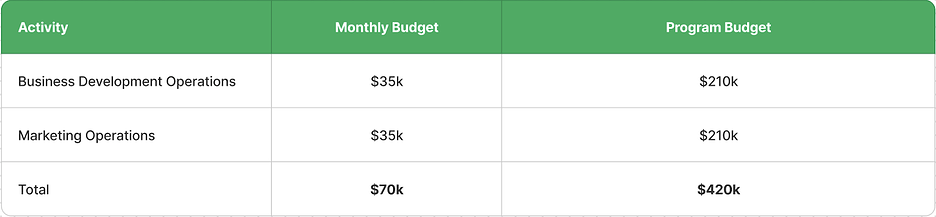Note: If the images aren't loading, please refer to the forums.
Funds will be sent to the Uniswap Accountability Committee. $420k will be then sent to AlphaGrowth. For the UEII, since we do not know exactly how much in grants we can secure for the DAO, a $500k “reserve” has been set side for the UEII success fee. This “reserve” will be held in the separate DAO trusted entity (UAC), and the UAC will NOT send funds for the UEII until grants and incentives have been sourced for the DAO. This should reduce governance overhead from having to vote in funding each time and ALL remaining “reserve” funds after the 6 month trial period will be returned to the DAO.
A forum thread updating the community on each UEII sourced grant and distribution/program specifics will be created and continuously updated.
UNI Price at vote: $7.49
sendMessage(address,bytes,uint32)setRewardConfig(address,address)# Initialize cAEROv3 on Base network
## Proposal summary
Compound Growth Program [AlphaGrowth] proposes the deployment of Compound III to the Base network. This proposal takes the governance steps recommended and necessary to initialize a Compound III AERO market on Base; upon execution, cAEROv3 will be ready for use. Simulations have confirmed the market’s readiness, as much as possible, using the [Comet scenario suite](https://github.com/compound-finance/comet/tree/main/scenario). The new parameters include setting the risk parameters based off of the [recommendations from Gauntlet](https://www.comp.xyz/t/gauntlet-base-aero-comet-recommendations/5790).
Further detailed information can be found on the corresponding [proposal pull request](https://github.com/compound-finance/comet/pull/937), [deploy market GitHub action run](https://github.com/woof-software/comet/actions/runs/11259792818) and [forum discussion](https://www.comp.xyz/t/gauntlet-base-aero-comet-recommendations/5790).
## Proposal Actions
The first proposal action sets the CometFactory for the new Comet instance in the existing Configurator.
The second action configures the Comet instance in the Configurator.
The third action deploys an instance of the newly configured factory and upgrades the Comet instance to use that implementation.
The fourth action configures the existing rewards contract for the newly deployed Comet instance.
TODO: Seed reserves.
The sixth action updates the ENS TXT record `v3-official-markets` on `v3-additional-grants.compound-community-licenses.eth`, updating the official markets JSON to include the new Ethereum Mainnet cwstETHv3 market.
# Add rswETH as collateral into cWETHv3 on Mainnet
## Proposal summary
Compound Growth Program [AlphaGrowth] proposes to add rswETH into cWETHv3 on Ethereum network. This proposal takes the governance steps recommended and necessary to update a Compound III WETH market on Ethereum. Simulations have confirmed the market’s readiness, as much as possible, using the [Comet scenario suite](https://github.com/compound-finance/comet/tree/main/scenario). The new parameters include setting the risk parameters based on the [recommendations from Gauntlet](https://www.comp.xyz/t/add-rsweth-as-collateral-to-eth-market-on-mainnet/5308/3).
Further detailed information can be found on the corresponding [proposal pull request](https://github.com/compound-finance/comet/pull/885) and [forum discussion](https://www.comp.xyz/t/add-rsweth-as-collateral-to-eth-market-on-mainnet/5308).
## Proposal Actions
The first proposal action adds rswETH asset as collateral with corresponding configurations.
The second action deploys and upgrades Comet to a new version.
# Add cbBTC as collateral into cUSDTv3 on Ethereum
## Proposal summary
Compound Growth Program [AlphaGrowth] proposes to add cbBTC into cUSDTv3 on Ethereum network. This proposal takes the governance steps recommended and necessary to update a Compound III USDT market on Ethereum. Simulations have confirmed the market’s readiness, as much as possible, using the [Comet scenario suite](https://github.com/compound-finance/comet/tree/main/scenario). The new parameters include setting the risk parameters based off of the [recommendations from Gauntlet](https://www.comp.xyz/t/add-collateral-cbbtc-to-weth-market-on-base-and-mainnet/5689/2).
Further detailed information can be found on the corresponding [proposal pull request](https://github.com/compound-finance/comet/pull/922) and [forum discussion](https://www.comp.xyz/t/add-collateral-cbbtc-to-weth-market-on-base-and-mainnet/5689).
## Proposal Actions
The first proposal action adds cbBTC asset as collateral with corresponding configurations.
The second action deploys and upgrades Comet to a new version.
# Uniswap Accountability S3 Renewal and Rebalance
# Summary 
This vote combines the snapshot budget approval for the Uniswap Accountability Renewal (UAC) Season 3, Approved Budget Rebalance, and extra 16th delegate cycle 2 spot for Argonaut and Tane.
UAC S3: 37,038 UNI ($242,600 @ $6.55/UNI)
Budget Rebalance: 42,060 UNI
Adding 16th Delegate Rewards Spot: 5,496 UNI ($36,000 @ $6.55/UNI)
Total: 84,594 UNI will be sent to the UAC wallet at this address: 0x3B59C6d0034490093460787566dc5D6cE17F2f9C
## Descriptions
**UAC Renewal S3**
For the full proposal, please see [this forum post](https://gov.uniswap.org/t/uniswap-accountability-committee-uac-season-2-report/24492).
The UAC has ramped up contributions in its current iteration, demanding more hours from members than in the past. Collectively, with our new much expanded scope, we have contributed more than originally expected, which was the limited 10 hours/month per member. In total over 6.5 months, committee members have worked 359 hours, 99 hours more than the expected 260 hours for this time frame. Note that the extra hours have not been paid out. Today, the scope of the UAC can broadly relate to DAO operations, program oversight, and protocol growth–the specifics of these categories will continue to evolve to meet the needs of the DAO.
Going forward, we propose a few key areas of focus for the committee:
* Proposing new incentive programs, including a potential exploration into Protocol Owned Liquidity and other forms of growth beyond mere incentives
* Administering an operational framework for the Uniswap DAO to best sustain efficiency with ever increasing programs and working groups
* Continuing our role as an escrow service for DAO-funded programs
* Polishing our accounting and record-keeping to improve reporting
* Exploring and implementing growth programs related to Uni v4
To accommodate this expanded focus, we propose the following next steps to operationalize the committee going forward:
* Add an additional member (going from 4 to 5 members) to increase work capacity and multisig security
* Increase the maximum hours per member from 10 hours/month to 30 hours/month
* Institute a staggered election system to retain three current members on the committee–this helps retain momentum and continuity with existing projects. We believe a degree of stickiness with the UAC team is important since conducting the noted operations requires subject matter expertise and familiarity with the DAO.
* Going forward, the UAC will internally hold a vote to decide which of the ⅖ members will be up for reelection–that is, if two members don’t resign by default
* For this election, @0xpibblez has stepped down, so there are automatically 2 available seats for the Season 3 election
* Approve the $32.6k of wages payable to accommodate for Season 2 overtime
* Fund the committee with an additional $210,000 of $UNI for payroll through March 2025 (this assumes that all 5 members spend 30 hours per month for all 7 months, given the $200/hour rate)
*Note: The UAGP is funding legal research into an entity structure that would be suitable for the UAC. This would, among other aspects, allow the committee to sign incentive matching agreements with protocols to which Uniswap is being deployed. The introduction of a legal entity may change the dynamic of the UAC and its election setup as well.*
### Approved Budgets Rebalancing
For the full proposal, please see [this forum post](https://gov.uniswap.org/t/uniswap-accountability-committee-uac-season-2-report/24492).
Fluctuations in the UNI token price means that the accounts for various programs become unbalanced–sometimes at a surplus and other times at a deficit. Since programs are almost always budgeted in terms of dollars, we are looking to top up those balances to ensure liabilities around sustaining elected DAO programs are covered. This temperature check associated with rebalancing is being run separately from the UAC Season 3 renewal vote–the vote will request 42,060 UNI.
Further details on the request and breakdown of budgets can be found at the forum linked above.
### Uniswap Delegate Race Tiebreaker
Upon conclusion of the cycle 2 for delegate rewards, two candidates were incredibly close for the last 15th spot. More information and rational can be found on this [forum post](https://gov.uniswap.org/t/uniswap-delegate-reward-initiative-cycle-2-application/24434/34) regarding specifics of the tiebreaker.
The snapshot link is [here](https://snapshot.org/#/uniswapgovernance.eth/proposal/0x8eb2e8135cab63b0ff987dff2bda9b651f86bf6cc90336a9b11b92640e16405b).
# Compound Grants Program (CGP) Renewal
## Compound Grants Program (CGP) Renewal
### Summary
After successfully running Compound grants for the past 12 months, the Compound Grants team proposes to renew the proposal with a budget of $1.375M for another period of 12 months. The first two iterations ran from [<u>January to May 2023</u>](https://compound.finance/governance/proposals/136) and [<u>November 2023 to May 2024</u>](https://compound.finance/governance/proposals/189)
During the previous grant programs, our focus has been sourcing and funding high-quality proposals aligned with the domain-specific RFPs ratified by the Compound community. Moreover, we have received [<u>great feedback</u>](https://www.comp.xyz/t/cgp-2-0-updates-and-renewal/4518) from the community, builders, and domain allocators regarding renewing CGP and are grateful for their valuable input.
### Program Overview
During the Compound grants periods, we have also made sure to update the community [<u>every month</u>](https://www.comp.xyz/t/cgp-monthly-updates/4920) and over the community calls about the progress of Compound Grants. We also led [<u>Demo Days</u>](https://drive.google.com/file/d/1RrPPhR_wOEzgk9FSVexNwJezNNXiCCkR/view?pli=1) to showcase the grantee projects with the community.
In our efforts to fund only the most impactful projects that align with Compound’s RFPs, we have strongly emphasized the quality of the proposals received. As a result of this increased selectivity and focus on excellence, our proposal acceptance rate has decreased by half compared to previous iterations of the grants program.
Overall, we received 92 proposals over two quarters and accepted 23, with an acceptance rate of 25%. The CGP team allocated ~$489,000 and disbursed $249,000 to projects from both iterations. A summary of the previous iteration and the details of funded proposals can be found below.
A detailed overview of each accepted proposal across both iterations can be viewed [<u>here</u>](https://docs.google.com/spreadsheets/d/11nTml9tB-88mfwj0P98frKqQTrHSFVZcG4LWcRfO228/edit?usp=sharing).
P.S: We are not optimizing for the quantity of the proposals or the higher acceptance rate, but optimizing for the quality of the proposals in the grants program. On the same lines we’re also launching the Questbook builder profile feature on Questbook, where you could verify developer credentials.
### Wins and Impact of Funded Proposals
[<u>Perps on top of Compound v3</u>](https://questbook.app/dashboard/?chainId=10\&grantId=0xeb047900b28a9f90f3c0e65768b23e7542a65163\&role=community\&proposalId=0x61d\&isRenderingProposalBody=true)
[<u>https://contango.xyz/</u>](https://contango.xyz/)
[<u>@Contango\_xyz</u>](https://twitter.com/contango_xyz)
Integration with Comet enables Compound markets to be a liquidity source for traders using leverage on Contango. Since the integration was shipped, there has been over $3m in volume, and there is currently an open interest of over $500k, with Arbitrum being the most used chain.
Overall data on Contango can be found [<u>here</u>](https://dune.com/contango_xyz/contango-v2).
[<u>Understanding & Improving the Governance Participation at Compound</u>](https://questbook.app/dashboard/?chainId=10\&grantId=0xeb047900b28a9f90f3c0e65768b23e7542a65163\&role=community\&proposalId=0x315\&isRenderingProposalBody=true)
[<u>https://deepdao.io/</u>](https://deepdao.io/)
[<u>@DeepDAO\_io</u>](https://twitter.com/DeepDAO_io)
DeepDAO delivered a thirteen-page report analyzing governance participation within the Compound DAO. TLDR: Much work remains to improve voter participation within the Compound community, and DeepDAO offers some recommendations on targeting missing voters, voters from previous years, incentivization programs, education grants, and more.
Full Report [<u>here</u>](https://docs.google.com/document/d/1o3mO1zOT3mmIkfVVCE9HaQ6MR1ASe08phc1GnM13L1k/edit#heading=h.eknno6jg1yfa)
[<u>Economic Risk Simulation Engine for Compound v3</u>](https://questbook.app/dashboard/?grantId=0xeb047900b28a9f90f3c0e65768b23e7542a65163\&proposalId=65c6d4b4f27e2e1702d17a72\&role=community\&chainId=10\&isRenderingProposalBody=true)
[<u>https://www.chainrisk.cloud/</u>](https://www.chainrisk.cloud/)
[<u>@chain\_risk</u>](http://twitter.com/chain_risk)
The Chainrisk team has been developing a realistic testing environment to simulate a variety of risks (Liquidation, Counterparty, Oracle, etc.) to Compound in one engine with low latency, high throughput, and high fidelity. Users can choose whatever inputs they want, and the engine will return a detailed analysis of the scenario and its impact on Compound.
[<u>Compound v3 Multi-chain User Portfolio Tracker</u>](https://questbook.app/dashboard/?grantId=0xeb047900b28a9f90f3c0e65768b23e7542a65163\&proposalId=0x5c7\&role=community\&chainId=10\&isRenderingProposalBody=true)
Paperclip Labs
[<u>@PaperclipLabs</u>](http://twitter.com/papercliplabs)
Paperclip Labs shipped a cool application that allows users to track and monitor their positions across all positions in Compound. Metrics include PnL, balances, weighted APR across all positions, and a list of all transactions. Users can also see more granular data related to specific positions, such as health factors, collateral breakdowns, etc.
Check it out [<u>here</u>](https://www.ollio.xyz/)
[<u>\[Improved Chain Technical Risk Checklist for New Market Proposals</u>](https://compoundgrants.questbook.app/dashboard/?proposalId=65ef4f5f8bf7331fd0ee022a\&grantId=0x291d6eb5de3b023ce9b760ef251b303c0c0fd11a\&chainId=10\&role=community\&isRenderingProposalBody=true)
[<u>https://defisafety.com/</u>](https://defisafety.com/)
[<u>@DefiSafety</u>](https://twitter.com/DefiSafety)
This proposal will incorporate Defisafety’s chainscore and Chainanalysis process into Compound’s multichain deployment checklist. Defisafety has already completed its first report on Linea, ZkSync, and Blast.
You can read all the checklists [<u>here</u>](https://www.comp.xyz/t/grant-result-cip-5-checklists-for-linea-zksync-blast-mode-network-and-celo/5290)
[<u>Bonadocs</u>](https://questbook.app/dashboard/?grantId=0x3b16764826f0baa77226327c7c0d7d53f8541913\&chainId=10\&role=community\&proposalId=0x5d3\&isRenderingProposalBody=true)
[<u>https://bonadocs.com/</u>](https://bonadocs.com/)
[<u>@bonadocs</u>](https://www.notion.so/cedoor-48c3da97f6604cc6805964d6cb071a29?pvs=21)
The Bonadocs grant streamlined Compound smart contract integration by implementing a custom widget allowing users to call Compound’s contract logic directly inside its documentation. This created a more seamless developer experience, as developers did not have to switch to etherscan or other tooling. Devs can query various functions inside the compound documentation and get a response. Bonadocs recently released an early version of the tool ([<u>demo</u>](https://drive.google.com/file/d/1q90u3L-4eAvnkjp7K3gBNsAz24Y2VZlV/edit))
[<u>Cross Chain Explorer</u>](https://questbook.app/dashboard/?proposalId=0x250\&role=community\&grantId=0xad96ce667e2a09311b439dbdcfcdefd2f98898df\&isRenderingProposalBody=true\&chainId=10)
[<u>https://chaoslabs.xyz/</u>](https://chaoslabs.xyz/)
[<u>@ChaosLabsXYZ</u>](https://twitter.com/ChaosLabsXYZ)
Chaos Labs delivered a multichain risk application for Compound to allow community members to monitor risk and market changes within the protocol. The application supports all EVM deployments. The application also includes a set of customized alerts based on certain trigger events that have significance to protocol utilization and risk (liquidity alerts, supply/borrow increases, risks of liquidation, etc.). The alerts are available via discord bots and the cross-chain notification center in the application.
You can try out the application [<u>here</u>](https://community.chaoslabs.xyz/compound/risk/alerts).
[<u>Compound Academy by Layer 3</u>](https://questbook.app/dashboard/?role=community\&proposalId=0x5f7\&grantId=0xeb047900b28a9f90f3c0e65768b23e7542a65163\&isRenderingProposalBody=true\&chainId=10)
[<u>https://app.layer3.xyz/quests</u>](https://app.layer3.xyz/quests)
[<u>@layer3xyz</u>](https://twitter.com/layer3xyz)
Layer 3 created a collection of quests and streaks to onboard, engage, and retain users on Compound. The grant funds went directly toward compensating the users who participated in the various quests and streaks on Layer 3. Each quest was divided into three stages, targeting three objectives: Onboard, Engage, and Retain. Initially targeting 30,000 participants, Layer3 received over 44,000 participants in the program. You can check out other Layer3 programs [<u>here</u>](https://app.layer3.xyz/quests).
[<u>Github Crawler for Compound</u>](https://www.questbook.app/dashboard/?isRenderingProposalBody=true\&proposalId=0x5de\&grantId=0xeb047900b28a9f90f3c0e65768b23e7542a65163\&chainId=10\&role=community)
[<u>@ElectricCapital</u>](https://twitter.com/electriccapital)
A GitHub crawler was developed for this project. The crawler utilizes Github’s API to identify and analyze projects that have integrated Compound. It uses metrics such as Compound API usage, NPM packages, and contract integrations and runs at monthly scheduled intervals. The crawler is live and has identified over 300 projects integrating the Compound stack.
You can check out the crawler [<u>here</u>](https://github.com/tolgayayci/ec-crawler-compound).
[<u>zkGraph & zkAutomation: Upgrading Indexing and Automating Liquidation</u>](https://questbook.app/dashboard/?chainId=10\&isRenderingProposalBody=true\&role=community\&grantId=0xeb047900b28a9f90f3c0e65768b23e7542a65163\&proposalId=0x336)
[<u>@HyperOracle</u>](https://twitter.com/HyperOracle)
Hyperoracle delivered a subgraph alternative for the indexing infrastructure of Compound smart contracts and its own implementation of a Compound protocol liquidation keeper.
### Learnings and Further Improvements
1. **Keeping the application process during the inactive period led to a longer application review pipeline.**
In the previous iteration of the Compound Grants Program, which concluded on June 30th, 2023, the application process remained open even after the program's conclusion. While our primary focus during this time was to gather input from the community, keeping the application process open resulted in a substantial backlog of proposals that needed to be reviewed when the program was renewed, often leading to longer review TATs. 
To address this issue, we closed the application process immediately upon the conclusion of the current iteration of the grants program on May 30th, 2024. By doing so, we aim to ensure a more efficient and streamlined review process for future grant proposals, allowing us to allocate our resources effectively and provide timely responses to applicants in the next iteration. 
2. **Minimizing the gap between milestone payout transaction queue and execution leads is essential to ensure price fluctuation in payouts.** 
While we have tried to minimize the time between initiating and executing the payout transactions for the completed milestones, there have been instances where proposers have yet to receive the exact amount initially committed due to fluctuations in the value of COMP and transaction execution delays. To mitigate this issue, the CGP team will execute the payout transactions as soon as the milestone transaction has been initiated. We're also arranging a weekly time that works for the domain allocators, during which we will actively collaborate with the CGP lead.
3. **Including the acceptance rationale for accepted proposals as part of the monthly reports**
In line with our commitment to transparency and community engagement, we have consistently provided monthly reports throughout the previous iteration. We will maintain this practice in the future to keep the community informed about the progress and developments within the Compound community. Furthermore, in response to feedback from several community members, we will introduce a dedicated section to provide additional insights into the rationale behind the acceptance of each proposal. By sharing the reasoning that led to the approval of specific proposals, we aim to offer the Compound community greater visibility and understanding of the decision-making process. The rationale for acceptance/rejection of each proposal is available on Questbook. 
4. **PGov as the domain allocator for DAO expenses.**
After thoughtful discussions and evaluation of proposals, we are pleased to announce that we have invited @PGov to serve as the Domain Allocator for the DAO Expenses domain. @PGov has expressed interest, and @cylon, our current DA, is supportive of this change. Without this update, Michael (@cylon) would need to serve as the DA for two domains, which we believe could benefit from more focused attention.Also, PGov has had relevant experience in this domain:
\- DeFi grants at Near and Aurora Protocols
\- Optimism Grants Council
\- Uniswap Accountability council (where he managed DAO expenses for working groups as well as made decisions on the deployment of UNI incentives for deployments)
\- etc.
5. **For proposals requesting greater than $25K up to $100K**
To ensure thorough evaluation, we propose implementing additional steps, such as requiring these projects to present their work to the broader community during a community developer call or through a forum post. This will allow for greater feedback and ensure that each case is carefully considered on its own merits. We believe this approach will encourage the development of larger, more complex infrastructure projects while maintaining transparency and community involvement.
### Proposal
We propose renewing the Compound grants program for the next iteration with a budget of $1.375 M for twelve months.
\- Extending the program to twelve months versus six will give the community enough time to evaluate the performance of the grants program, striking a better balance between managing program costs and meeting community expectations while allowing us to concentrate more on achieving better program outcomes. It also reduces the burden on voters by reducing the frequency of renewal votes from every five to every eleven months. It reduces the frequency of backlogging the waitlist when the program is active. Furthermore, since many grantees require several months to complete their projects, a longer program timeline would allow us to assess and showcase the program's impact on the Compound community more effectively.
\- Additionally, we suggest slight modifications to the program domains. Following detailed discussions with domain allocators and the community members, we've proposed merging the Dev Tooling domain with the New Ideas and Dapps domain due to the fewer applications received in the Dev Tooling domain. We also propose introducing a new domain named "DAO Expenses.” This domain will cover reimbursements for documented expenses personally incurred by DAO members on behalf of the DAO, for example, gas fees, operational costs for off-chain infrastructure, and maintenance expenses for long-term grant projects. We've set aside $75,000 in the program budget for these DAO expenses.
RFPs for each domain can be found here: 
1. New Dapps and Ideas merged with Developer Tooling 
2. Multi Chain and Cross-chain tooling 
3. Security Tooling 
4. DAO Expenses 
### Specifications and Implementation
We continue running the grants program using the [<u>Delegated Domain Capital Allocation Model</u>](https://compound.finance/governance/proposals/136) with minor changes. Each \*domain allocator\* will run their domain on-chain using Questbook for full transparency. The data and performance across key metrics will be visible to the community. Domain allocators can discretionally adjust funding amounts for KPI non-achievement.
The grant funds will be disbursed on-chain from a multi-signature wallet managed by the program manager and the domain allocator. The domain allocator will approve or reject applications based on an evaluation rubric. A Grants SAFE with a 3/5 multi-signature setup will be established, involving the program manager and four domain allocators. Additionally, four separate SAFEs, each with a 2/2 multi-signature between the program manager and a specific domain allocator, will be created for each domain. The grants program funds will be transferred from the treasury into the Grants SAFE, which will cover operational costs, committee compensation, and the grants budget. Funds allocated to the proposers will be held in the domain-level SAFEs.
After 12 months, the grants committee and the Compound community shall evaluate the performance of each domain using publicly available data and decide to change the domain, the domain allocator, or the program manager. CGP closed viewing new proposals on May 31st. Upon approval of this proposal, the CGP grants team will evaluate the milestones and initiate payouts for the remaining milestones to the accepted proposals from the allocated budget. Funds left over will be transferred back to Compound’s contract.
### KPIs and Expectations
**Program Success**
\- Multiple relevant proposals and at least one funded project for each of Compound’s RFPs
\- Increase in milestone and proposal completion rates
\- Increase in NPS score from all proposers and grantees
\- Lower response turnaround time to delegates’ and community’s queries
\- Diversity in projects being funded across technologies, geographies, demographics, etc. We encourage the community members to review the proposals across different domains during community calls regularly
\- Timely publishing of a comprehensive monthly grants report outlining the status, progress, and impact of the program, ensuring transparency and accountability
**Enhanced Community Involvement**
\- Increase in community engagement across:
- Discourse
- Discord, Telegram
- Social media (Twitter, Reddit)
\- Increase in the community members’ participation to keep domain allocators and program manager accountable (measured by the number of people looking at the dashboard and participating in the program)
**Brand Awareness**
\- Strengthened contributors’ sentiment and word of mouth towards Compound measured through frequent sentiment surveys/ polls to gauge satisfaction.
\- Enhanced Compound’s brand recognition and awareness within contributor circles through surveys or social media analytics, tracking mentions, reach, etc.
**Contribution of Funded Projects to Compound**
\- Number of users onboarded by the funded proposals onto their app/protocol
\- TVL (if applicable) of the selected proposals
\- Number of projects supplying/borrowing on Compound
\- Number of new interfaces for supplying/borrowing/governance interactions
\- Number of projects that have raised follow-on capital after getting a grant from CGP
**Domain Allocator Roles & Responsibilities**
\- All Domain Allocators and the Program Manager will continue to uphold their designated responsibilities as outlined in the [<u>CGP proposal</u>](https://www.comp.xyz/t/cgp-2-0-delegated-domain-allocation-by-questbook/3352/1#:~:text=Domain%20Allocator%20Roles%20%26%20Responsibilities%3A)
\- Domain allocators may request an audit for the considered/accepted proposals, particularly those that involve Solidity code being deployed into production and directly impacting Compound. To streamline the code auditing process and avoid potential time-consuming challenges, the domain allocators will assist with the considered/accepted proposals by offering code quality and design feedback.
\- Like previous CGP programs, the Program Manager will collaborate with the Compound Labs team and the elected domain allocators to maintain an updated list of RFPs to ensure alignment with Compound’s priorities and roadmap.
### Product Improvements
During the last iteration of CGP, we made the following enhancements to Questbook. Based on the feedback received from the Compound community members, proposers, and domain allocators, we will continue to improve.
1. Status of each proposal on Questbook: Community members can now view the status (complete, in-progress, or inactive) of every grant proposal accepted in the current and previous iteration at [<u>https://compoundgrants.questbook.app/</u>](https://compoundgrants.questbook.app/)
2. Adding images to the comments section on Questbook: All stakeholders can post images in the comments section while discussing the proposed proposal on [<u>Questbook</u>](https://questbook.app/)
3. Edit and resubmit the existing proposal: All proposers can now edit and resubmit their updated proposals upon resubmit request from domain allocators without the need to submit an entirely new proposal under a different name.
4. Tags for each milestone payout: Community members can now view tags indicating the payout for each milestone on [<u>Questbook</u>](https://questbook.app/) as soon as a milestone has been paid out.
5. Dedicated CGP landing page: Community members can also view comprehensive details related to the current and previous iterations of CGP through a dedicated Compound Grants [<u>landing page</u>](https://compoundgrants.questbook.app/)
6. Questbook Builder Profile: We are introducing a Questbook Builder Profile that will deeply connect to the builders’ credentials.
### Budget Requested and Breakdown
We propose to renew CGP with a budget of $1.375 M for twelve months. This budget will be allocated as follows:
1. New Dapps and Ideas: $800k
2. Security Tooling Domain: $150k
3. DAO Expenses Domain: $75k
4. Multichain and Cross Chain Domain : $100k
Grants budget that will be allocated: $1.125M
**Program Manager & Domain Allocator Compensation**
Based on what we learned from the last iteration of CGP, a program manager and domain allocator are expected to dedicate approximately 15 and 12 hours per week, respectively. However, the time commitments may vary depending on the number of proposals received for a domain and the nature of the domain. Moreover, the domain allocators may exceed or work less than the hours committed per week based on the proposal volumes. We propose that the hourly price be the same for the Domain Allocators and the Program Manager, as in the case of the last iteration of CGP. 
Note:
1. The above figures ([forums](https://www.comp.xyz/t/compound-grants-program-renewal/5595/19)) are calculated based on the assumption of 48 working weeks in a year.
2. Questbook will provide the grants committee its grants orchestration tool at a cost of $5000 per month.
**About Questbook**
* Questbook (YC-W21) is a decentralized grant orchestration tool currently being/previously used by Arbitrum, Solana, TON, Aleph Zero, ENS, Alchemix, Axelar, etc.
* Considering CGP's achievements and the time commitment and operational expertise necessary for running an effective grants program, Questbook will continue as the Program Manager.
**Proposal**
The $1.375m will entirely in COMP.
* $1.375m COMP @ $41.50 => 33133 COMP
sendMessage(address,bytes,uint32)# Add wrsETH as collateral into cWETHv3 on Optimism
## Proposal summary
Compound Growth Program [AlphaGrowth] proposes to add wrsETH into cWETHv3 on Optimism network. This proposal takes the governance steps recommended and necessary to update a Compound III WETH market on Optimism. Simulations have confirmed the market’s readiness, as much as possible, using the [Comet scenario suite](https://github.com/compound-finance/comet/tree/main/scenario). The new parameters include setting the risk parameters based off of the [recommendations from Gauntlet](https://www.comp.xyz/t/add-rseth-as-collateral-on-arbitrum-and-wrseth-as-collateral-on-optimism-base-and-scroll/5445/5).
Further detailed information can be found on the corresponding [proposal pull request](https://github.com/compound-finance/comet/pull/913) and [forum discussion](https://www.comp.xyz/t/add-rseth-as-collateral-on-arbitrum-and-wrseth-as-collateral-on-optimism-base-and-scroll/5445).
## Proposal Actions
The first proposal action adds wrsETH to the WETH Comet on Optimism. This sends the encoded `addAsset` and `deployAndUpgradeTo` calls across the bridge to the governance receiver on Optimism.
# Finalize Delegate Race (Cycle 1)
## Summary:
The Compound Governance Support Working Group (GSWG) introduced the DAO’s first delegate race in July to increase the robustness of the DAO’s delegate base. This onchian proposal is the final step for ratifying delegation to the 8 entities/individuals that received the highest number of points during the application process. If this proposal passes, 8 Franchiser contracts will be created by the already deployed and audited FranchiserFactory contract, ownership of the FranchiserFactory will be set to the timelock, and each individual Franchiser will allocate the appropriate amount of voting power to the delegates’ addresses. A total of 250k COMP will be delegated from the Comptroller to the elected delegates. This vote also includes 50k COMP in delegation to Alpha Growth since their team did not receive delegation from a previously passed proposal due to a lack of the stated Franchiser infrastructure. Hence, the total number of Franchisers will amount to 9, and the delegated COMP will amount to 300k.
## Proposal Motivation:
Despite Compound being one of the most prominent DeFi protocols, this stature unfortunately does not translate into active governance participation. Many top delegates with considerable voting power have less than 50% vote participation rate–and many even sit under 10%. In healthy governance environments, proactive delegates wield significant voting power, ensuring malicious votes are prevented and quorum requirements are met. This is especially vital for lending markets with a high degree of reliance on governance, requiring delegates to be consistently available, often voting on numerous proposals over the course of a single week. The recent governance attack also illustrated the importance of allocating more voting power to community-trusted delegates.
Most DAOs have dormant native tokens present in their treasury. If these native tokens aren’t already being allocated to active initiatives, they can be put to good use elsewhere. There is minimal risk to setting aside a pocket of these dormant funds to ensure better governance participation in a manner where governance can recall the tokens back to the community treasury. The most straightforward means by which these tokens can be mobilized is by delegating a portion of them to either existing or new delegates.
For sourcing the votes, we can reference Compound’s [Comptroller](https://etherscan.io/address/0x3d9819210a31b4961b30ef54be2aed79b9c9cd3b):
- Address: 0x3d9819210A31b4961b30EF54bE2aeD79B9c9Cd3B
- As of August 20, 2024 the address held 1,578,587.6 COMP tokens
- Dormant capital from this address can be mobilized for delegation
It is important to establish a structure that will enable the DAO to sustain control and ownership of these funds, however. In other words, if the DAO would like to clawback funds at any point, either to use the tokens for alternative purposes, or to rescind a particular wallet’s voting power, it should be able to do so seamlessly. The advantage of this setup is that the DAO’s COMP tokens never leave the community’s control and can be relocated when needed at any time.
## More details on the implementation:
This proposal will delegate voting power to the 8 applicants using the deployed [FranchiserFactory](https://etherscan.io/address/0xE696d89f4F378772f437F01FaaD70240abdf1854), which is responsible for creating Franchiser contracts. The Franchiser contracts have already been [audited by OpenZeppelin](https://forum.arbitrum.foundation/t/event-horizon-franchiser-contract-audit/25738). Individual Franchiser contracts are used to delegate COMP tokens to noted addresses, and the FranchiserFactory has the ability to clawback the voting power if it decides. Ownership of the FranchiserFactory will be given to the Compound timelock, effectively enabling the DAO to give or take voting power from elected delegates. Hence, revoking voting power once it has been granted to the given addresses requires a typical onchain governance vote.
## Delegate Race Outcome:
The GSWG created a [points system](https://www.comp.xyz/t/compound-delegate-race/5460) to decide how points would be given to delegates. This setup weighted heavily on a wallet’s voting participation rate–and also rewarded those who authored and sponsored previous proposals, as well as attended community calls. A week-long [application process](https://www.comp.xyz/t/compound-delegate-race-application/5521) followed, with 18 groups and individuals applying for delegation. Up to 50k COMP delegation for each applicant was given–unless that address hit 80k COMP in total delegation, at which point, the upper threshold for voting power was capped. This process was conducted until the 250l allocation was fully used. There was a tie breaker between four candidates, and votes were allocated based on which candidate had the oldest active delegate address.
Below are the final candidates, along with their assigned votes and voting addresses.
### Candidate: PGov
- Points Scored: 10
- Assigned Votes: 34,450.00
- Voting Power Final: 80,000.00
- Address: 0x3FB19771947072629C8EEE7995a2eF23B72d4C8A
### Candidate: Franklin DAO
- Points Scored: 9
- Assigned Votes: 9,999.76
- Voting Power Final: 80,000.00
- Address: 0x070341aA5Ed571f0FB2c4a5641409B1A46b4961b
### Candidate: Arana Digital
- Points Scored: 9
- Assigned Votes: 50,000.00
- Voting Power Final: 50,001.00
- Address: 0x0579A616689f7ed748dC07692A3F150D44b0CA09
### Candidate: Michigan Blockchain
- Points Scored: 8
- Assigned Votes: 29,999.88
- Voting Power Final: 80,000.00
- Address: 0x13BDaE8c5F0fC40231F0E6A4ad70196F59138548
### Candidate: Allthecolors
- Points Scored: 6
- Assigned Votes: 44,371.81
- Voting Power Final: 80,000.00
- Address: 0x66cD62c6F8A4BB0Cd8720488BCBd1A6221B765F9
### Candidate: Avantgarde Finance
- Points Scored: 6
- Assigned Votes: 29,999.85
- Voting Power Final: 80,000.00
- Address: 0xB49f8b8613bE240213C1827e2E576044fFEC7948
### Candidate: Event Horizon
- Points Scored: 6
- Assigned Votes: 50,000.00
- Voting Power Final: 54,588.74
- Address: 0xb35659cbac913D5E4119F2Af47fD490A45e2c826
### Candidate: Sharp
- Points Scored: 6
- Assigned Votes: 1,178.70
- Voting Power Final: 1,190.67
- Address: 0x72C58877ef744b86F6ef416a3bE26Ec19d587708
createRetryableTicket(address,uint256,uint256,address,address,uint256,uint256,bytes)deployAndUpgradeTo(address,address)# Add ezETH as collateral into cWETHv3 on Arbitrum
## Proposal summary
Compound Growth Program [AlphaGrowth] proposes to add ezETH into cWETHv3 on Arbitrum network. This proposal takes the governance steps recommended and necessary to update a Compound III WETH market on Arbitrum. Simulations have confirmed the market’s readiness, as much as possible, using the [Comet scenario suite](https://github.com/compound-finance/comet/tree/main/scenario). The new parameters include setting the risk parameters based off of the [recommendations from Gauntlet](https://www.comp.xyz/t/gauntlet-wsteth-and-ezeth-asset-listing/5404/11).
Further detailed information can be found on the corresponding [proposal pull request](https://github.com/compound-finance/comet/pull/907) and [forum discussion](https://www.comp.xyz/t/gauntlet-wsteth-and-ezeth-asset-listing/5404).
## Proposal Actions
The first proposal action adds ezETH to the WETH Comet on Arbitrum. This sends the encoded `addAsset` and `deployAndUpgradeTo` calls across the bridge to the governance receiver on Arbitrum.
# Add Proposal Guardian to Governor Bravo
## Summary
We propose to seek implementation of the community multisig to be used as a guardian for Compound Governance. The goal of this Proposal Guardian is to act as a last defense against any malicious governance votes in the future. Additionally, we propose a few future changes to the Compound Governor contract to be more robust in the future.
## Proposal Guardian
The Proposal Guardian would initially consist of the Community Multi-sig ([0xbbf3f1421D886E9b2c5D716B5192aC998af2012c](https://etherscan.io/address/0xbbf3f1421D886E9b2c5D716B5192aC998af2012c)), a 4/8 multi-sig composed of trusted Compound DAO community members ([here](https://www.comp.xyz/t/community-multisig-4-of-6-deployment/134/18)) which has been functioning as the Pause Guardian for the majority of Compound’s existence. This Proposal Guardian role should only be able to veto a proposal that has passed a majority vote and is awaiting execution. We have established this set of rules for when the Proposal Guardian is able to choose to move forward with a veto:
1. Users’ funds deposited into the protocol might be infringed or at risk by a proposal passing
2. If a vote has been controlled by a single entity or a proposal will result in a single entity taking effective control of the DAO
3. When necessary to coordinate pausing protocol functionality during urgent security emergencies to protect the protocol and user funds.
4. Serious considerations will be made when votes having received at least 400K “NO” votes still pass.
Update: Based on community feedback, the Proposal Guardian role will automatically expire to ensure that the Community Multi-sig cannot use its veto power to remain in-place indefinitely. The initial expiration period will be set to 6 months and require another governance proposal to renew. The additional changes are currently underway and will be ready to share and include in the on-chain proposal and forum post by this Friday.
## Technical Implementation
@Arr00 has completed technical work and OpenZeppelin has reviewed the changes to implement the Guardian changes in [PR16](https://github.com/compound-finance/compound-governance/pull/16). It introduces a new `proposalGuardian` role that can call the `cancel` function on any proposal and a `_setProposalGuardian` function to set the role. The PR also includes simulation tests to ensure the changes work as expected on-chain.
Please note that the [compound-governance repo](https://github.com/compound-finance/compound-governance) being used as the base for this upgrade was previously [audited by OpenZeppelin](https://github.com/compound-finance/compound-governance/blob/main/audit/OZ-Sept-23.pdf) as a new source for Compound governance with dedicated testing and coverage. It also introduces the ability to vote with reason and propose by signature.
## Timeline
Given the nature and sensitivity of this proposal, we will be moving forward in an accelerated timeline. The proposal will be discussed on the Community Call this week on Aug 7th and shared privately with all major identified delegates to collect final feedback. The proposal will then be published on the forums and submitted on-chain Friday, Aug 9th so that voting can begin early next week.
## Future
A full “Constitution” regarding when to get involved in veto votes will be drafted in the near future. Coupled with a concurrent new delegate race to get more Compound delegated and active in governance to trusted members of the DAO, this should set a new foundation for a more secure and active Compound governance!
Additionally, we propose exploring additional changes to Compound Governance to improve security and coordination in the future:
* Upgrade Compound Governor Bravo to use OpenZeppelin Governor that has more gas efficiency, security features and optional extensions. There is already a [CGP grant by ScopeLift](https://questbook.app/dashboard/?grantId=0xeb047900b28a9f90f3c0e65768b23e7542a65163\&chainId=10\&proposalId=664b6f438d3dfee9013f4a38\&isRenderingProposalBody=true) working on delivering this.
* Late Quorum Voting Period: If last minute votes change the outcome of a vote, additional time will be added on to the voting period to allow for more delegates to review and finalize decisions. A [Late Qurum Prevention extension](https://github.com/OpenZeppelin/openzeppelin-contracts/blob/master/contracts/governance/extensions/GovernorPreventLateQuorum.sol) is already available in OpenZeppelin Governor.
* Adaptable Voting Quorum: Quorum can increase based on the amount of delegated COMP once a proposal shifts from "review --> voting". If not technically feasible to automate on-chain, this could also be achieved by regularly adjusting the quorum threshold based on the current number of delegated COMP.
* Delegation Rights for COMP Staking Product: Ensure that the [Compound Staking Product](https://www.comp.xyz/t/alphagrowth-stake-compound-product/5478?u=cylon) proposed by the Compound Growth Program preserves delegation rights and helps to further align COMP token holder incentives with responsible governance participation. This is already referenced as a requirement in the recent [Staked COMP Design forum post](https://www.comp.xyz/t/potential-design-of-staked-comp/5526).
## Compound Governance Proposal Guardian Audit
OpenZeppelin, in its role as Security Partner to the Compound DAO, audited the changes to include a Proposal Guardian into the Governance contracts proposed by @PGov and developed by @arr00.
### Summary:
Aug 7th - Aug 9, 2024
Total Issues: 2 (1 resolved)
Notes & Additional Information: 1 (1 resolved)
### Scope
We audited the [compound-governance](https://github.com/compound-finance/compound-governance) repository at [commit e3b36ad](https://github.com/compound-finance/compound-governance/tree/e3b36ad5b4e23022921fa077d657182f9340b203) with a focus on the [differences](https://github.com/compound-finance/compound-governance/compare/c96570375f6696baa576f760642d55ab28aa7340...e3b36ad5b4e23022921fa077d657182f9340b203) since our [last audit](https://github.com/compound-finance/compound-governance/blob/e3b36ad5b4e23022921fa077d657182f9340b203/audit/OZ-Sept-23.pdf).
After the initial report, we were asked to also audit the updates to the repository at commit [84dff8d](https://github.com/compound-finance/compound-governance/tree/84dff8dca36052a4981793e86f000627c148bd12), introducing expiration for the `proposalGuardian`.
In scope were the following files:
```
contracts
├── GovernorBravoDelegate.sol
└── GovernorBravoInterfaces.sol
```
### System Overview
Compound Governance is the main protocol used by holders and delegates of COMP to govern Compound II and III. It gives them the power to propose, vote, and implement changes to both active Compound protocols. The governance system has control over several systems across the protocol such as each proxy, the `Configurator`, Comet factory, and `Comet`.
When a proposal to update any system parameters succeeds, the `Timelock` will call all of the relevant methods on the `Configurator` contract. For Compound III this process is followed by invoking the `deployAndUpgradeTo` method on the `CometProxyAdmin` contract, which then points to the new implementation upon execution.
In this audit, we focused on the new role of the `proposalGuardian` and the modifications made to the logic of the `cancel` function. The holder of this role will be allowed to cancel any proposal as if they were the proposer themselves. Apart from this update, no other no other significant alterations were made to the `cancel` function that would impact its execution.
In the second part of the audit, our focus remained on the `proposalGuardian` role, specifically examining the new logic introduced in the `_setProposalGuardian` function. This modification allows the guardian’s role to have an expiration, enabling a time-limited tenure for this position.
### Security Model and Trust Assumptions
The addition of a `proposalGuardian` with the power to cancel any proposal that has not yet been executed introduces important security considerations and trust assumptions that must be addressed to maintain the integrity of Compound's governance. To prevent misuse of this veto power and ensure the robustness of the protocol, the `proposalGuardian` must be a trusted entity without centralized control.
It is assumed that the `proposalGuardian` will be a reputable and accountable entity managed by a multisig of trusted community members, to distribute veto power and reduce the risk of malicious actions, such as canceling proposals beneficial to Compound, not vetoing dangerous proposals for the protocol, or vetoing proposals to change the `proposalGuardian`. Ensuring the `proposalGuardian` is correctly configured during deployment, regularly monitored, and assigned a strict expiration is crucial for maintaining its effectiveness.
Active community engagement and oversight are essential to ensure that the `proposalGuardian` aligns with the DAO's goals and acts in the community's best interests. This engagement allows the community to flag any misuse of power, enabling the DAO to propose replacing the `proposalGuardian` if necessary. It is worth noting that proposals to transfer the role to another account, while the current role is still active, can be vetoed by the current `proposalGuardian`.
<div style="page-break-after: always" />
### Low Severity
#### `_setProposalGuardian` Should Limit the Expiry
Currently [`_setProposalGuardian`](https://github.com/compound-finance/compound-governance/blob/84dff8dca36052a4981793e86f000627c148bd12/contracts/GovernorBravoDelegate.sol#L768-L784) has no restrictions on how long a `proposalGuardian` can hold their role. If `proposalGuardian` were to ever be compromised and can hold the role for the next 2 years, they would be able to veto all proposals until those 2 years are up. Although `_setProposalGuardian` is set by governance and to a trusted multisig, we believe it would be more secure validating the expiry to be within reasonable limits, including that the `expiration` is in the future.
Consider adding a restriction to `_setProposalGuardian` that would check that `newProposalGuardian.expiration` is in the future and within reasonable limits, for example less than or equal to 6 months.
***Update:** Acknowledged, not resolved. @cylon stated:*
> This is a reasonable change but given the time sensitivity of getting this upgrade completed, I think its better to proceed without addressing it. The proposal performing this upgrade will be setting the initial timestamp expiry and can be scrutinized by governance to ensure it is no longer than 6 months and is set in the future. This issue can then be addressed in the code itself by the upgrade to OpenZeppelin Governor by the ScopeLift team.
### Notes & Additional Information
#### Incomplete Function Documentation and Comments
The function [`cancel`](https://github.com/compound-finance/compound-governance/blob/e3b36ad5b4e23022921fa077d657182f9340b203/contracts/GovernorBravoDelegate.sol#L370-L410) has been updated to allow cancellation of yet-to-be-executed proposals under the following conditions:
* the sender is the `proposal.proposer`
* the sender is the `proposalGuardian`
* the `proposal.proposer` is not whitelisted and the proposer votes are below the `proposalThreshold`
* the `proposal.proposer` is whitelisted, the proposer votes are below the `proposalThreshold` and the sender is the `whitelistGuardian`
However, the function's `notice` docstring, as well as the inline comments, are not updated to reflect the introduction of a `proposalGuardian`.
We recommend the following updates:
1. `notice` docstring: Updated the `notice` docstring to include that the function cancels a proposal if the sender is the proposer or the `proposalGuardian`.
2. [Line 382](https://github.com/compound-finance/compound-governance//blob/e3b36ad5b4e23022921fa077d657182f9340b203/contracts/GovernorBravoDelegate.sol#L382-L382) Comment: Updated the comment on [line 382](https://github.com/compound-finance/compound-governance//blob/e3b36ad5b4e23022921fa077d657182f9340b203/contracts/GovernorBravoDelegate.sol#L382-L382) to highlight that the `proposalGuardian` can cancel any proposal,
3. [Line 389](https://github.com/compound-finance/compound-governance//blob/e3b36ad5b4e23022921fa077d657182f9340b203/contracts/GovernorBravoDelegate.sol#L389-L389) Comment: Updated the comment on [line 389](https://github.com/compound-finance/compound-governance//blob/e3b36ad5b4e23022921fa077d657182f9340b203/contracts/GovernorBravoDelegate.sol#L389-L389) to explicitly state that only the `whitelistGuardian` can cancel a proposal by a whitelisted proposer if it falls below the proposal threshold.
***Update:** Resolved in* [commit 8340937](https://github.com/compound-finance/compound-governance/blob/83409378e25d78dfb2cdbc98f8c97bdec166b173/contracts/GovernorBravoDelegate.sol#L374-L396)*.*
### Conclusion
The new addition of the proposal guardian to the Compound Governance contracts is minimally invasive and has been effectively implemented. However, this role carries substantial privileges, notably the ability to cancel proposals, including those that involve transferring the role itself to another account. Caution should be exercised in assigning this role and determining its duration. To bolster the long-term robustness and resilience of the protocol and to safeguard its decentralization, it is crucial to continue exploring more long-term solutions.
### [Forum Post](https://www.comp.xyz/t/compound-governance-proposal-guardian/5544)
# Onboarding Package for Gnosis Chain
# Uniswap Onboarding Package - Gnosis Chain
Outline
* Overview
* Motivation
* About Gnosis Chain
* Benefits to Uniswap
* Cost and Timeline
* Stakeholders
### Overview
Gnosis Chain is a community-owned, EVM-compatible network operated by a diverse set of 200k+ validators around the world. In the last two quarters (Q4 2023 and Q1 2024), Gnosis Chain experienced significant growth reaching over $300 Million in TVL. The DeFi sector added numerous established blue chip projects and now powers a vibrant ecosystem including Spark, Aave, Balancer, Curve, CoW Swap, 1inch and Connext among others.
Since Gnosis Chain’s focus on revolutionising the payments infrastructure to make decentralized financial tools accessible and usable for all, we feel it fitting for Uniswap to tap into the ecosystem.
This proposal requests a retroactive Onboarding Package for Gnosis Chain.
### Motivation
While already deployed on Gnosis Chain, Uniswap is not currently capitalizing on it. This proposal aims to change that.
One of the key areas of focus suggested by the Uniswap Deployments Accountability Committee to expand the Uniswap ecosystem is “Uniswap Revitalization and Growth”. In their recent work, a large emphasis is on revisiting some of the old deployments and proactively capturing first-mover advantage on promising new chains.
As Gnosis Chain experienced significant growth across Q4 2023 and Q1 2024, we believe the chain aligns perfectly with the scope of the Uniswap Revitalization and Growth initiative. Uniswap’s deployment on Gnosis Chain was completed in early 2022, hence Gnosis Chain was never a beneficiary of the “Onboarding Package” that is now included as a standard element of deployment proposals.
We believe there are synergies between Uniswap and Gnosis Chain as well as a strong potential for Gnosis Chain to generate high volumes and mobilize an influx of new users to Uniswap because of its focus on payments and financial tools.
As a comparison, Balancer processed over $590 Million in volumes YTD (end of May) on Gnosis Chain, making it the second-largest alternative EVM market for the DeFi protocol (similarly to Uniswap, Arbitrum is the first). Gnosis Chain has a larger positive impact on Balancer’s volumes than other more prominent networks like Polygon ($284M YTD) or Base ($80.8M YTD).
We believe that additional visibility and an incentive program would enable both Uniswap and Gnosis Chain to tap into their synergies resulting in positive growth on both ends.
### About Gnosis Chain
Gnosis Chain is a community-owned, EVM-compatible network operated by a diverse set of 200k+ validators around the world. It features fast transaction times (5 seconds) and low transaction fees (500 tx for $0.01) with the unique advantage of having a stable token as a base asset for transactions and gas fees.
One of the first Ethereum sidechains, Gnosis Chain’s core values are resilience and credible neutrality. By allowing contributors to easily run a node, Gnosis Chain created a community-owned, anti-fragile network secured by a geographically diverse validator set. Its strong culture of at-home stakers (not reliant on cloud providers or data centres) and its community governance ensure Gnosis Chain remains credibly neutral at a lower price point than Mainnet.
Gnosis Chain underpins the Gnosis collective of aligned projects revolutionising the payments infrastructure to make decentralised financial tools accessible and usable for all. The collective features established blue chip projects like Safe as well as prominent ones like Gnosis Pay and Monerium.
In the last two quarters (Q4 2023 and Q1 2024), Gnosis Chain experienced significant growth reaching over $300 Million in TVL. The DeFi sector added numerous established blue chip projects and now powers a vibrant ecosystem including Spark, Aave, Balancer, Curve, CoW Swap, 1inch and Connext among others.
### Benefits to Uniswap
The [Multichain Uniswap](https://blog.uniswap.org/multichain-uniswap) approach has proven successful with approx. [35% of trading volumes](https://tokenterminal.com/terminal/projects/uniswap) in the last 6 months come from non-Ethereum-Mainnet deployments.
Since Gnosis Chain’s focus on revolutionising the payments infrastructure to make decentralized financial tools accessible and usable for all, we feel it fitting for Uniswap to tap into the ecosystem. The potential for Uniswap to capture the inflow of new and existing users leveraging Gnosis Chain as a payments infrastructure is a promising opportunity for the project to reach a new audience.
Gnosis Chain underpins the Gnosis collective of aligned projects, building synergic services to Uniswap. Among those, Safe and Gnosis Pay. Safe Smart Accounts count 9.1 Million accounts deployed with $100B+ in total assets stored and VIP individuals (e.g. Vitalik) using them. Gnosis Pay is the world’s first on-chain spending account with a Visa Debit Card linked to a self-custodial blockchain wallet, connected with 80 Million merchants worldwide. Roll-out in Europe and the United Kingdom has already started, with upcoming new Countries including Brazil and Argentina. That is a combined population of approx. 1.45 Billion people.
Additionally, Gnosis Chain powers a growing DeFi sector with numerous blue chip projects added since Q4 2023. These include Aave, whose market on Gnosis Chain has grown rapidly since its launch 7 months ago and is now larger than the lending protocol’s markets on Base and Scroll (as of May 2024). sDAI (MakerDAO’s interest-earning DAI) accumulated over $68 Million TVL since October 2023. Focusing on the on-chain trading vertical, Balancer processed over $590 Million in volumes YTD (end of May) on Gnosis Chain, making it the second-largest alternative EVM market for the DeFi protocol (similarly to Uniswap, Arbitrum is the first). This means, Gnosis Chain has a larger positive impact on Balancer’s volumes than other more prominent networks like Polygon ($284M YTD) or Base ($80.8M YTD).
Based on the above and observing Uniswap’s performance across blockchains, we anticipate the protocol will replicate its success in capturing market share on Gnosis Chain.
### Bridges
Gnosis Chain is committed to providing easy and secure access to Ethereum L1 and other Layer 1 and Layer 2 ecosystems. For this reason, multiple bridging options are available to connect with Gnosis Chain.
The [Omnibridge](https://docs.gnosischain.com/bridges/About%20Token%20Bridges/omnibridge) is a native token bridge that connects Ethereum and Gnosis Chain (and vice-versa) by minting the canonical representation of bridged assets on Gnosis. The Omnibridge is built on top of the [Arbitrary Message Bridge (AMB)](https://docs.gnosischain.com/bridges/About%20Token%20Bridges/amb-bridge), a key bridge primitive that is used inside higher-order bridges like the Omnibridge and allows Gnosis contracts to send data and trigger contract functions on Ethereum and vice-versa. Therefore, the Omnibridge relies on the same trust models and group of [Trusted Bridge Validators](https://docs.gnosischain.com/bridges/management/validators#amb--omnibridge) as the AMB. Part of these validators is Succinct Lab’s zkSNARK-enabled Light Client, Telepathy. Telepathy is a key component of the AMB bridge ecosystem as it enhances security and reliability for cross-chain transactions by providing validity proofs via zkSNARKs that ensure trustless verification of transaction events across chains.
The [xDAI bridge](https://docs.gnosischain.com/bridges/About%20Token%20Bridges/xdai-bridge) is a native DAI bridge from Ethereum that is used to mint and burn xDAI, the native asset used for gas and transaction fees on Gnosis.
Gnosis has a long-term roadmap to move towards trustless bridges and is investing resources into trust-minimization of its bridges, to ensure trust and safety of users. [Hashi](https://crosschain-alliance.gitbook.io/hashi) is an EVM Hash Oracle Aggregator designed to enhance cross-chain bridge security by aggregating block headers from various sources. It supports 15+ General Message Passing bridges and ZK light clients, promoting redundancy and reducing reliance on single mechanisms. By requiring validation from multiple independent mechanisms, Hashi ensures greater resilience against security incidents. Gnosis plans to [gradually migrate](https://forum.gnosis.io/t/gip-93-should-gnosisdao-support-the-integration-of-hashi-within-gnosis-chains-canonical-bridges/8245) its canonical bridges to Hashi’s distributed trust model with the goal of strengthening security, decentralisation and interoperability.
Additionally, Gnosis Chain is supported within independent bridge solutions that enable the cross-chain connection with other Layer 1 and Layer 2 ecosystems. These include Jumper (provided by Li.Fi), Bungee, Hop, Connext, DLN (debridge), LayerZero, Chainlink CCIP and Wormhole.
Cost and Timeline
This proposal has passed the snapshot with $250k being the winning option. This is addition to the $105k Oku deployment and $21.6k Merkl integration fee. Given the price volatility of UNI recently, we will take a price of $5 per UNI, resulting in 75320 UNI.
Stakeholders
Proposal sponsor - [karpatkey](https://www.karpatkey.com/). karpatkey is a delegate both in the Uniswap DAO and in the Gnosis DAO. PGov is helping propose the vote on their behalf.
Deployer - The relevant smart contracts have already been deployed.
Target chain: Gnosis Chain by [GnosisDAO](https://www.gnosis.io/about)
createRetryableTicket(address,uint256,uint256,address,address,uint256,uint256,bytes)# Update Price Feeds on Arbitrum for LSTs
## Proposal summary
WOOF team suggests to update price feeds for LSTs on Arbitrum markets:
- wstETH on WETH Arbitrum market from market rate to exchange rate
- weETH on WETH Arbitrum market from market rate to exchange rate
- wstETH on USDT Arbitrum market from market rate to exchange rate
- wstETH on USDC Arbitrum market from market rate to exchange rate
Simulations have confirmed the market’s readiness, as much as possible, using the [Comet scenario suite](https://github.com/compound-finance/comet/tree/main/scenario). Further detailed information can be found on the corresponding [proposal pull request](https://github.com/compound-finance/comet/pull/903).
## Proposal Actions
The proposal contains only 1 action on Mainnet - send message to arbitrum. There are 7 actions on the Arbitrum side: four first ones are update price feeds and three last actions make comet update to new version.
sendMessage(address,bytes,uint32)# Add wstETH as collateral into cUSDTv3 on Optimism
## Proposal summary
Compound Growth Program [AlphaGrowth] proposes to add wstETH into cUSDTv3 on Optimism network. This proposal takes the governance steps recommended and necessary to update a Compound III USDT market on Optimism. Simulations have confirmed the market’s readiness, as much as possible, using the [Comet scenario suite](https://github.com/compound-finance/comet/tree/main/scenario). The new parameters include setting the risk parameters based off of the [recommendations from Gauntlet](https://www.comp.xyz/t/gauntlet-wsteth-listing-for-usdc-and-usdt-comet-on-optimism/5441/1).
Further detailed information can be found on the corresponding [proposal pull request](https://github.com/compound-finance/comet/pull/891) and [forum discussion](https://www.comp.xyz/t/gauntlet-wsteth-listing-for-usdc-and-usdt-comet-on-optimism/5441).
## Proposal Actions
The first proposal action adds wstETH to the USDT Comet on Optimism. This sends the encoded `addAsset` and `deployAndUpgradeTo` calls across the bridge to the governance receiver on Optimism.
createRetryableTicket(address,uint256,uint256,address,address,uint256,uint256,bytes)deployAndUpgradeTo(address,address)# Add wstETH as collateral into cUSDCv3 on Arbitrum
## Proposal summary
Compound Growth Program [AlphaGrowth] proposes to add wstETH into cUSDCv3 on Arbitrum network. This proposal takes the governance steps recommended and necessary to update a Compound III USDC market on Arbitrum. Simulations have confirmed the market’s readiness, as much as possible, using the [Comet scenario suite](https://github.com/compound-finance/comet/tree/main/scenario). The new parameters include setting the risk parameters based off of the [recommendations from Gauntlet](https://www.comp.xyz/t/gauntlet-wsteth-and-ezeth-asset-listing/5404).
Further detailed information can be found on the corresponding [proposal pull request](https://github.com/compound-finance/comet/pull/883) and [forum discussion](https://www.comp.xyz/t/temp-check-add-wsteth-as-a-collateral-on-base-eth-market-usdc-market-on-arbitrum-and-ethereum-mainnet/4867/).
## Proposal Actions
The first proposal action adds wstETH to the USDC Comet on Arbitrum. This sends the encoded `addAsset` and `deployAndUpgradeTo` calls across the bridge to the governance receiver on Arbitrum.
# Add ezETH as collateral into cWETHv3 on Mainnet
## Proposal summary
Compound Growth Program [AlphaGrowth] proposes to add ezETH into cWETHv3 on Ethereum network. This proposal takes the governance steps recommended and necessary to update a Compound III WETH market on Ethereum. Simulations have confirmed the market’s readiness, as much as possible, using the [Comet scenario suite](https://github.com/compound-finance/comet/tree/main/scenario). The new parameters include setting the risk parameters based off of the [recommendations from Gauntlet](https://www.comp.xyz/t/add-market-ezeth-on-eth-mainnet/5062/7).
Further detailed information can be found on the corresponding [proposal pull request](https://github.com/compound-finance/comet/pull/874) and [forum discussion](https://www.comp.xyz/t/add-market-ezeth-on-eth-mainnet/5062).
# [Yield Risk](https://www.comp.xyz/t/add-market-ezeth-on-eth-mainnet/5062/7#yield-risk-7)
Currently LRTs such as ezETH have elevated yields due to points program. EigenLayer maturity and AVS launch will cause yield shocks and consequentially elevate slippage magnitude and liquidity on DEXs. Gauntlet flags this potential risk to the community.
## Proposal Actions
The first proposal action adds ezETH asset as collateral with the corresponding configuration.
The second action deploys and upgrades Comet to a new version.
# Add osETH as collateral into cWETHv3 on Mainnet
## Proposal summary
Compound Growth Program [AlphaGrowth] proposes to add osETH into cWETHv3 on Ethereum network. This proposal takes the governance steps recommended and necessary to update a Compound III WETH market on Ethereum. Simulations have confirmed the market’s readiness, as much as possible, using the [Comet scenario suite](https://github.com/compound-finance/comet/tree/main/scenario). The new parameters include setting the risk parameters based on the [recommendations from Gauntlet osETH](https://www.comp.xyz/t/add-oseth-as-a-collateral-on-ethereum-mainnet/5272/2).
Further detailed information can be found on the corresponding [proposal pull request](https://github.com/compound-finance/comet/pull/871) and [forum discussion osETH](https://www.comp.xyz/t/add-oseth-as-a-collateral-on-ethereum-mainnet/5272).
## Price feed
Chainlink does not have osETH/ETH price feed on their website, however, Chainlink team ensured us that this address is the native exchange rate [price feed](https://etherscan.io/address/0x8023518b2192FB5384DAdc596765B3dD1cdFe471)
## Proposal Actions
The first action adds osETH asset as collateral with corresponding configurations.
The second action deploys and upgrades Comet to a new version.
# Uniswap Arbitrum LTIPP Matching
### TLDR:
* In April, the UADP submitted an application to participate in the Arbitrum LTIPP (long term incentive program pilot)
* We were able to receive 1,000,000 of ARB, the largest amount out of all other DEX applicants
* In our application, we stated that “the UADP will request the Uni DAO to decide whether or not it wants to partially match this 1.0M ARB ask. The options the DAO has to vote on are four: $250k, $500k, $750k, and $1M. We cannot guarantee that the DAO will vote to match incentives, but we will make a best-effort attempt and report the results of the temperature check”
* We will be collaborating with Gauntlet and Merkl to distribute the incentives (cost breakdowns are below)
* To those ends, we are running this temperature check to see if the DAO is interested in matching the given LTIPP grant to some capacity
### About the LTIPP Application
Uniswap did not apply to the first two rounds of Arbitrum incentives (STIP 1 & 2). This was for two reasons:
* Native DEXs and smaller protocols deserve a chance to make a name for themselves and perhaps offer unique protocols for trading
* We did not have a formal structure like the UADP to help facilitate an application
Since many native DEXs–and non-native ones–have already had the chance to apply for ARB incentives throughout the past year across multiple incentive distribution initiatives, the UADP decided that it’s now the right time for Uniswap to also partake in these programs, especially since other blue-chip protocols also applied for these incentives. Plus, the establishment of this committee has allowed Uniswap DAO to further mature its relationship with Arbitrum DAO. We’ve partaken in multiple discourses, participating in all of the votes taking place on Arbitrum since November 2023.
The LTIPP pilot program is a 3-month long incentive program, with 45M worth of ARB to be distributed among an elected group of protocols. A total of 174 applications were vetted by the LTIPP Advisors, with whom we interacted and obtained feedback during the month of March. One of the primary sticking points was the amount of capital that we initially requested, along with clarifications around some of the target KPIs behind our request.
After some deliberation, in line with many other projects, we ended up lowering our ARB ask from 2.5M to 1M, which increased our chances of being admitted into the program by the Advisors and ARB delegates. Uniswap was able to attain the largest amount of incentives from the cohort of DEX applicants:.
### Uniswap LTIPP Grant Structure and Execution
Below is a breakdown of how the LTIPP funds will be used:
* 900k ARB for incentives: 882k ARB: The bulk of these funds will be used to incentivize liquidity providers on Uniswap using Gauntlet’s dynamic optimization engine. 18k ARB: For Merkl to distribute the funds. Merkl charges based on a percentage of the incentives distributed.
* 85k ARB for Gauntlet: they will dedicate part of its Applied Research team, the same team currently managing the Uniswap/Arbitrum liquidity mining program, to this initiative.
* 15k ARB for UADP: These funds will be sent to the UADP multisig with the goal of making this meta-governance initiative a self-sustaining program. This will allow Uniswap DAO to maintain its voting participation in the Arbitrum DAO.
In order for us to accept this grant, we had to elect three signers onto a Gnosis Safe, and each member had to follow Arbitrum Foundation’s KYC process.
Multisig Address: 0x1026D3D219098D7b1B0A180F7E557DEeA7DA82C1 (⅔ Signers)
* @Juanbug (UADP), 0xB8Dcad009E533066F12e408075E10E3a30F1f15A
* @AbdullahUmar (UADP), 0x3d0e30031b547737fFCf13c127350159A6C4ce17
* Picodes (Merkl), 0x34Eb88EAD486A09CAcD8DaBe013682Dc5F1DC41D
All performance reporting will be conducted by Gauntlet, just as they have been providing analytics regarding their previous Arb-Uniswap incentive program.
### Incentive Matching
It’s clear that Uniswap has a steeped history with Arbitrum. We are currently the dominant DEX by TVL and volume on the L2. After ETH L1, Arbitrum is where Uniswap has the largest stronghold. It is therefore important for delegates to potentially consider doubling down on this ecosystem.
Uniswap DAO and Arbitrum DAO have also conducted themselves symbiotically ever since Uniswap launched on the L2 in August, 2021. Below are some contributions that Uniswap has made to the Arbitrum ecosystem in the past year alone:
* Gauntlet has shipped out a Dynamic Incentive Optimization for Uniswap V3
* Uniswap/Arbitrum liquidity mining mid-point retrospective
* Set up a Uniswap-Arbitrum Working Group
* Funded a ~$2m Uniswap-Arbitrum Grants Program
* Created an active Metagovernance group (Uniswap-Arbitrum Delegate Program)
As mentioned, it is up to Uniswap delegates to decide whether or not matching is favorable. Doing so would signify to the Arbitrum community our continued support, and in the UADP’s opinion, allow for further collaboration and grants in the future. If any funds are approved, they will follow a similar distribution structure and execution as above and be grouped together in Gauntlet’s incentives allocation.
We recently ran a snapshot where the options were: $1m, $750k, $500k, $250k, Do Not Fund
The snapshot finished with the winner being $750k, hence we will move forward with this being the amount proposed. We will use the price of $9.74 per UNI for calculations. The snapshot can be found here: <https://snapshot.org/#/uniswapgovernance.eth/proposal/0x82c77c3a10bc17ce65c3fa2fd553d224e00ccaa012ea5c203024fa3695acb7d0>